Winter gardening does not end when the beds are prepared and the first frost arrives. A well-prepared garden still needs regular attention throughout the cold season.
Snow can weigh down branches, wind can loosen protective covers, soil can dry out, and hungry wildlife may damage plants that appeared safe in autumn. At the same time, winter maintenance should not become a daily chore. Most gardens benefit from short, purposeful inspections rather than constant disturbance.
This winter garden maintenance schedule explains what to check during the cold season, how often to inspect key areas, and which tasks deserve attention during different winter conditions.
Why Winter Garden Maintenance Matters
Winter maintenance helps you identify small problems before they become serious.
Regular inspections can help you:
- Detect damaged frost covers.
- Prevent snow or ice from breaking vulnerable branches.
- Identify unusually dry soil.
- Protect plants from browsing wildlife.
- Check containers and raised beds.
- Reduce damage caused by wind and standing water.
- Keep paths and access points safe.
- Prepare for sudden temperature changes.
- Notice signs of disease or rot.
- Avoid unnecessary disturbance during plant dormancy.
The aim is not to keep the garden looking active throughout winter. The aim is to protect the garden’s structure, moisture balance, and surviving plants until conditions improve.
How Often Should You Maintain a Winter Garden?
The right maintenance frequency depends on your climate, plant selection, and winter weather.
A sheltered garden in a mild climate may need only occasional inspections. An exposed garden that receives heavy snow, strong winds, or repeated freeze-thaw cycles may need attention several times a week.
A useful general schedule is:
| Task | Suggested Frequency |
|---|---|
| Check weather forecasts | Several times per week |
| Inspect frost covers and supports | After strong wind, snow, or ice |
| Check exposed plants | Weekly or after severe weather |
| Inspect soil moisture | During dry periods or thaws |
| Check containers | Weekly during active winter weather |
| Look for wildlife damage | Weekly |
| Remove fallen or broken branches | As needed |
| Inspect paths and access areas | After snow, ice, or storms |
| Review winter protection | Before another severe cold event |
These are flexible guidelines, not strict rules. Weather conditions should determine when an inspection is necessary.
Winter Garden Maintenance: The Basic Routine
A simple winter inspection can usually be completed in a few minutes.
Walk through the garden and check:
- Protective covers and supports
- Vulnerable plants
- Containers and raised beds
- Soil moisture
- Snow and ice accumulation
- Wind damage
- Wildlife activity
- Drainage and standing water
- Fallen branches or debris
- Paths and access points
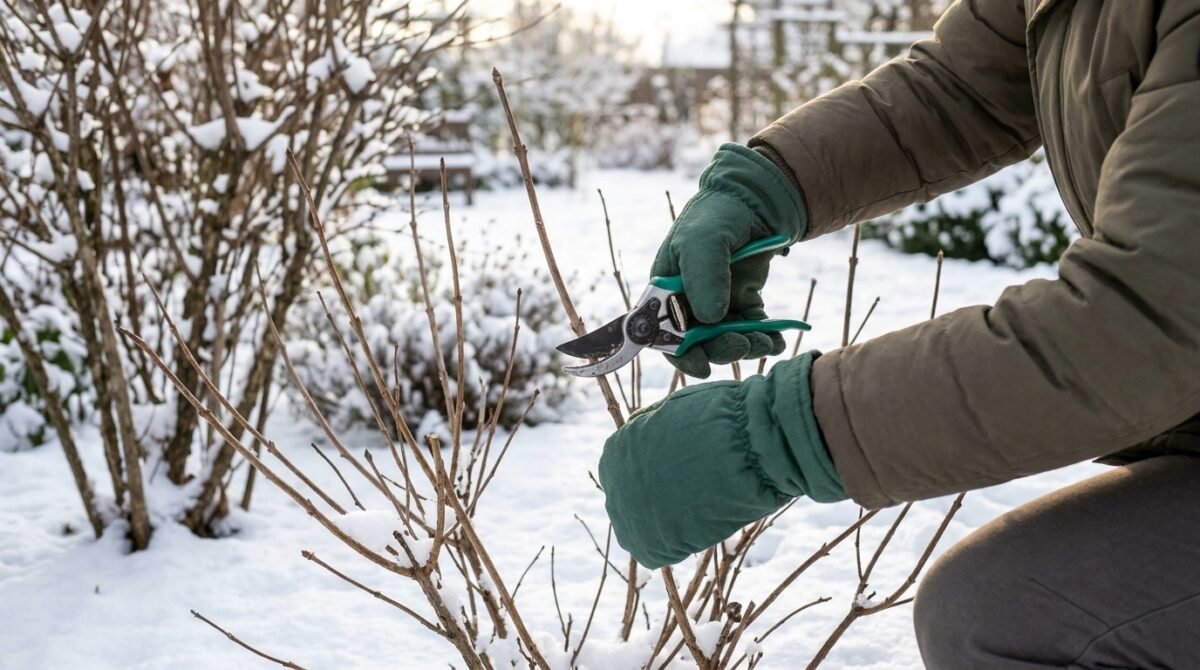
Avoid disturbing the soil or plants unnecessarily. During cold weather, a short visual inspection is often more useful than extensive digging, pruning, or rearranging.
December: Check That Winter Protection Is Working
In many regions, December is when the garden moves from preparation into regular winter maintenance.
The exact timing will vary by climate, but this is often the month when protective measures face their first serious test from cold, wind, snow, and ice.
Inspect frost covers
Check whether covers have:
- Shifted in the wind
- Torn
- Become loose
- Exposed plant foliage
- Collected excessive moisture
- Pressed heavily against plants
Secure loose edges and repair damaged materials when conditions allow.
Check newly protected plants
Recently covered plants may need occasional inspection to ensure that the protection remains effective and is not causing problems through trapped moisture, poor ventilation, or physical pressure.
Inspect containers
Move vulnerable containers to more sheltered locations if necessary. Check whether pots are exposed to strong winds, standing water, or repeated freezing and thawing.
Monitor soil moisture
During a dry period, inspect the root zone of evergreen plants, recently planted specimens, and container-grown plants. Do not water frozen soil or waterlogged beds.
Check garden structures
Inspect:
- Cold frames
- Low tunnels
- Trellises
- Stakes
- Greenhouse coverings
- Raised-bed edging
- Protective hoops
A small structural problem can become much more serious after the next storm.
January: Monitor Cold, Snow, and Winter Stress
January often brings some of the most demanding winter conditions in colder climates. However, the maintenance priorities depend heavily on local weather.
The main focus should be protecting plants from prolonged cold, snow load, wind, and drying.
Manage heavy snow carefully
Snow can insulate the soil and protect plant roots, but heavy accumulation can also bend or break branches and damage structures.
Pay particular attention to:
- Narrow evergreen shrubs
- Multi-stemmed shrubs
- Young trees
- Weak branches
- Arbors and trellises
- Low tunnels
- Greenhouse roofs
- Fragile plant supports
If snow is weighing down a vulnerable structure or branch, remove it carefully using an appropriate method. Avoid striking frozen branches or shaking them aggressively, as brittle wood can break easily.
Inspect evergreens
Evergreen foliage continues losing moisture during winter. Cold winds and bright sunlight can increase water loss, especially when the ground is frozen.
Look for:
- Browning foliage
- Windburn
- Broken branches
- Exposed roots
- Damage from snow or ice
Do not automatically prune discolored evergreen growth during the coldest part of winter. Wait until the extent of the damage is clearer unless broken or hazardous material requires immediate attention.
Check for wildlife browsing
Food becomes scarce during winter, and animals may feed more heavily on bark, twigs, buds, and evergreen foliage.
Inspect plants for:
- Chewed stems
- Stripped bark
- Broken branches
- Tracks
- Droppings
- Repeated browsing patterns
If damage is occurring, improve physical protection around vulnerable plants.
February: Watch for Freeze-Thaw Damage
In some climates, February brings alternating periods of freezing and milder weather. These fluctuations can create problems even when the coldest temperatures are not extreme.
Repeated freezing and thawing may affect:
- Shallow-rooted plants
- Newly planted shrubs
- Exposed crowns
- Raised beds
- Containers
- Soil surfaces
- Young trees
Check for heaving plants
Freeze-thaw cycles can push shallow-rooted plants upward, exposing roots or lifting crowns out of the soil.
If a plant has been lifted, avoid working in wet or frozen soil. Wait until the ground is workable, then gently reposition the plant and restore appropriate soil contact.
Inspect exposed roots
Look for roots that have become visible because of erosion, soil movement, or frost heaving.
Do not pile wet soil against stems or trunks. Correct the problem carefully when conditions permit.
Review winter covers
As weather becomes less predictable, protective covers may need adjustment. A cover that was useful during severe cold may become unnecessary during milder periods, particularly if it traps moisture or restricts airflow.
Continue checking containers
Container plants remain vulnerable to rapid temperature changes. Inspect pots for cracks, waterlogging, exposed roots, and damage caused by freezing conditions.
March: Prepare for the Transition Out of Winter
In colder areas, March may still be a winter month. In milder areas, it may mark the beginning of the transition toward spring.
The key is to avoid treating the calendar as a guarantee.
Continue protecting plants while freezing weather remains possible, but begin observing signs of renewed growth.
Check for early growth
Look for:
- Swollen buds
- New shoots
- Emerging bulbs
- Green tissue near the base of plants
- Early weeds
- Changes in soil condition
Early growth can be vulnerable to a sudden return of freezing temperatures.
Avoid removing protection too early
If covers are still needed, keep them available until the risk of severe cold has passed.
At the same time, monitor covered plants during milder weather. Excess heat, trapped moisture, and poor ventilation can create new problems.
Inspect winter damage
Look for:
- Broken branches
- Split stems
- Damaged bark
- Dead-looking shoots
- Erosion
- Compacted areas
- Damaged supports
Not every damaged-looking branch needs immediate removal. Assess whether it is dead, hazardous, diseased, or likely to recover.
Check stored equipment
As the gardening season approaches, inspect:
- Hand tools
- Pruners
- Hoses
- Seed trays
- Plant supports
- Watering equipment
- Garden gloves
- Stored pots
Cleaning and repairing equipment before the main season begins can prevent delays later.
Winter Maintenance After Heavy Snow
Snow can be beneficial or damaging depending on its depth, weight, moisture content, and location.
Snow can help by:
- Insulating the soil
- Reducing rapid temperature changes
- Protecting dormant roots
- Adding moisture as it melts
Snow can cause problems by:
- Bending branches
- Breaking supports
- Collapsing covers
- Blocking ventilation
- Damaging tunnels
- Covering access paths
- Creating excess moisture during thawing
Do not remove every layer of snow automatically. Light, loose snow may provide useful insulation.
Focus on snow that is:
- Excessively heavy
- Accumulating on fragile structures
- Bending vulnerable branches
- Blocking necessary access
- Creating a safety risk
Work carefully and avoid damaging frozen plants while attempting to remove snow.
Winter Maintenance After Strong Winds
Wind can cause damage even when temperatures are moderate.
After a windy period, inspect:
- Frost cloth
- Row covers
- Stakes
- Hoops
- Trellises
- Tree ties
- Shrubs
- Containers
- Mulch
- Lightweight garden materials
Look for covers that have lifted, exposed roots, broken branches, and displaced containers.
Do not leave loose plastic, fabric, or other materials where they can damage plants or become a hazard.
Winter Watering Checks
Winter watering is not required on a fixed schedule. It depends on rainfall, snow cover, soil conditions, plant type, and temperature.
Evergreens, recently planted trees and shrubs, and container plants may be especially vulnerable to winter dryness.
Before watering, check:
- Whether the soil is actually dry
- Whether the ground is frozen
- Whether drainage is adequate
- Whether the plant is dormant
- Whether the weather is expected to remain cold
- Whether the plant is protected from wind
Water only when conditions are suitable and the plant genuinely needs it.
Avoid watering frozen soil or adding water to already saturated beds.
Winter Mulch Checks
Mulch can help moderate soil temperatures and reduce moisture loss, but it should be inspected rather than ignored after installation.
Check whether mulch has:
- Blown away
- Become compacted
- Shifted from the root zone
- Covered plant crowns
- Pressed against trunks
- Become excessively wet
Keep mulch away from direct contact with tree trunks and woody stems. Excessive moisture around the crown or trunk can encourage rot and other problems.
If mulch has been displaced, redistribute it when the soil and weather conditions allow.
Winter Wildlife Protection
Wildlife can become a major source of winter damage, particularly when natural food is limited.
Common problems include:
- Browsing on evergreen shrubs
- Gnawing on young tree bark
- Eating dormant buds
- Digging around roots
- Disturbing mulch
- Damaging protective covers
Inspect vulnerable plants regularly and look for repeated patterns of damage.
Physical barriers are often more reliable than temporary deterrents. Protection should be appropriate for the animal involved and should not create additional hazards for pets or wildlife.
What to Do During a Winter Thaw
A winter thaw can create a useful maintenance window, but it can also introduce new risks.
During a thaw, check:
- Whether soil is becoming waterlogged
- Whether containers are draining properly
- Whether protective covers need ventilation
- Whether snowmelt is collecting around plant crowns
- Whether frost-heaved plants need attention
- Whether branches or structures have shifted
- Whether exposed roots need protection
Avoid walking repeatedly across wet beds. Working in saturated soil can cause compaction and damage its structure.
A thaw is also a good time to complete small repairs, provided the ground is workable and plants are not being disturbed unnecessarily.
Winter Garden Maintenance: What to Avoid
Winter maintenance is as much about restraint as it is about action.
Avoid:
Pruning heavily during severe cold
Cold weather can increase stress and make damaged tissue difficult to assess.
Walking on frozen or wet garden beds
This can damage soil structure and compact the root zone.
Removing all snow
Snow may provide valuable insulation, especially around dormant perennials and roots.
Watering automatically
Winter plants do not follow the same watering schedule as actively growing plants.
Leaving damaged covers in place
A torn or displaced cover may provide little protection and can damage plants in strong wind.
Fertilizing dormant plants unnecessarily
Winter is generally not the time to encourage soft new growth that may be vulnerable to cold.
Disturbing dormant plants repeatedly
Frequent digging, moving, or handling can create more stress than it prevents.
A Practical Weekly Winter Garden Checklist
Use this short checklist during regular winter inspections:
- Check the latest weather forecast.
- Inspect vulnerable plants.
- Look for broken branches.
- Check frost covers and supports.
- Inspect containers.
- Look for dry or waterlogged soil.
- Check mulch placement.
- Inspect for wildlife damage.
- Look for exposed roots.
- Check paths and access points.
- Remove hazardous debris.
- Record problems that need attention during the next thaw.
After severe snow, ice, wind, or rapid temperature changes, complete an additional inspection.
When Should You Leave the Garden Alone?
Not every winter condition requires intervention.
It may be best to leave the garden undisturbed when:
- Plants are frozen.
- Soil is saturated.
- Snow is providing useful insulation.
- No damage is visible.
- Protective covers are secure.
- Plants are dormant and stable.
- Working in the garden would cause compaction.
- Temperatures are too low for safe repairs.
A quiet garden is not necessarily a neglected garden. In many cases, the best winter maintenance decision is to observe rather than interfere.
Final Thoughts
A winter garden needs maintenance, but it does not need constant activity.
The most effective approach is to inspect regularly, respond to weather events, and avoid unnecessary disturbance. Check covers after wind, monitor snow load, inspect soil moisture during dry periods, watch for wildlife damage, and use winter thaws to complete small repairs.
A simple routine of inspect, assess, protect, and leave undisturbed when appropriate can carry the garden safely through the cold season.
By the time spring arrives, consistent winter maintenance will have helped preserve soil structure, reduce plant damage, and keep the garden ready for the next growing season.