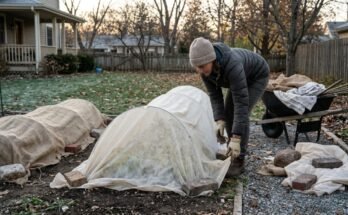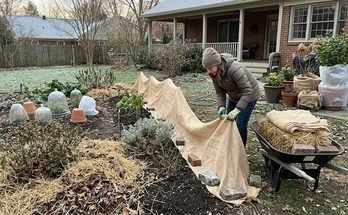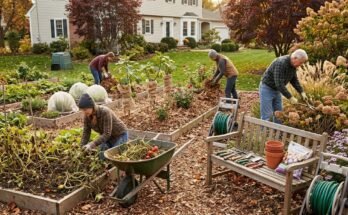
When winter is approaching, it is easy to look at the garden and see twenty things that need attention at once. There may be beds to clean, containers to move, plants to protect, tools to store, soil to improve, and water systems to check.
The problem is that not every task has the same level of urgency.
If time, money, or energy is limited, trying to complete everything equally can actually make winter preparation harder. A better approach is to identify the tasks that protect the most vulnerable plants and prevent the most expensive or irreversible damage first.
This guide explains how to establish practical garden winterization priorities, decide what needs attention immediately, and determine which jobs can safely wait.
Why Garden Winterization Priorities Matter
Winter preparation is not simply a checklist where every task has equal importance.
A healthy established shrub may survive a missed cleanup with little trouble, while a newly planted perennial, container plant, or frost-sensitive vegetable can suffer serious damage from one severe cold event.
Prioritizing tasks allows you to spend your available time where it matters most.
A useful priority system considers four things:
- How vulnerable is the plant or garden feature?
- How severe could the damage be?
- How soon could the problem occur?
- How difficult or expensive would recovery be?
The answers help determine what belongs at the top of your winter preparation list.
The Basic Order of Winter Garden Tasks
For most home gardens, a practical order is:
| Priority | Task Type | Why It Matters |
|---|---|---|
| 1 | Protect highly vulnerable plants | Cold damage can happen quickly and may be difficult to reverse |
| 2 | Secure containers and exposed plants | Containers lose heat faster than plants in the ground |
| 3 | Address water-related risks | Frozen water can damage irrigation, hoses, and containers |
| 4 | Protect newly planted or weak plants | Young plants often have less-established root systems |
| 5 | Check structures and supports | Wind, ice, and snow can turn small weaknesses into failures |
| 6 | Manage soil and mulch | Helps protect roots and moderate temperature changes |
| 7 | Store or protect tools and equipment | Prevents avoidable winter damage |
| 8 | Complete general cleanup | Useful, but not every cleanup task is urgent |
This order is not rigid. Local climate, plant selection, garden design, and the expected winter conditions should influence your decisions.
The important principle is simple: protect what can suffer serious damage first.
Step 1: Identify the Most Vulnerable Parts of Your Garden
Before doing any physical work, walk through the garden and make a quick vulnerability assessment.
Look for plants and features that are more exposed to winter conditions than the rest of the garden.
Common high-risk areas include:
- Newly planted trees and shrubs
- Young perennials
- Tender or frost-sensitive plants
- Plants growing in exposed locations
- Container-grown plants
- Plants already showing stress
- Plants in windy areas
- Shallow-rooted plants
- Newly established garden beds
- Exposed irrigation components
- Fragile garden structures
Do not assume that the oldest or largest plants need the most attention.
A mature, well-established plant may require very little intervention, while a small plant planted only weeks earlier may deserve much more attention.
Step 2: Separate “Must Do” From “Nice to Do”
One of the easiest ways to become overwhelmed is treating every garden task as mandatory.
Instead, divide your work into three groups.
Must Do
These are tasks where delaying action could result in meaningful damage.
Examples include:
- Protecting vulnerable plants before a severe cold event
- Moving susceptible container plants
- Addressing exposed water lines
- Securing unstable structures
- Checking plants that are already stressed
- Dealing with obvious drainage or standing-water problems
Should Do
These tasks improve winter readiness but are generally less urgent.
Examples include:
- Applying appropriate mulch
- Organizing garden tools
- Cleaning healthy plant debris
- Checking supports
- Tidying storage areas
Can Wait
These are tasks that provide convenience or appearance benefits but are unlikely to determine whether the garden survives winter.
Examples might include:
- Detailed aesthetic cleanup
- Rearranging decorative features
- Minor cosmetic repairs
- Reorganizing nonessential garden supplies
This distinction is especially useful when a sudden cold spell is approaching.
Step 3: Prioritize Plants by Vulnerability
Not every plant needs the same level of winter attention.
A simple way to organize your garden is to divide plants into three groups.
High Vulnerability
These deserve your earliest attention.
Examples can include:
- Tender plants
- Recently planted specimens
- Container plants
- Plants already damaged by disease, drought, or pests
- Plants in highly exposed locations
- Plants known to struggle in your local winter conditions
Moderate Vulnerability
These should be addressed after the highest-risk plants.
Examples may include:
- Established but relatively young plants
- Plants in exposed beds
- Plants with shallow or restricted root zones
- Plants that have previously suffered winter damage
Low Vulnerability
These can usually receive less immediate attention.
Examples include:
- Healthy established plants adapted to your climate
- Hardy mature shrubs
- Well-established trees
- Plants naturally suited to local winter conditions
The goal is not to protect everything equally.
It is to recognize where intervention provides the greatest benefit.
Step 4: Consider Potential Damage, Not Just Plant Sensitivity
Plant vulnerability is only half of the equation.
You should also consider what happens if something fails.
For example, a small decorative annual may be frost-sensitive, but losing it may have little long-term consequence.
A young fruit tree, however, may represent a much larger investment of time and money.
When prioritizing tasks, ask:
“If I ignore this until tomorrow, what could I lose?”
This question helps distinguish inconvenience from genuine risk.
A task deserves a higher priority when delaying it could lead to:
- Permanent plant loss
- Major structural damage
- Expensive replacement
- Root damage
- Water-system damage
- Significant loss of next season’s growth
- Damage that cannot easily be corrected later
Step 5: Look at the Time Factor
Some garden tasks are important but not urgent.
Others have a narrow window.
For example, organizing your garden shed can probably wait a few days.
Protecting a vulnerable plant before an overnight freeze cannot.
Use three simple time categories:
Immediate
Complete as soon as possible.
Use this category for tasks where the next weather event could cause damage.
Soon
Complete within the next several days.
These tasks support winter readiness but do not usually require emergency action.
Later
Complete when the urgent work is finished.
These tasks are useful but have little short-term risk attached to them.
This approach prevents low-risk jobs from consuming the time you need for more important work.
Step 6: Prioritize by Potential Damage Per Dollar
Budget is another important part of winter preparation.
You do not necessarily need to spend a lot of money to make a garden more winter-ready.
Instead, ask which relatively inexpensive action could prevent significant damage.
For example, a small amount of appropriate protective material may be more valuable than purchasing new decorative garden accessories.
When money is limited, focus spending on:
- Vulnerable plants
- Newly established plants
- Exposed containers
- Critical water or irrigation components
- Structural weaknesses
- Essential protective materials
Avoid spending your winter-preparation budget on low-risk cosmetic improvements before addressing genuine vulnerabilities.
Step 7: Pay Special Attention to Containers
Container plants deserve a separate place in your winter priorities because their roots have less insulation than roots surrounded by the ground.
A plant that is relatively hardy when planted in the soil may experience greater cold stress when grown in a container.
Prioritize containers that are:
- Holding frost-sensitive plants
- Small or exposed
- Made from materials vulnerable to freezing conditions
- Positioned in windy locations
- Holding recently planted specimens
If you have many containers, do not automatically treat every pot identically.
Start with the plants that have the highest combination of value, vulnerability, and exposure.
Step 8: Protect Recently Planted Plants Early
Newly planted trees, shrubs, and perennials deserve extra attention.
They may not yet have developed the extensive root systems of established plants.
When creating your winter task list, mark newly planted specimens separately.
Ask:
- When was this plant installed?
- Is it adapted to my winter climate?
- Is its root zone well established?
- Is it exposed to wind?
- Has it experienced stress during the growing season?
A newly planted plant does not automatically need elaborate protection, but it deserves a closer assessment than an established plant growing under similar conditions.
Step 9: Check for Structural Risks
Winter weather does not only affect plants.
Snow, ice, and strong winds can place additional loads on:
- Trellises
- Supports
- Stakes
- Fences
- Arbors
- Greenhouse components
- Raised-bed structures
- Garden shelving
Look for loose connections, leaning supports, cracked materials, and unstable structures.
A small repair made before winter can prevent a much larger problem later.
Structural checks are particularly important in gardens exposed to strong winter winds or heavy snow.
Step 10: Don’t Ignore Water-Related Risks
Water deserves a high place on your winter preparation list because freezing conditions can create problems that are easy to overlook.
Inspect:
- Garden hoses
- Outdoor faucets
- Irrigation components
- Water containers
- Exposed pipes
- Drip irrigation equipment
- Rain barrels and similar systems
The exact preparation required depends on your climate and equipment.
The important point is to identify water-related components that could be damaged by freezing and deal with those risks before the coldest conditions arrive.
Step 11: Decide Where Cleanup Fits
Garden cleanup is useful, but it should not automatically become your first priority.
Some plant debris should be removed because it is diseased, infested, or otherwise likely to create problems.
Other healthy plant material can sometimes remain for habitat, soil protection, or winter interest.
Therefore, instead of asking:
“How quickly can I clean the entire garden?”
ask:
“Which material actually needs to be removed before winter?”
This prevents hours of unnecessary cleanup from taking priority over plant protection and other higher-risk tasks.
A Simple Garden Winterization Priority Score
If you have a large garden and struggle to decide where to start, give each task a simple score.
Rate each factor from 1 to 3:
- Vulnerability: How sensitive is the plant or feature?
- Damage: How serious would failure be?
- Urgency: How soon could the problem occur?
- Cost: How expensive would replacement or repair be?
Add the scores.
Example
| Task | Vulnerability | Damage | Urgency | Cost | Total |
|---|---|---|---|---|---|
| Protect young citrus tree | 3 | 3 | 3 | 3 | 12 |
| Move exposed container plant | 3 | 2 | 3 | 2 | 10 |
| Secure loose trellis | 2 | 3 | 2 | 2 | 9 |
| Clean decorative border | 1 | 1 | 1 | 1 | 4 |
| Organize garden shed | 1 | 1 | 1 | 1 | 4 |
The numbers are not scientific measurements. They are simply a decision-making tool.
The higher the total, the sooner you should consider addressing the task.
What to Do When You Only Have One Day
Sometimes winter arrives faster than expected.
If you only have a single day, do not try to complete the entire garden.
Work through the highest-risk tasks first.
One-Day Priority Order
First: Identify vulnerable plants.
Second: Address plants or garden features that could suffer immediate damage.
Third: Deal with containers and exposed plants.
Fourth: Check water-related risks.
Fifth: Secure unstable structures.
Sixth: Address obvious soil, mulch, or root-zone concerns.
Last: Complete general cleanup and organization if time remains.
This approach is far more practical than spending the entire day on cosmetic cleanup while vulnerable plants remain exposed.
What to Do When Your Budget Is Limited
Winterizing a garden does not have to mean buying everything advertised as “winter protection.”
Start with the risks already present in your garden.
With a limited budget, prioritize:
- Existing vulnerable plants
- Recently planted specimens
- Essential protective materials
- Critical repairs
- Water-related protection
- Appropriate root-zone protection
- Materials that can be reused in future seasons
Before purchasing anything, inspect what you already own.
Old stakes, supports, containers, garden fabric, ties, and other supplies may still be useful if they are clean, safe, and appropriate for the job.
Common Prioritization Mistakes
Doing the Easiest Tasks First
Gardeners often begin with jobs that provide immediate visual satisfaction.
A perfectly cleaned path feels productive, but it may not be the most important task.
Start with risk, not convenience.
Treating Every Plant the Same
Different plants have different levels of vulnerability.
A blanket approach can waste time and materials.
Spending Too Much on Low-Risk Improvements
Winter preparation should protect the garden before it improves its appearance.
Ignoring Newly Planted Specimens
Established plants and new plantings should not automatically receive identical treatment.
Waiting Until Every Task Can Be Completed
Perfect preparation is not necessary.
If time is limited, completing the five most important tasks is better than starting fifteen tasks and finishing none.
Focusing Only on Plants
Structures, containers, irrigation components, and garden equipment can also suffer winter damage.
A Practical Winterization Priority Checklist
Before finishing your preparation, ask:
High-risk plants
- Have I identified my most vulnerable plants?
- Have I checked newly planted specimens?
- Have I identified plants in exposed locations?
- Have I considered container plants separately?
Immediate risks
- Are any plants facing an immediate weather threat?
- Are any structures unstable?
- Are water-related components vulnerable?
- Are there obvious problems that could become expensive if ignored?
Budget
- Am I spending money on the highest-risk problems first?
- Can I reuse existing materials?
- Have I avoided unnecessary purchases?
Time
- Which tasks must be completed today?
- Which can wait several days?
- Which are useful but nonessential?
Final decision
- Have I dealt with the highest-risk problems before starting cosmetic cleanup?
A Simple Rule for Prioritizing Winter Garden Tasks
When you are unsure which task should come next, use this sequence:
Vulnerability → Damage → Urgency → Cost → Convenience
Start with the plant or garden feature that is most vulnerable.
Then consider how serious the damage could be.
Next, determine how soon the risk could occur.
Consider the financial or practical cost of failure.
Only after those factors should convenience or appearance influence your decision.
This simple order keeps winter preparation focused on what actually matters.
Final Thoughts
Winter garden preparation does not have to be an all-or-nothing project.
The most effective approach is to prioritize the work according to risk. Protect vulnerable plants before hardy established ones, address immediate threats before cosmetic improvements, and spend limited time and money where they can prevent the greatest potential damage.
If you cannot complete every winter task, that is okay.
A well-prioritized garden is often better prepared than a garden where every task was attempted without considering which ones mattered most.
Start with vulnerability. Address the biggest risks. Then work down the list.
You May Also Like: The 72-Hour Garden Winterization Plan for a Sudden Freeze