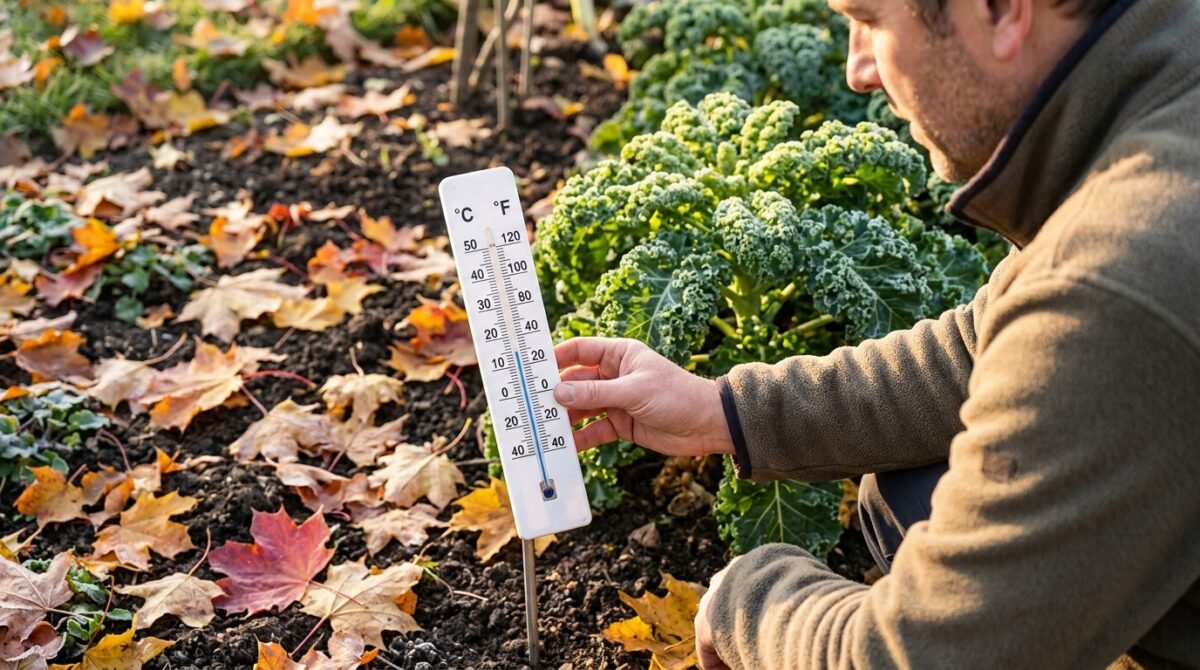
Winterizing a garden at the right time is more important than simply getting the work done.
Start too early and you may interfere with plants that are still actively growing. Wait too long and the first hard freeze can arrive before vulnerable plants, containers and water systems are ready.
The tricky part is that there isn’t one universal date for winterizing every garden.
A garden in Minnesota, a garden in Virginia and a garden in Colorado can require completely different timing. Even within the same region, elevation, exposure, soil drainage and local microclimate can move the practical winterization window by weeks.
The better approach is to use weather, plant behavior and garden conditions together.
Here’s how I determine when a garden is actually ready to transition into winter.
Quick Answer: When Should You Winterize Your Garden?
For most gardens, begin winter preparation several weeks before your area’s expected first hard freeze, while completing frost-sensitive tasks before the first damaging frost.
Use this general sequence:
| Winterization stage | What to watch for | Typical action |
|---|---|---|
| Early preparation | Growing season slowing | Inspect plants, beds and equipment |
| Preparation window | Cooler nights and shorter days | Clean selectively, remove diseased material, address problems |
| Soil-cooling period | Soil temperatures falling and plants approaching dormancy | Apply appropriate winter mulch |
| Frost-protection window | First frost approaching | Protect tender plants and vulnerable containers |
| Freeze preparation | Sustained freezing forecast | Prepare hoses, irrigation and exposed water equipment |
| Dormant period | Plants fully dormant | Complete appropriate dormant-season tasks |
| Severe-weather preparation | Hard freeze, snow or ice approaching | Perform final protection checks |
The exact timing depends on your climate and the plants you grow.
Don’t Use the Calendar Alone
One of the biggest mistakes gardeners make is treating a date on a calendar as the beginning of winter.
Plants don’t respond to the calendar.
They respond to temperature, day length, soil conditions and accumulated environmental signals.
Your area’s average first frost date is useful, but it is only a planning reference.
For example, if your average first frost is October 15, you shouldn’t necessarily wait until October 15 to begin winter preparation.
Some tasks should already be finished by then.
Think in terms of a preparation window
Rather than asking:
“What date should I winterize my garden?”
ask:
“What needs to be ready before the next significant cold event?”
That is a much more reliable way to plan.
Start With Your Local First-Frost Pattern
The first useful reference point is your area’s typical first frost.
A first frost occurs when temperatures near the ground become cold enough for frost to form. But frost dates vary considerably from year to year.
Use historical frost information to establish a planning window, not an exact deadline.
If your region normally experiences its first frost in mid-October, you might begin inspecting and preparing vulnerable areas well before then.
A practical rule
Give yourself enough time to handle unexpected weather.
If a tender plant needs protection and you only start shopping for frost covers on the night before a freeze, you’re already behind.
Watch the Weather Forecast More Closely as Autumn Progresses
Historical frost dates tell you what commonly happens.
The short-term forecast tells you what is actually approaching.
As autumn progresses, start paying more attention to overnight temperatures.
A forecast showing several increasingly cold nights is a stronger preparation signal than a calendar date alone.
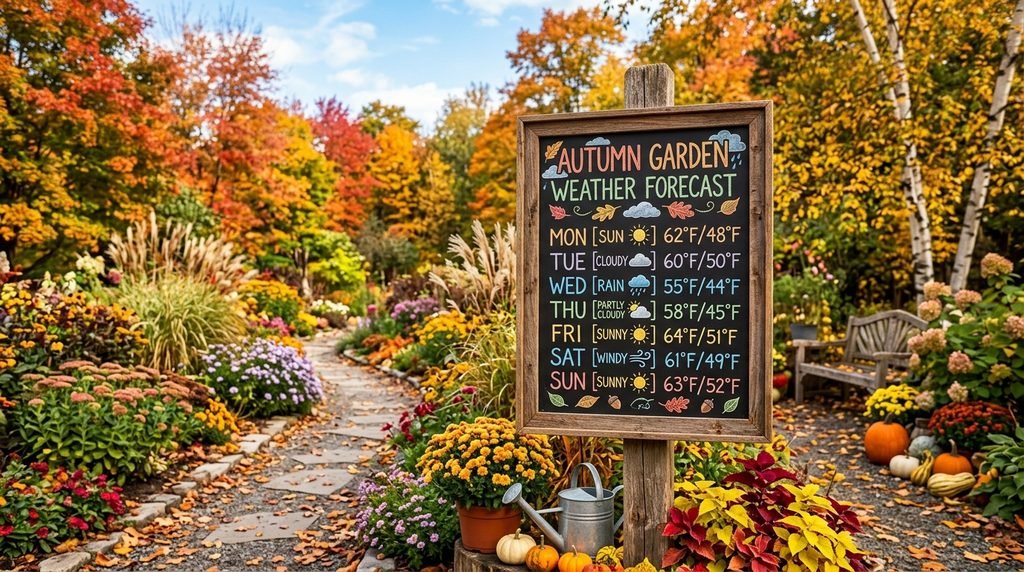
Look particularly for:
- Forecast overnight lows
- Frost advisories or warnings
- Freeze warnings
- Sudden temperature drops
- Extended periods of cold
- Strong winds accompanying cold weather
Don’t wait for frost to appear on the lawn before protecting a particularly vulnerable plant.
Preparation should happen before the damaging event.
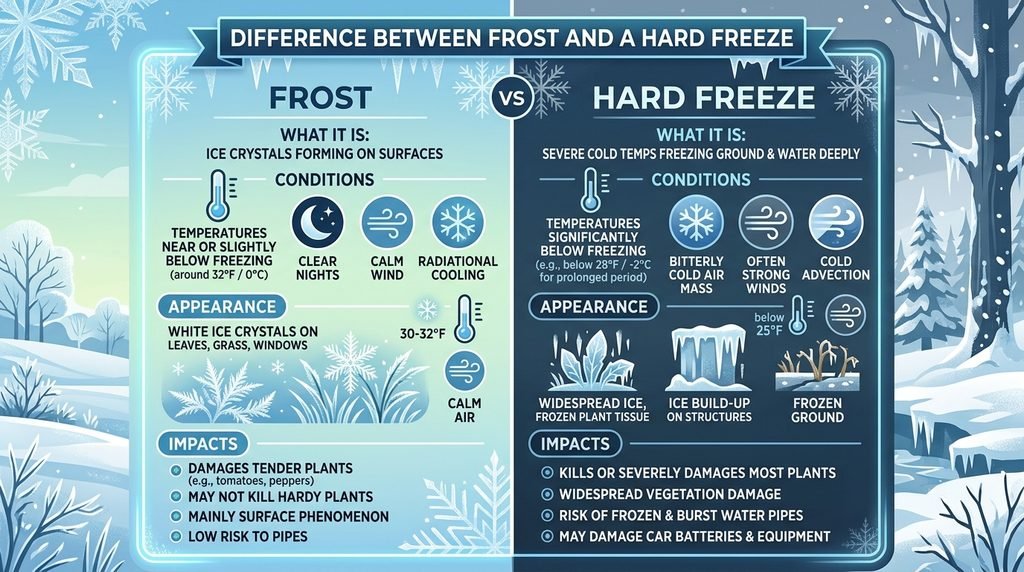
Know the Difference Between Frost and a Hard Freeze
Not every cold night represents the same level of risk.
A light frost, a prolonged freeze and a hard freeze can produce very different results in a garden.
That’s why the phrase “winterize when it gets cold” isn’t particularly useful.
A tender annual may be damaged by a relatively minor frost, while a properly established hardy perennial can tolerate considerably colder conditions.
The response should therefore depend on the plant.
Your winterization list should have different levels of urgency
High urgency:
- Tender plants
- Tropical plants
- Vulnerable containers
- Recently planted specimens
- Exposed young plants
Lower urgency:
- Established hardy perennials
- Cold-hardy shrubs
- Mature trees adapted to your climate
This simple classification prevents you from wasting time treating every plant identically.
Pay Attention to Plant Dormancy
Plant dormancy is another important signal.
Many deciduous plants naturally slow down as temperatures fall and daylight decreases.
This is different from simply experiencing one cold night.
You should not assume that every plant needs to be cut back, covered or otherwise manipulated as soon as autumn arrives.
For some plants, winter preparation should occur after active growth has slowed or stopped.
For others, protection must happen before dormancy because the first frost itself is the danger.
That’s why winterization timing needs to be plant-specific.
The Important Exception: Frost-Sensitive Plants
Tender plants are the reason you should never wait for the entire garden to enter dormancy before beginning winter preparation.
If a plant is vulnerable to frost, its protection deadline may arrive while other plants are still actively growing.
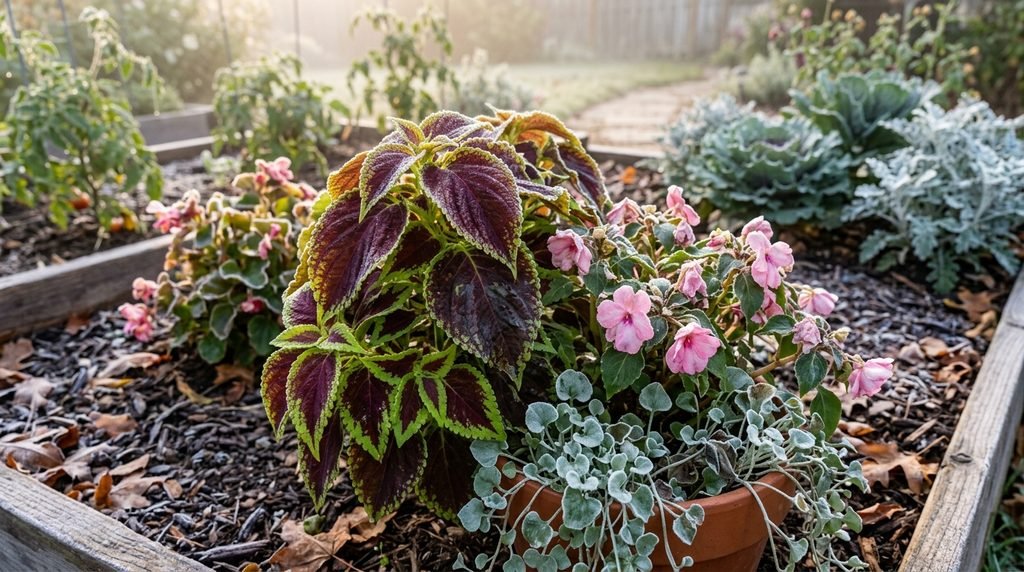
Before autumn gets too far along, identify:
- Plants that cannot tolerate frost
- Plants that need temporary frost protection
- Containers that need relocation
- Newly planted specimens
- Plants exposed to wind or low areas
- Plants with known winter limitations
Then prepare your protection materials in advance.
Soil Temperature Matters Too
Air temperature isn’t the only consideration.
The soil changes more slowly than the air because it has greater thermal mass.
This is one reason gardeners can sometimes experience a surprisingly cold night without the entire root zone immediately reaching the same temperature.
As autumn progresses, however, soil temperatures gradually decline.
This matters when deciding when to apply winter mulch.
Don’t mulch simply because the calendar says “fall”
If soil is still warm and plants are actively growing, very heavy winter protection may be premature.
In many situations, a better approach is to wait until the soil has cooled and plants are entering dormancy, then apply an appropriate protective mulch layer.
The purpose is to moderate winter temperature fluctuations, particularly around vulnerable roots.
When Is the Best Time to Apply Winter Mulch?
There isn’t one date that works everywhere.
A useful signal is:
The growing season is winding down, the soil has cooled, and sustained freezing is approaching.
This is generally more useful than applying mulch at the first sign of autumn.
Why timing matters
Mulch is intended to insulate the soil and moderate temperature swings.
Applied thoughtfully, it can help protect shallow roots from repeated freezing and thawing.
Applied indiscriminately, especially around wet soil or directly against woody stems, it can create other problems.
Remember
Mulch protects the root zone; it should not be piled against trunks and stems.
When Should You Protect Plants From Frost?
Frost protection should be completed before the expected frost, not after it.
If a tender plant is vulnerable at a particular temperature, don’t wait for visible frost to form.
Have covers, supports and other materials ready ahead of the forecast.
This is especially important when:
- A clear, calm night is forecast
- Temperatures are expected to drop rapidly
- The plant is in a frost-prone location
- The plant is newly established
- The plant is container-grown
The exact temperature threshold depends on the species and its condition, so avoid treating one temperature as a universal danger point.
When Should You Winterize Container Plants?
Container plants often need attention earlier than comparable plants growing in the ground.
The reason is simple: a pot contains a relatively small volume of soil.
That smaller root zone can experience temperature changes more rapidly than the larger mass of soil surrounding an in-ground plant.
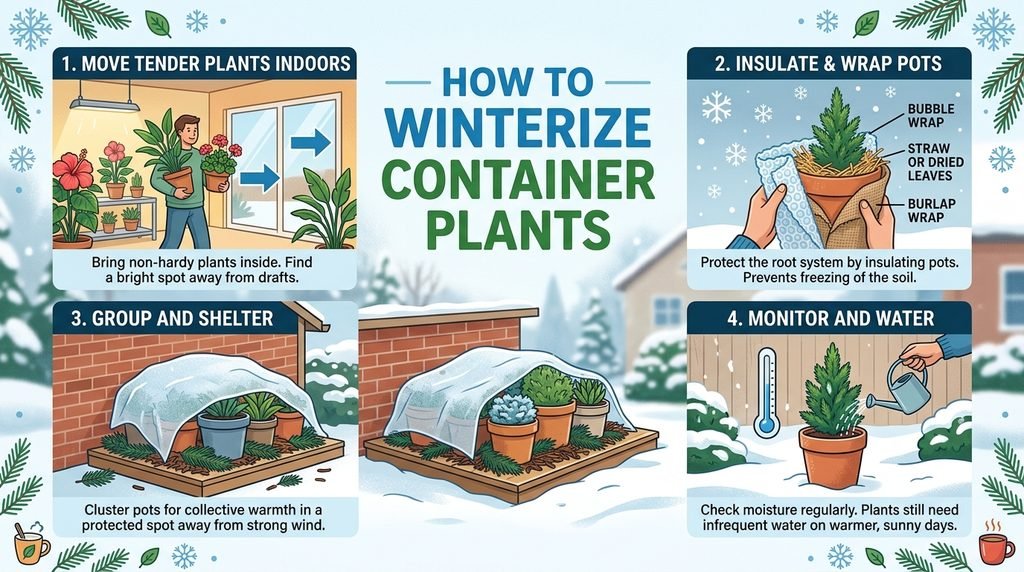
Before the first significant cold event, decide whether each vulnerable container should:
- Remain outdoors
- Be moved against a sheltered wall
- Be grouped with other containers
- Be insulated appropriately
- Be moved into a suitable protected location
Don’t wait until the potting mix is frozen.
When Should You Prepare Garden Hoses and Water Systems?
Water-system preparation has a firm deadline:
before sustained freezing can occur.
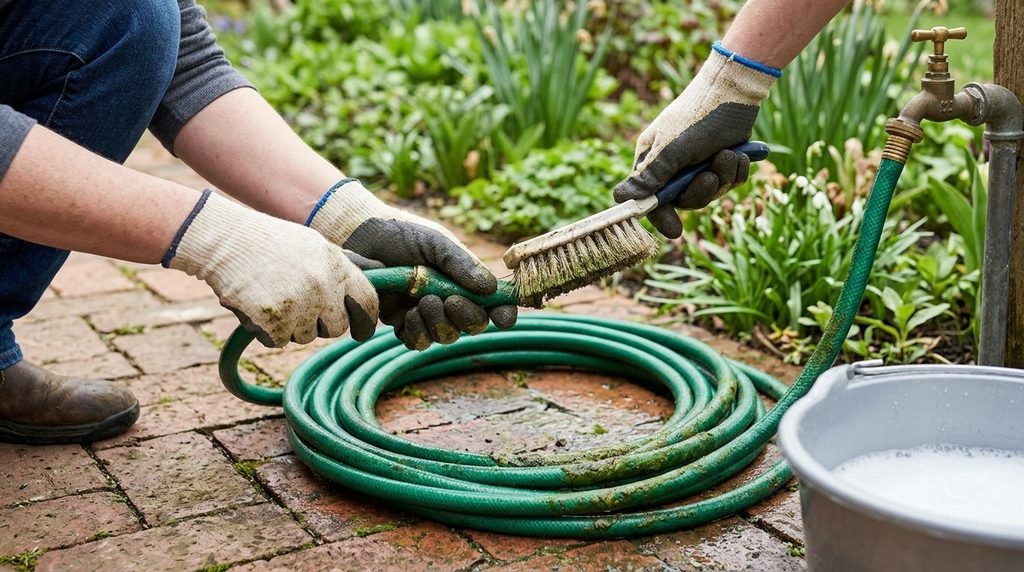
Disconnect and drain garden hoses before freezing weather arrives.
For permanent irrigation systems, follow the system’s recommended winterization procedure.
This is particularly important because trapped water can expand as it freezes and damage vulnerable components.
Don’t confuse this with plant winterization
You can have perfectly protected plants and still suffer winter damage because an outdoor water system was forgotten.
That is why I include hoses and irrigation on my winter preparation checklist.
When Should You Clean Up the Garden?
This is where “clean everything in fall” advice can lead gardeners astray.
Some cleanup should happen before winter.
Other material can remain.
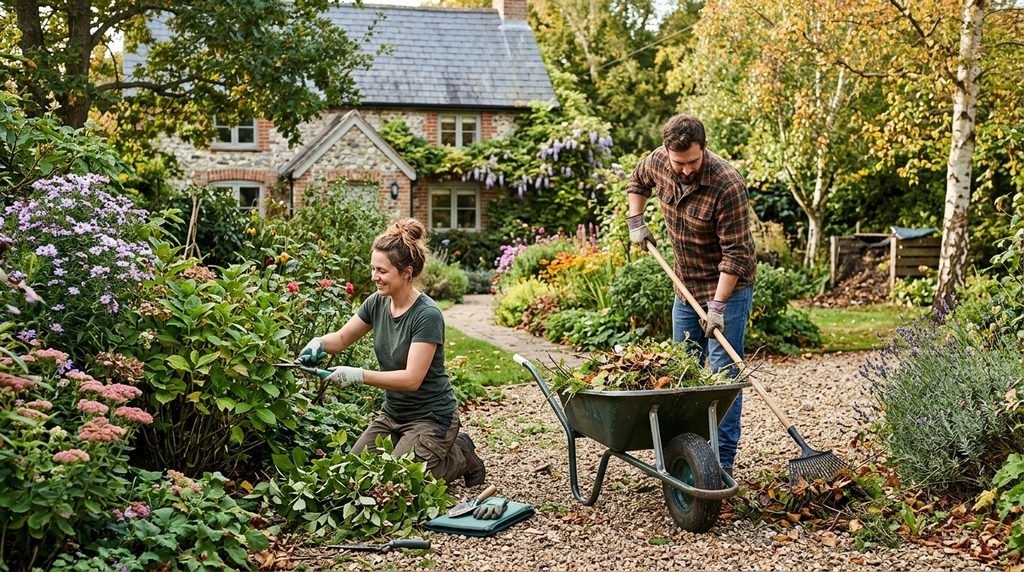
Remove or deal with:
- Diseased plant material
- Serious pest-infested material
- Weeds that are producing seed
- Hazardous fallen branches
- Material that creates a genuine disease problem
Consider leaving:
- Some healthy perennial stems
- Certain seed heads
- Useful wildlife habitat
- Healthy organic material that can contribute to the soil
The decision should be based on plant health, disease risk and winter habitat, not simply appearance.
When Should You Winterize Raised Beds?
Raised beds often deserve preparation before the ground freezes solid.
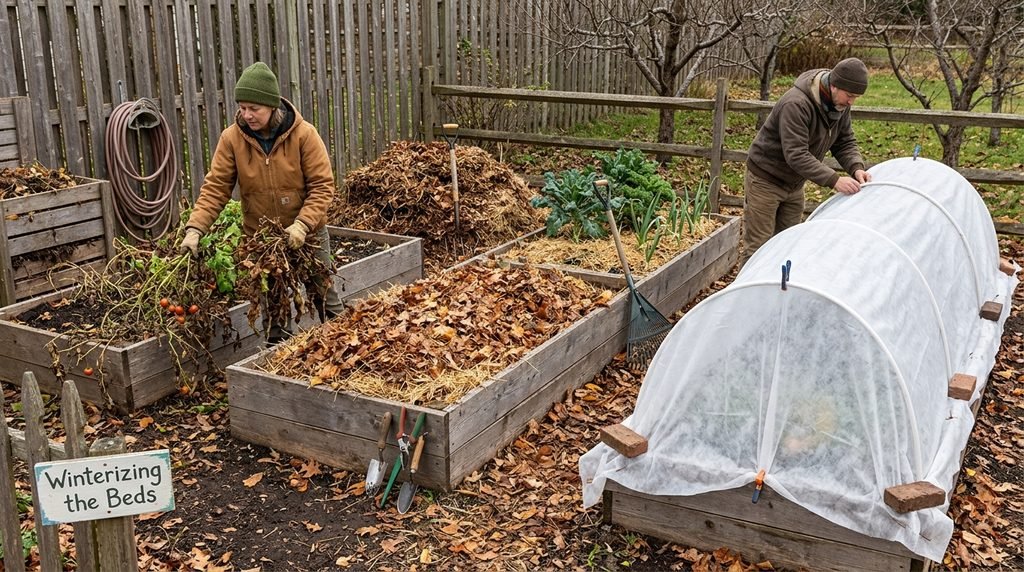
Before winter, inspect them for:
- Erosion
- Exposed roots
- Damaged frames
- Poor drainage
- Soil loss
- Excessive compaction
Depending on your planting plan, you may use:
- Winter mulch
- Cover crops
- Appropriate organic material
- Protective covers
The timing should take both the soil condition and the next crop into account.
Avoid working soil when it is excessively wet simply because winter is approaching.
When Should You Prepare Your Lawn?
Lawn winterization follows a slightly different schedule from garden beds.
Continue mowing while the grass is actively growing, then make the final mowing decisions according to your grass type and local conditions.
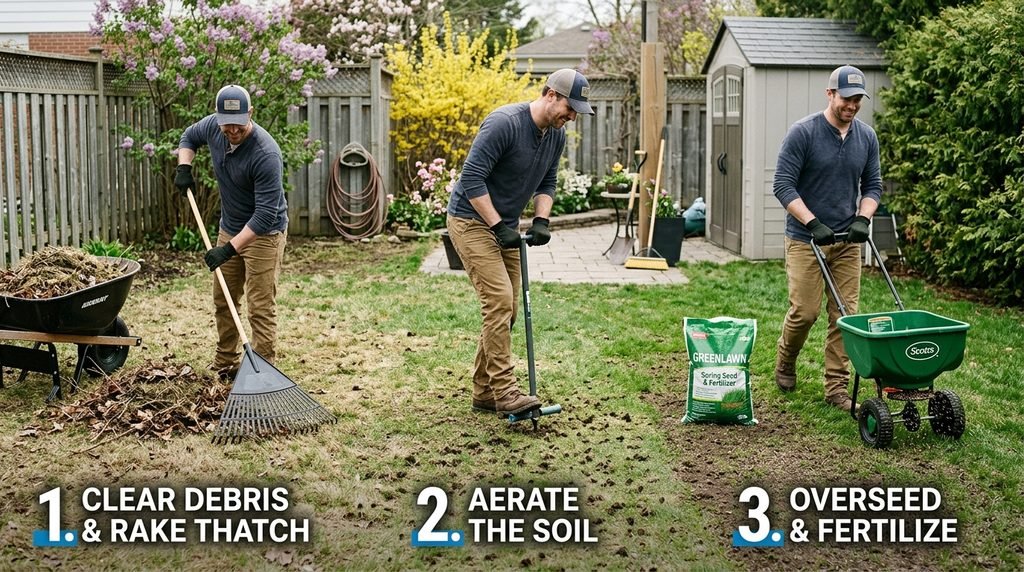
As winter approaches, also consider:
- Leaf accumulation
- Soil compaction
- Moisture
- Winter disease risks
- Expected snow cover
- Foot traffic during frozen conditions
A lawn shouldn’t be treated as though it were simply another perennial bed.
A Better Way to Plan Winterization: Work Backward From the Freeze
Here’s a technique I find much more useful than assigning everything to a calendar date.
Imagine a significant freeze is expected in about two weeks.
Work backward.
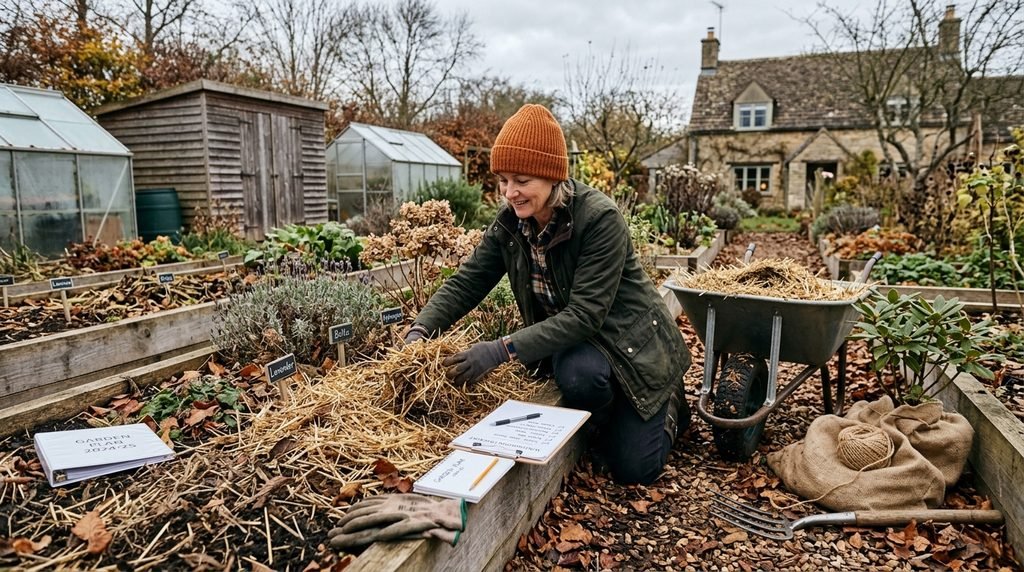
Two or more weeks before
- Inspect the entire garden
- Identify vulnerable plants
- Check containers
- Inspect structures
- Check drainage
- Gather winterization supplies
- Deal with obvious maintenance problems
About one week before
- Complete appropriate cleanup
- Address exposed roots
- Prepare winter mulch
- Prepare vulnerable containers
- Check water systems
- Prepare frost covers
24–48 hours before a predicted damaging frost
- Move vulnerable containers
- Protect tender plants
- Check covers and supports
- Complete final water-system checks
After the freeze
- Inspect plants
- Avoid immediately cutting away every damaged-looking leaf or stem
- Allow the extent of damage to become clearer before making major pruning decisions
This approach works because the weather creates the deadline, rather than an arbitrary date.
Winterization Timing by Garden Component
| Garden component | Main timing signal |
| Tender plants | Before damaging frost |
| Newly planted plants | Before significant freezing |
| Winter mulch | After soil cools and plants approach dormancy |
| Containers | Before root zone is exposed to damaging cold |
| Garden beds | As growth declines and winter approaches |
| Hoses | Before freezing weather |
| Irrigation | Before sustained freezing |
| Garden tools | Before long-term storage |
| Lawn | As active growth declines |
| Garden structures | Before heavy snow, ice or winter storms |
| Hardy established plants | Usually later, based on local conditions |
This table is more useful than a single “winterize on October 1” rule because different parts of the garden have different deadlines.
Signs You’ve Started Winterizing Too Early
You may be ahead of schedule if:
- Plants are still actively producing substantial new growth.
- Soil remains unusually warm.
- You are applying heavy winter protection without a weather reason.
- You are removing healthy plant material solely for appearance.
- Plants still need normal seasonal care.
- There is no foreseeable frost or freeze risk for vulnerable plants.
Early preparation isn’t automatically harmful, but premature intervention can be unnecessary.
Signs You’ve Waited Too Long
You are probably late if:
- A freeze warning is already in effect.
- Tender plants are still uncovered.
- Containers are exposed to rapidly falling temperatures.
- Hoses remain full of water.
- Newly planted specimens haven’t been assessed.
- You are trying to repair garden structures during a snowstorm.
- Soil is already frozen when you intended to make substantial bed preparations.
The most serious mistake is allowing a predictable cold event to become an emergency.
What Experienced Gardeners Do Differently
The biggest difference isn’t that experienced gardeners perform more winterization.
They prioritize it better.
If time is limited, I would rather spend an hour protecting a vulnerable container, newly planted tree and frost-sensitive perennial than spend that same hour making the garden look perfectly tidy.
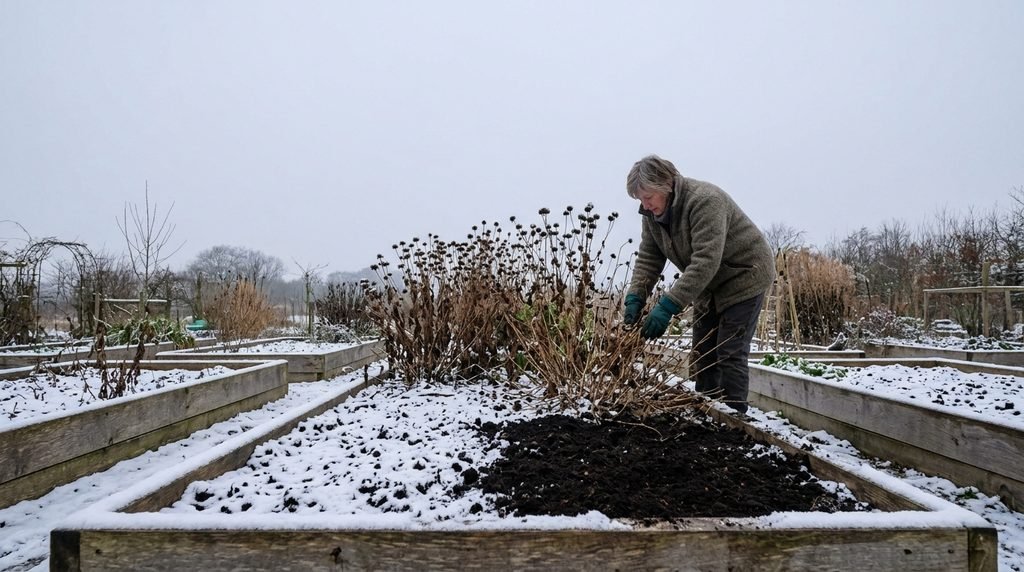
Use this order:
1. Protect living plants that are genuinely vulnerable.
2. Prevent freeze-related infrastructure damage.
3. Protect exposed roots and soil.
4. Secure structures and equipment.
5. Perform cosmetic cleanup last.
That order becomes particularly valuable when an unexpected early freeze arrives.
A Simple Decision Tree for Winterization Timing
Ask these questions in order:
Is a damaging frost or freeze approaching?
→ Yes: Protect vulnerable plants now.
→ No: Continue preparation.
Are plants still actively growing?
→ Yes: Avoid unnecessary dormant-season interventions.
→ No: Continue appropriate winter preparation.
Has the soil cooled?
→ Yes: Consider appropriate winter mulch.
→ No: Don’t rush heavy winter insulation.
Will temperatures remain below freezing?
→ Yes: Prepare hoses, exposed water systems and vulnerable containers.
→ No: Continue monitoring.
Are you dealing with a tender or newly planted specimen?
→ Yes: Give it individual attention.
→ No: Normal winter preparation may be sufficient.
This simple decision process is often more useful than following a fixed autumn schedule.
Final Winterization Timing Checklist
Before winter arrives, make sure you’ve answered these questions:
- Do I know my approximate first-frost period?
- Have I checked the current forecast?
- Which plants are frost-sensitive?
- Which plants are newly planted?
- Which containers need special protection?
- Has the soil cooled enough for winter mulching?
- Have I addressed exposed roots?
- Have I removed problematic diseased material?
- Are hoses disconnected and drained?
- Is the irrigation system prepared?
- Are garden structures ready for winter weather?
- Are frost-protection materials accessible?
- Have I avoided unnecessary pruning or cleanup?
If you can answer those questions confidently, you’re much less likely to be caught by the first serious cold spell.
Final Thoughts
There is no single day when every garden should be winterized.
The best timing comes from combining your local frost pattern, short-term weather forecasts, plant behavior, soil conditions and the specific vulnerabilities of your garden.
Start observing early. Prepare gradually. Protect tender plants before damaging frost arrives. Apply winter mulch after the soil has cooled rather than simply following the calendar. Prepare water systems before freezing weather. And don’t mistake a tidy garden for a properly winterized garden.
Most importantly, give yourself a buffer.
The ideal winterization day isn’t the night before the first hard freeze. It’s the period when you can look at the forecast, recognize what is coming and calmly finish the jobs that matter.
That is what good winter preparation looks like: not reacting to winter, but getting the garden ready before winter has the chance to cause damage.


One Comment on “When to Winterize Your Garden: The Best Timing for Winter Preparation”