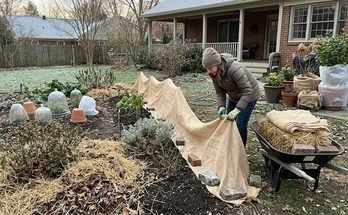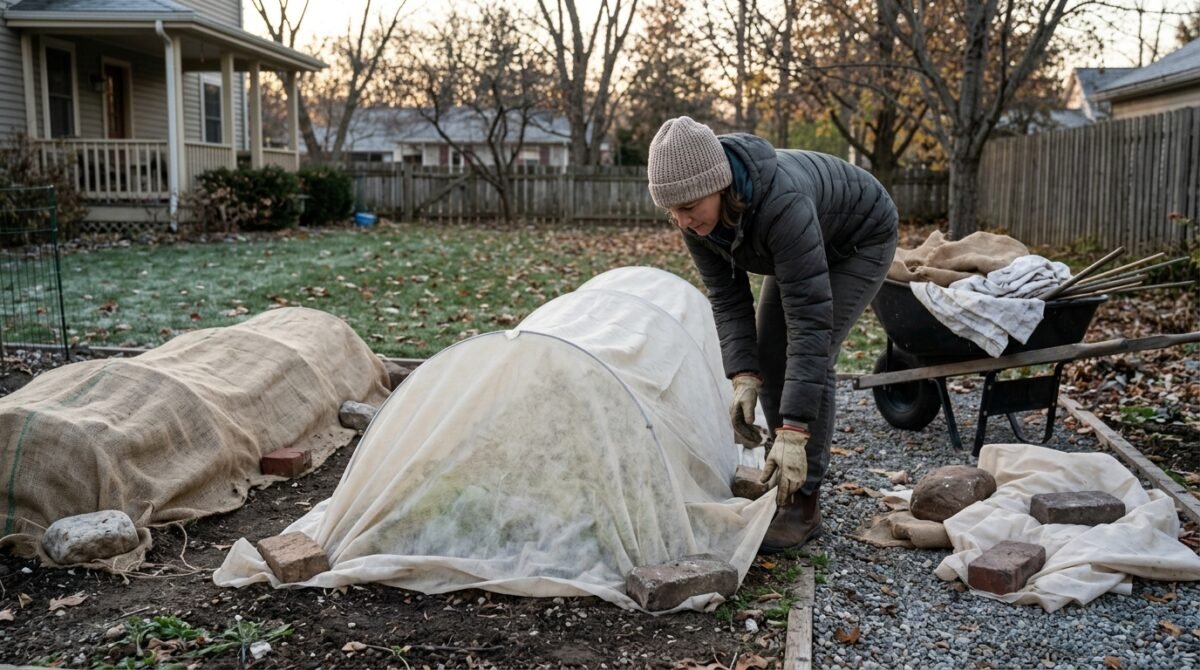
Covering plants before frost is one of the simplest ways to protect a vulnerable garden during a cold night. However, the results depend on more than simply placing a sheet over the foliage. The material you choose, how you position it, whether it reaches the ground, and when you remove it can all affect how well the cover works.
A poorly secured cover may blow away overnight. Plastic resting directly against leaves can increase the risk of cold injury, while leaving a cover in place through a sunny day may cause overheating.
The good news is that you do not need an expensive setup for most home gardens. With suitable materials and a few practical precautions, you can cover many vulnerable plants effectively.
This guide explains how to cover plants for frost, which materials to use, how to support and secure them, and what to do when temperatures rise again.
Why Covering Plants Helps Prevent Frost Damage
On a clear night, plant surfaces and the surrounding ground lose heat. Their temperatures can fall enough for frost to form, even when the official air temperature is slightly above freezing.
A suitable plant cover helps reduce heat loss and can trap some of the warmth released by the soil. Its effectiveness depends on the material, how well it is installed, wind conditions, moisture, and how far temperatures fall.
A cover does not generate heat by itself. Instead, it helps preserve some of the warmth already present around the plant.
This distinction matters because a lightweight cover may be enough during a light frost but offer insufficient protection during a prolonged, severe freeze.
1. Choose the Right Material for Frost Protection
Not every household fabric or garden covering provides the same level of protection. Choose a material that suits the expected conditions and the size of the plant.
Frost cloth or garden fleece
Purpose-made frost cloth, also called horticultural fleece or row cover, is often the most convenient option.
It is generally lightweight, easy to drape over plants, and available in different thicknesses. Some products allow light and air to pass through, making them useful for temporary or, depending on the product, longer periods of protection.
Before buying, check the manufacturer’s guidance for the temperature protection the material is designed to provide. Actual results will vary with installation and weather conditions.
Old bedsheets and lightweight blankets
Clean, dry cotton sheets and lightweight blankets can work for temporary protection during a mild frost.
They are particularly useful when you need to cover a few individual plants and do not have purpose-made frost cloth available.
Choose fabric that is light enough to avoid crushing delicate stems. Heavy blankets may become much heavier when wet and can bend or break branches.
Household fabrics are not automatically suitable for every freeze. They may offer limited protection during severe or prolonged cold, especially if they become wet or are exposed to strong winds.
Burlap
Burlap can be useful for protecting certain shrubs and small plants from wind exposure and harsh conditions.
However, it is not always the best choice for covering delicate foliage directly. Its suitability depends on the plant, the structure of the covering, and the duration of protection.
Use supports when needed and avoid wrapping plants so tightly that the material damages branches.
Plastic sheeting
Plastic sheeting can be useful as an outer weather barrier in a properly supported structure, but it requires care.
Do not lay plastic directly on plant leaves or stems. Foliage touching the plastic can become especially vulnerable to cold injury.
If you use plastic, keep it separated from the plant with a frame or other suitable supports. Remove it or open the structure when temperatures rise to prevent overheating and excessive moisture buildup.
For most home gardeners, purpose-made frost cloth is easier to manage for routine overnight protection.
Quick material comparison
| Covering Material | Best Use | Main Precaution |
|---|---|---|
| Horticultural frost cloth | Routine protection for vulnerable plants | Follow product guidance for expected temperatures |
| Lightweight cotton sheet | Temporary protection during mild frost | Secure it and remove it when conditions improve |
| Lightweight blanket | Temporary protection for suitable plants | Avoid excessive weight and wet fabric |
| Burlap | Selected shrubs and plants needing shelter | Avoid tight wrapping and damaging foliage |
| Plastic sheeting | Supported outer barrier | Never allow it to rest directly against foliage |
No material guarantees protection during every freeze. The plant’s hardiness and the severity and duration of the cold remain important.
2. Prepare the Plant Before Covering It
Before putting a cover in place, inspect the plant and the area around it.
Remove objects that could damage foliage, and check whether the plant needs watering. If the soil is dry and the plant would normally benefit from watering, water it during the day when conditions allow.
Do not saturate poorly drained soil simply because frost is forecast.
For tall or spreading plants, identify branches that may need gentle support. Do not force brittle stems into a smaller shape just to make the cover fit.
If the plant is in a movable container, consider relocating it to a suitable sheltered area instead of covering it outdoors.
Preparation should take only a few minutes, but it helps prevent avoidable damage during installation.
3. Install Supports to Keep the Cover Off the Foliage
One of the most common frost-covering mistakes is allowing the material to rest heavily on the plant.
Direct contact is not equally harmful in every situation, and lightweight frost cloth is sometimes designed for direct contact with crops. However, unsupported material can press against tender leaves, trap moisture, or damage branches. Plastic should always be kept away from foliage.
Supports are particularly useful for:
- Young vegetable plants
- Tender annuals
- Flowering plants with delicate stems
- Small shrubs with fragile branches
- Plants that need a plastic outer barrier
How to support a cover
- Place suitable stakes around the plant without damaging major roots.
- Position hoops or a frame so the cover can span the plant.
- Check that the support is stable and tall enough.
- Drape the material gently over the structure.
- Ensure the fabric does not sag excessively onto delicate growth.
For a small plant, a few stakes may be enough. For a row of vegetables, hoops can create a simple tunnel.
The structure does not need to be elaborate. It simply needs to hold the cover in place without putting unnecessary pressure on the plant.
4. Extend the Cover Down to the Ground
For many frost-protection setups, extending the cover to the ground is more effective than covering only the upper leaves.
The ground can release stored heat during the night. A cover that reaches the surrounding soil helps retain some of that warmth around the plant.
When installing a cover:
- Drape it over the entire plant or support structure.
- Extend the edges down toward the ground.
- Secure the perimeter to limit gaps.
- Avoid leaving large openings where cold air can readily enter.
- Keep the cover from damaging stems at ground level.
Where practical, use the ground around the plant as the boundary of the covered area rather than tying the material tightly around the stem.
For raised beds or rows, extend the material over the crop and secure both sides. Make sure the cover is long and wide enough before temperatures drop.
A cover that ends halfway down the plant may still reduce some exposure, but it will generally be less effective at trapping ground warmth than a properly positioned cover that reaches the soil.
5. Secure the Cover Against Wind
Even a good covering material cannot help if it blows away during the night.
Check the local forecast for wind as well as temperature. Wind can lift fabric, expose plants, and put pressure on frames.
Useful ways to secure a cover include:
- Weighing the edges with suitable objects
- Using garden pegs designed for covers
- Clipping fabric to a stable frame
- Securing row-cover edges along the bed
- Checking that stakes and hoops are firmly positioned
Avoid placing heavy objects directly on delicate stems or branches. The weight should hold down the edge of the covering, not crush the plant.
If strong winds are expected, inspect the setup before nightfall. A few minutes spent checking loose edges can prevent the cover from becoming ineffective halfway through the night.
6. Cover Plants at the Right Time
Install frost covers before the plant and surrounding soil have lost too much heat.
For a typical overnight frost warning, prepare and cover vulnerable plants in the late afternoon or early evening, before temperatures fall significantly.
Do not wait until frost has formed on the leaves.
There is no single exact installation time for every location. The forecast, local temperature, wind, and type of cover all matter.
A useful routine is:
- Check the overnight forecast earlier in the day.
- Gather and inspect the covers.
- Move containers and prepare supports.
- Install covers before the coldest part of the night.
- Secure the edges and check for gaps.
If a sudden frost warning arrives late, cover the most vulnerable plants as soon as it is safe and practical to do so.
7. Should You Water Before Covering Plants?
Watering and covering can complement each other, but watering should be based on soil moisture and plant needs.
Moist soil can store and release heat differently from very dry soil, potentially helping maintain slightly warmer conditions around the root zone. However, watering is not a substitute for a cover, and it cannot reliably protect tender plants during a severe freeze.
Follow these guidelines:
- Check the soil before watering.
- Water dry soil during the day if appropriate.
- Allow excess water to drain.
- Avoid waterlogging.
- Do not create icy conditions on paths or working areas.
- Do not assume that wet foliage or wet covers provide extra protection.
For ordinary home gardening, suitable covers and careful timing are more straightforward than attempting specialized irrigation-based frost protection.
8. Know When to Remove the Cover
Leaving a cover on for too long can create new problems.
As the air warms and sunlight reaches the garden, temperatures beneath a cover may rise significantly. Plants may also receive insufficient light or ventilation if the material remains in place unnecessarily.
For most temporary overnight covers, inspect conditions in the morning and remove or open the cover once the immediate frost danger has passed and temperatures are suitable.
A practical removal routine:
- Check the current temperature and forecast.
- Wait until the immediate freezing conditions have eased.
- Remove or open the cover when daytime warming begins.
- Avoid pulling fabric roughly across delicate stems.
- Allow the plant to receive light and airflow.
- Dry and store reusable covers before the next use.
If freezing conditions are expected to continue through the day, do not remove protection solely because the sun has risen. Use the forecast and the plant’s cold tolerance to decide when it is safe.
Some row covers are designed to remain over crops for longer periods. In those cases, follow the product instructions and monitor temperature, light, moisture, and ventilation.
9. What to Do if the Cover Becomes Wet
Moisture is not automatically a problem, but a heavy, waterlogged cover can become difficult to support and may damage plants.
If fabric becomes wet:
- Check whether its weight is bending stems or branches.
- Make sure the support structure remains stable.
- Secure loose sections.
- Remove or replace the material when conditions permit if it is too heavy.
- Dry reusable covers before storing them.
Avoid shaking or pulling heavy wet fabric across fragile foliage.
If the covering is plastic, check for trapped condensation and overheating when temperatures rise. Open or remove the outer layer as appropriate.
The right response depends on the material and weather conditions, so inspect the setup rather than assuming every wet cover must be handled the same way.
10. Covering Different Types of Garden Plants
The same basic principles apply across the garden, but the installation method may change depending on the plant’s size and growth habit.
Small vegetable plants
Use hoops or stakes to keep the material from crushing leaves. Extend the cover to the ground and secure both sides of the row.
Flowering annuals
For small groups, lightweight frost cloth may be sufficient during a mild frost. Avoid bending delicate flowers or stems when positioning the cover.
Young shrubs
Use a frame or carefully positioned supports if the branches are fragile. The cover should provide shelter without tightly compressing the plant.
Container plants
If the plant is portable, moving it to a suitable sheltered location may be easier than constructing a cover. If it must remain outdoors, protect the foliage and consider the vulnerability of the container’s root zone separately.
Large plants
Large shrubs and small trees may require a purpose-built frame or a different protection strategy. Do not pull branches together forcefully or use a cover that could become dangerous in strong wind.
The key is to adapt the setup to the plant rather than forcing every plant into the same covering method.
Common Mistakes When Covering Plants for Frost
Covering only the top
A cover that leaves most of the plant exposed provides limited protection. Extend it around the plant and down toward the ground where practical.
Using a cover that is too heavy
Wet or heavy materials can bend stems and damage branches. Choose a suitable weight and provide supports.
Letting plastic touch the leaves
Direct contact can increase the risk of cold injury. Keep plastic separated from foliage.
Forgetting to secure the edges
Loose material may lift in wind and expose the plant. Secure the perimeter before nightfall.
Waiting until frost appears
Installing covers before the coldest part of the night gives the setup a better chance of retaining warmth.
Leaving covers on through warm, sunny weather
Plants may overheat or receive insufficient light and airflow. Remove or adjust temporary covers when conditions allow.
Assuming one cover works for every temperature
A lightweight sheet may help during a mild frost but may not provide sufficient protection during a prolonged freeze. Check the plant’s hardiness and the covering material’s guidance.
A Quick Checklist for Covering Plants for Frost
Before nightfall:
- Check the overnight forecast.
- Identify the most vulnerable plants.
- Select suitable, dry covering material.
- Prepare stakes, hoops, or other supports.
- Install the cover before temperatures fall significantly.
- Keep plastic away from foliage.
- Extend the cover down toward the ground where practical.
- Secure the edges against wind.
- Check that the structure will not crush the plant.
- Plan to inspect and remove or open temporary covers when conditions improve.
Frequently Asked Questions
Can I use a bedsheet to cover plants for frost?
Yes, a clean, lightweight bedsheet can provide temporary protection during a mild frost. Secure it so wind cannot remove it, and avoid allowing heavy fabric to crush delicate growth. A bedsheet may not provide enough protection during a severe or prolonged freeze.
Is it better for a frost cover to touch the plant?
It depends on the material. Some lightweight horticultural fabrics are designed for direct contact, but supports can reduce pressure and improve coverage. Plastic should not rest directly on foliage because contact can increase the risk of cold injury.
Should a frost cover touch the ground?
For many overnight frost-protection setups, extending the cover down to the ground helps retain warmth released by the soil. Secure the edges where practical and avoid tightly binding the material around the plant’s stem.
When should I cover plants before frost?
For a typical overnight frost, prepare covers in advance and install them before temperatures fall significantly, usually in the late afternoon or early evening. Follow the local forecast and do not wait for visible frost to form.
Can I leave frost cloth on plants all winter?
Some horticultural covers are designed for extended use, but ordinary temporary covers should be removed or opened when conditions improve. Follow the manufacturer’s instructions and monitor light, ventilation, moisture, and daytime temperatures.
Will covering plants protect them during a hard freeze?
It may reduce damage, but protection is not guaranteed. The result depends on how low temperatures fall, how long freezing conditions last, the plant’s hardiness, and the material and installation. Extremely cold conditions may require moving susceptible plants to a suitable protected location.
Final Thoughts
Knowing how to cover plants for frost is about more than choosing a piece of fabric. Effective protection depends on using a suitable material, supporting it properly, extending it toward the ground, securing it against wind, and removing or adjusting it when temperatures rise.
For most home gardeners, a supply of horticultural frost cloth, a few simple supports, and a reliable weather-checking routine are enough to make overnight protection easier.
Prepare before the cold arrives, pay particular attention to vulnerable plants, and inspect your setup before going indoors. These small habits can reduce avoidable frost damage and help your garden make it through cold nights in better condition.