Preparing a lawn for winter is an important part of seasonal garden maintenance. As temperatures fall and grass growth slows, the way you care for your lawn can influence how well it handles cold weather and how quickly it recovers when spring arrives.
Winterizing your lawn doesn’t mean doing every possible lawn-care task. It means completing the right maintenance before winter, then adjusting your routine as grass enters dormancy.
This guide focuses specifically on preparing the lawn itself for winter, rather than winterizing garden beds, raised beds, sprinklers, or individual plants.
Why Winterize Your Lawn?
A lawn experiences several stresses during winter, including cold temperatures, reduced sunlight, moisture fluctuations, and, in some regions, snow and ice.
Proper preparation can help you:
- Enter winter with healthier grass
- Reduce problems caused by compacted soil
- Minimize winter lawn damage
- Improve spring recovery
- Reduce disease and debris problems
- Make spring lawn maintenance easier
The right approach depends heavily on your grass type and local climate. Cool-season and warm-season grasses have different growth cycles, so avoid following a winter routine designed for a completely different climate.
1. Identify Your Grass Type
Before making major changes to your lawn-care routine, determine whether you have a cool-season or warm-season grass.
Cool-Season Grasses
Cool-season grasses generally grow most actively during cooler parts of the year.
Depending on your region, examples may include:
- Kentucky bluegrass
- Perennial ryegrass
- Tall fescue
- Fine fescue
These grasses can remain active during parts of fall and may benefit from appropriate late-season maintenance before winter dormancy.
Warm-Season Grasses
Warm-season grasses generally grow best during warmer weather and become dormant as temperatures fall.
Examples include:
- Bermuda grass
- Zoysia grass
- St. Augustine grass
- Centipede grass
Because their seasonal growth patterns differ, winter lawn care should be adapted accordingly.
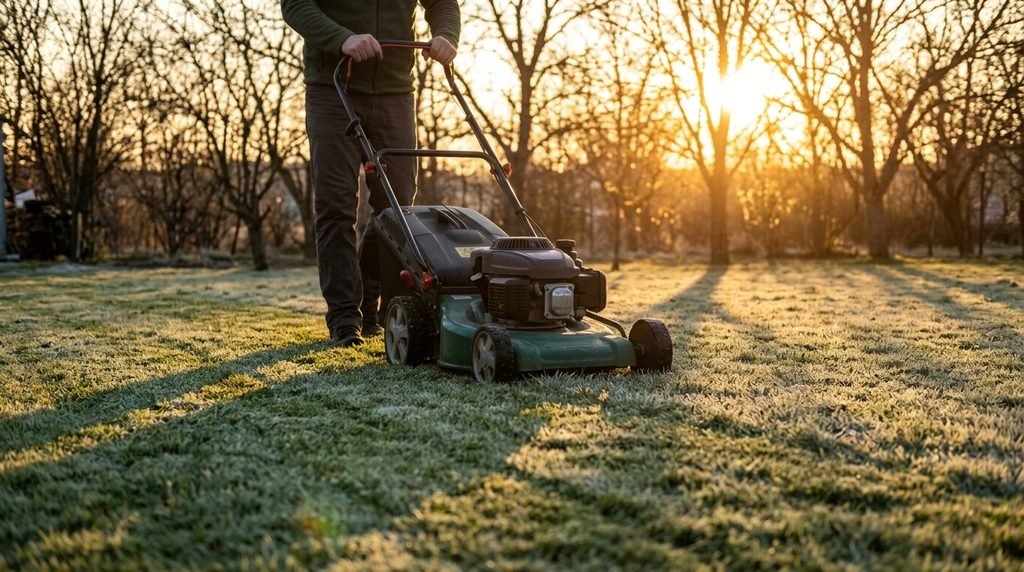
2. Keep Mowing Until Growth Slows
Don’t stop mowing simply because the calendar says winter is approaching.
Continue mowing while the grass is actively growing, gradually adjusting your mowing routine as growth slows.
The final mowing should leave the grass at an appropriate height for its type.
Avoid cutting the lawn extremely short simply because you want to finish mowing for the season.
Excessively short grass can be stressed by cold, while excessively tall grass may become more vulnerable to matting and certain winter problems.
The ideal final mowing height depends on your grass species and local conditions.
3. Remove Leaves and Debris
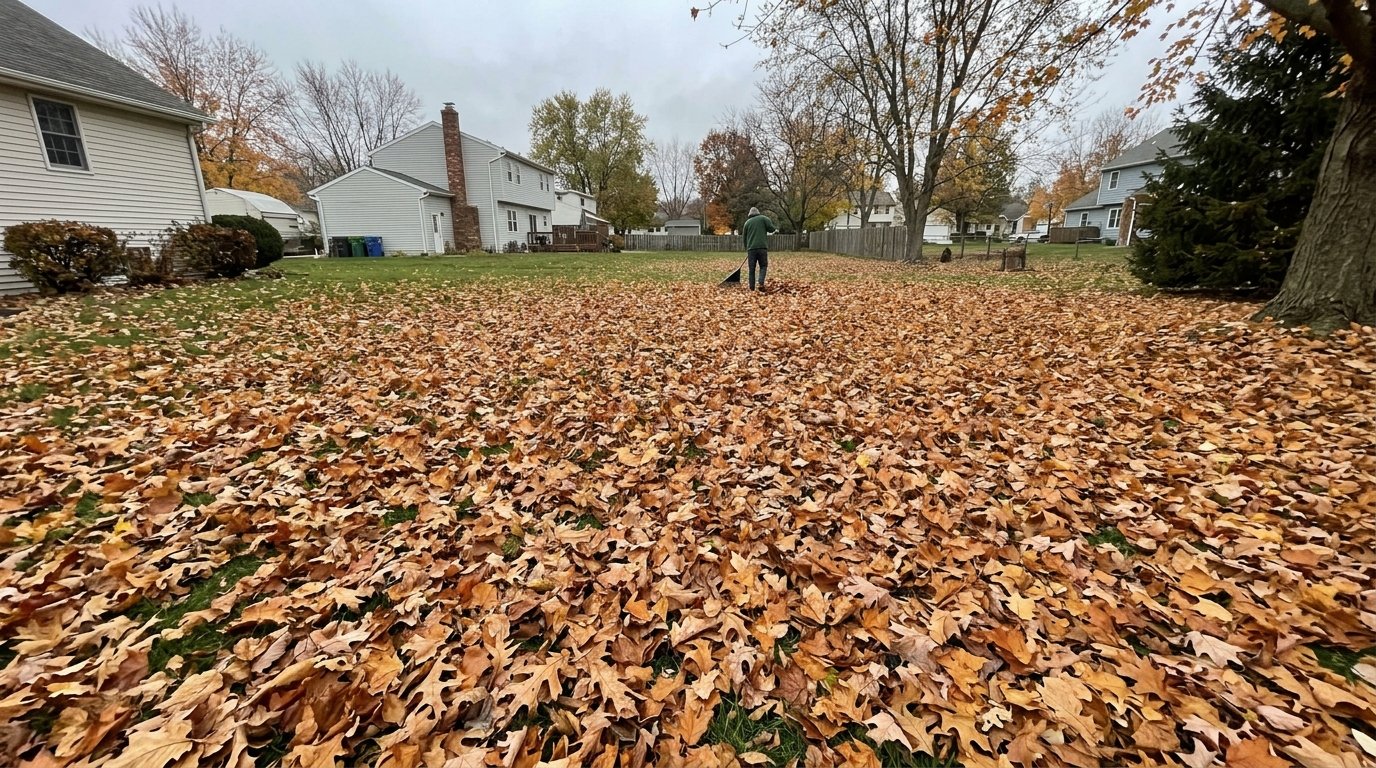
Fallen leaves are a normal part of autumn, but thick layers shouldn’t remain on the lawn for extended periods.
Heavy leaf coverage can:
- Block light
- Restrict air movement
- Hold excess moisture
- Smother grass
- Create conditions favorable to certain lawn diseases
Regularly rake, mulch, or remove leaves according to your lawn-care system.
If your mower is designed for leaf mulching, finely shredded leaves may sometimes be incorporated into the lawn rather than removed entirely.
The key is avoiding a thick, persistent layer that covers the grass.
4. Aerate Compacted Lawns When Appropriate
Compacted soil can restrict the movement of air, water, and nutrients around grass roots.
If your lawn experiences heavy foot traffic or has noticeably compacted soil, aeration may be beneficial.
However, timing matters.
Cool-season lawns are generally aerated during periods when the grass can actively recover, while warm-season lawns have a different ideal timing.
Don’t automatically aerate immediately before winter just because you’re preparing the lawn for cold weather.
The goal is to aerate when the grass can benefit from it—not simply to add another task to your winter checklist.
5. Address Bare and Thin Areas
Autumn can be an appropriate time to repair thin areas in some cool-season lawns.
Look for:
- Bare patches
- Thin grass
- Areas damaged by foot traffic
- Areas affected by previous drought
- Spots where grass failed to establish
If your grass type and local climate make fall overseeding appropriate, address these areas before the grass enters winter dormancy.
Warm-season lawns generally follow a different seasonal schedule, so don’t assume fall overseeding is appropriate for every lawn.
6. Fertilize According to Grass Type
Fertilizer can play a role in seasonal lawn care, but more fertilizer isn’t automatically better.
If your grass needs nutrients, use a fertilizer program appropriate for:
- Grass species
- Soil condition
- Local climate
- Time of year
Cool-season lawns may have different late-season nutritional requirements from warm-season lawns.
Avoid applying fertilizer simply because winter is approaching.
A soil test can provide useful information about nutrient availability and help prevent unnecessary applications.
7. Keep the Lawn Free From Excessive Traffic
As grass becomes less active during winter, avoid unnecessary stress.
Repeated traffic over dormant or wet grass can contribute to:
- Compaction
- Damaged crowns
- Muddy areas
- Poor spring recovery
This is especially important when the soil is saturated or frozen.
If you have areas that receive frequent winter foot traffic, consider using designated paths rather than repeatedly walking across the lawn.
8. Manage Water Before Winter
Water requirements change as temperatures fall.
Don’t continue watering your lawn according to a summer schedule simply because that is what your irrigation system is programmed to do.
As growth slows, water demand generally changes.
The appropriate winter watering routine depends on:
- Grass type
- Climate
- Rainfall
- Soil
- Temperature
- Whether the lawn is dormant
In areas where winter conditions are dry, occasional watering may still be necessary.
In wet climates, additional irrigation may be unnecessary.
The goal is to provide appropriate moisture without keeping the soil unnecessarily saturated.
9. Watch for Lawn Diseases
Cool, wet conditions can create favorable environments for certain lawn diseases.
Before winter, inspect the lawn for unusual:
- Discoloration
- Patches
- Rings
- Mold-like growth
- Persistent dead areas
Don’t automatically treat every discoloration with a fungicide.
Many lawn problems have different causes, including:
- Poor drainage
- Nutrient deficiencies
- Insects
- Compaction
- Improper mowing
- Drought stress
Identifying the underlying cause is more useful than treating symptoms blindly.
10. Check Drainage
Good drainage is important throughout winter.
Walk around the property after significant rainfall and look for areas where water consistently collects.
Persistent standing water can indicate:
- Compacted soil
- Poor grading
- Blocked drainage
- Low areas
- Excessive irrigation
If one section of the lawn repeatedly becomes saturated, investigate the cause rather than simply reducing mowing or fertilizer.
Winter is a good time to note drainage problems that may need attention during the next growing season.
11. Don’t Leave Grass Clippings in Heavy Clumps
Grass clippings normally break down naturally when they are distributed across the lawn.
Problems occur when thick clumps remain concentrated in particular areas.
Large piles of wet grass can block light and air from reaching the turf underneath.
If you’re mowing during late autumn, make sure clippings are distributed appropriately.
12. Prepare Your Lawn Equipment
Once mowing becomes less frequent, inspect the equipment you’ll be storing.
Clean grass and debris from:
- Mower deck
- Wheels
- Handles
- Cutting components
- Other accessible areas
Check the equipment manufacturer’s recommended storage procedure.
For gasoline-powered equipment, fuel and engine storage requirements should be handled separately according to the manufacturer’s instructions.
This article focuses on winterizing your lawn, while detailed mower storage and winterization belong to a dedicated lawn-mower article.
What Should You Avoid When Winterizing Your Lawn?
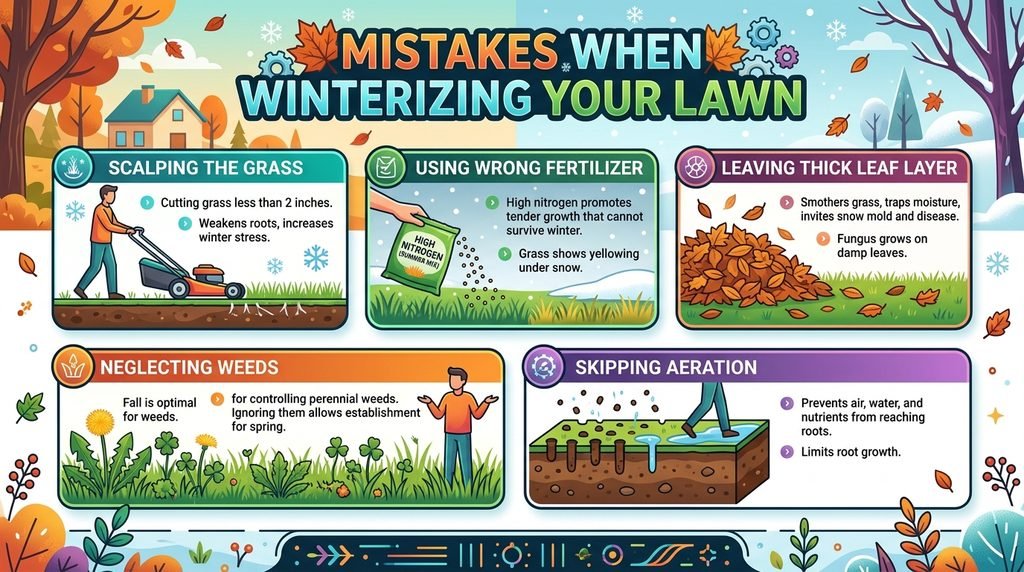
Several common mistakes can create unnecessary problems.
Don’t Cut the Grass Extremely Short
Scalping the lawn isn’t a substitute for proper winter preparation.
Don’t Leave Thick Layers of Leaves
A heavy layer can block light and airflow.
Don’t Overwater
Lower temperatures usually mean that summer watering schedules need adjustment.
Don’t Fertilize Without a Reason
Apply nutrients based on grass requirements and soil conditions rather than a calendar alone.
Don’t Aerate at the Wrong Time
Aeration is most useful when the grass can recover afterward.
Don’t Ignore Compaction
Repeated traffic can make already-compacted areas worse.
Don’t Treat Problems Without Identifying Them
Brown patches and discoloration can have many causes.
Winterizing Your Lawn Checklist
Before winter arrives, review your lawn:
- Identify your grass type.
- Continue mowing while grass is actively growing.
- Adjust the final mowing height appropriately.
- Remove or mulch excessive fallen leaves.
- Check for compacted areas.
- Aerate when appropriate for your grass type and climate.
- Repair suitable bare or thin areas.
- Apply fertilizer only when appropriate.
- Adjust watering as temperatures change.
- Check for drainage problems.
- Inspect the lawn for disease or unusual damage.
- Reduce unnecessary winter foot traffic.
- Clean and prepare lawn equipment.
Final Thoughts
Winterizing your lawn is less about completing a long checklist and more about understanding what your grass needs as its growth cycle changes.
Keep mowing while necessary, manage fallen leaves, address suitable thin areas, monitor moisture, and avoid unnecessary stress on dormant or slowing turf.
Most importantly, adapt your approach to your grass type and climate. A winter lawn-care routine that works well for a cool-season lawn may not be appropriate for warm-season grass.
With sensible preparation before winter, your lawn can enter the dormant period in better condition and be ready for proper spring recovery.