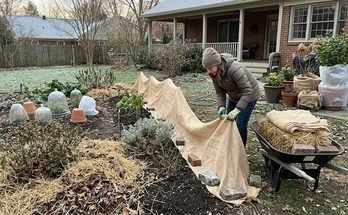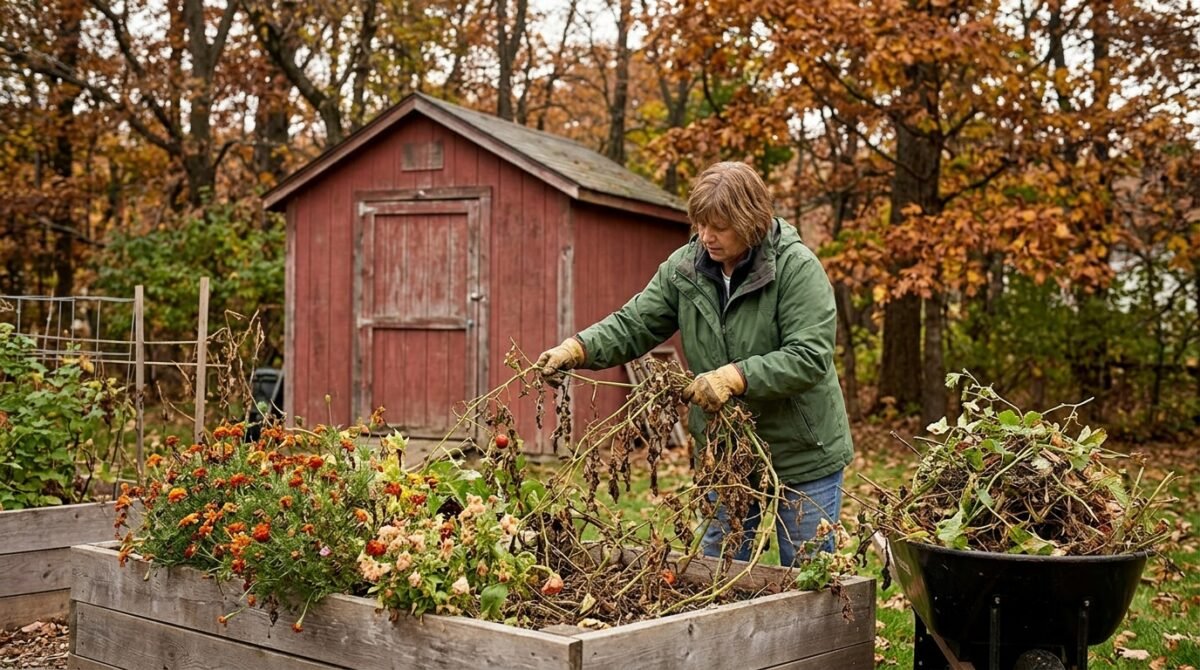
A backyard garden can contain much more than planting beds. It may include containers, flower borders, vegetable areas, small structures, garden tools, paths, outdoor furniture, and plants growing along fences or walls.
As winter approaches, preparing all of these elements together makes the garden easier to manage and reduces the risk of avoidable cold-weather damage.
Winterizing a backyard garden does not mean stripping the entire space bare. The goal is to clean up problems, protect the soil and plants, secure garden structures, organize equipment, and prepare the backyard for winter conditions.
This guide focuses on the whole backyard garden rather than going deeply into lawn care, individual plant protection, or irrigation-system winterization.
What Does It Mean to Winterize a Backyard Garden?
Winterizing a backyard garden means preparing the garden and its growing areas for the cold season before severe winter weather arrives.
A complete backyard winterization routine may include:
- Inspecting garden beds
- Removing diseased plant material
- Controlling weeds
- Protecting exposed soil
- Applying appropriate mulch
- Checking containers
- Securing garden structures
- Protecting vulnerable plants where necessary
- Organizing tools and equipment
- Checking drainage
- Preparing paths and garden access
- Removing fragile outdoor items
- Completing a final pre-winter inspection
The exact amount of work depends on your climate, garden size, and what you grow.
A sheltered backyard in a mild winter climate may need relatively little preparation. A garden exposed to freezing temperatures, heavy snow, strong winds, or repeated freeze-thaw cycles may require considerably more attention.
When Should You Winterize a Backyard Garden?
The best time to begin is generally after the main growing season has slowed down but before the ground becomes consistently frozen.
Instead of relying entirely on a calendar date, watch the garden itself.
Useful signals include:
- Most annual plants have finished producing.
- Perennials are beginning to enter dormancy.
- Leaves are falling.
- Night temperatures are consistently dropping.
- The first significant frost is approaching.
- The soil is still workable.
- Heavy winter weather has not yet arrived.
Do not try to complete every task during one weekend if conditions are still changing. Start with cleanup and organization, then complete final protection as winter approaches.
1. Walk Through the Entire Backyard
Begin with an inspection rather than immediately grabbing the rake.
Walk around the entire garden and look at:
- Flower beds
- Vegetable beds
- Containers
- Trees and shrubs
- Fences and walls
- Trellises
- Raised beds
- Garden paths
- Compost areas
- Tool storage
- Outdoor structures
- Watering equipment
- Decorative features
Look for anything that could become a winter problem.
Pay particular attention to loose structures, standing water, exposed roots, diseased foliage, broken containers, and objects that could be blown around during storms.
A complete inspection helps you create a winterization plan before you start removing things.
2. Remove Diseased Plant Material
Healthy plant material and diseased material should not be treated the same way.
Remove plants or debris showing significant signs of disease when leaving them in the garden could allow problems to persist.
Pay attention to:
- Severely diseased leaves
- Rotten stems
- Infected flowers
- Persistent fungal symptoms
- Diseased fallen debris
Dispose of problematic material appropriately rather than automatically adding it to a home compost pile.
At the same time, do not turn the entire backyard into a sterile space.
Healthy stems, seed heads, and some natural plant debris can provide winter habitat and visual structure.
3. Remove Finished Annuals
Once annual flowers and vegetables have completely finished producing, decide which plants should be removed.
Remove:
- Dead annual plants
- Rotten vegetation
- Unwanted volunteer plants
- Excessive dead material
But before removing every seed head, consider whether you want certain plants to self-seed or provide food for birds and other wildlife.
A selective cleanup is usually better than automatically clearing every plant from the backyard.
4. Control Weeds Before Winter
Established weeds are easier to deal with while the soil remains workable.
Clear weeds from:
- Garden beds
- Around perennial plants
- Along paths
- Around containers
- Beneath shrubs
- Around garden structures
Focus especially on weeds that have already produced seeds.
However, avoid excessive digging simply to make every bed look perfectly clean.
Repeatedly disturbing the soil can damage its structure and expose additional weed seeds.
Remove the weeds you can reasonably control, then protect the soil with appropriate mulch.
5. Protect the Soil
Bare soil is vulnerable to erosion, temperature fluctuations, and moisture loss.
Where appropriate, protect exposed garden soil with organic material or mulch.
Benefits can include:
- More stable soil temperatures
- Reduced erosion
- Protection for shallow roots
- Better moisture retention
- Reduced winter weed pressure
Potential materials include:
- Shredded leaves
- Compost
- Clean straw
- Pine needles
- Suitable garden mulch
The right material depends on your garden and climate.
Do not pile thick, wet material against plant crowns or stems. Winter protection should protect the root zone without creating a persistently damp environment around the plant base.
6. Check the Backyard’s Drainage
Winter preparation should always include a drainage inspection.
Walk around the backyard after rainfall and identify areas where water remains for too long.
Look for:
- Persistent puddles
- Saturated planting beds
- Water collecting around containers
- Blocked drainage paths
- Compacted soil
- Low spots receiving runoff
Poor drainage can become especially problematic during freeze-thaw cycles.
Do not assume that adding more mulch will solve a drainage problem. If water cannot leave the root zone, the underlying cause needs attention.
7. Inspect Raised Beds and Garden Borders
If your backyard contains raised beds, inspect their structure before winter weather arrives.
Check:
- Loose boards
- Rotting materials
- Damaged corners
- Shifting soil
- Cracks
- Exposed roots
- Drainage
Repair structural problems while the weather is still suitable for outdoor work.
If the raised bed is healthy, protect the soil rather than leaving it exposed.
The same principle applies to permanent garden borders and edging. Loose edging can shift when soil freezes and thaws.
8. Check Containers Around the Backyard
Containers deserve special attention because their roots are surrounded by a relatively small volume of soil.
Inspect each pot for:
- Blocked drainage holes
- Cracks
- Excessive moisture
- Unstable positioning
- Wind exposure
- Plants requiring special protection
Where appropriate, move vulnerable containers into sheltered locations.
Good options may include:
- A protected wall
- A covered but suitable outdoor area
- A sheltered corner
- A location protected from prevailing winds
Do not move every container indoors automatically. Some plants require cold dormancy or outdoor conditions to remain healthy.
9. Secure Trellises, Stakes, and Supports
Backyard gardens often contain structures that become vulnerable during winter.
Inspect:
- Trellises
- Plant cages
- Stakes
- Arches
- Climbing supports
- Fences used for plants
- Temporary frames
Check whether they can withstand:
- Strong winds
- Snow accumulation
- Ice
- Heavy wet vegetation
Remove temporary structures that are no longer needed, and reinforce or secure permanent ones where appropriate.
A weak trellis can become a much bigger problem when winter wind or snow puts additional weight on it.
10. Prepare Trees and Shrubs Without Overdoing It
Trees and shrubs are an important part of many backyard gardens, but winterization does not mean giving every woody plant a heavy protective covering.
Start with inspection.
Look for:
- Broken branches
- Dead limbs
- Damage
- Exposed roots
- Poorly supported young plants
- Signs of stress
Remove clearly damaged material when appropriate, but avoid unnecessary major pruning simply because winter is approaching.
For plants that require specific winter protection, follow their individual requirements rather than applying the same method across the entire backyard.
11. Check the Garden’s Wind Exposure
Wind can cause significant winter stress even when temperatures are not extremely low.
Walk around the backyard and identify areas where wind is strongest.
Consider:
- Open corners
- Gaps between structures
- Exposed fences
- Raised areas
- Plants positioned away from natural shelter
Existing structures such as walls, fences, hedges, and buildings can create useful microclimates.
Use those features intelligently when positioning vulnerable containers or plants.
Avoid creating unnecessary barriers that restrict airflow or trap excessive moisture.
12. Prepare Garden Paths and Access Areas
Winter maintenance is easier when you can safely reach the garden.
Inspect:
- Garden paths
- Steps
- Paving
- Edges
- Gates
- Access routes
Remove leaves and debris where they could become slippery or obstruct drainage.
Make sure garden tools, storage areas, and frequently accessed beds remain reasonably accessible.
You do not want to discover in the middle of winter that the only route to a garden bed is blocked by stored equipment or unstable materials.
13. Organize Garden Tools
Clean and store tools before winter.
Inspect:
- Pruners
- Shovels
- Spades
- Rakes
- Hoes
- Hand tools
- Hoses
- Garden carts
Remove soil and plant residue from tools, dry them properly, and store them somewhere protected from prolonged moisture.
Sharp cutting tools should be kept clean and protected.
A small amount of maintenance now can make the first gardening jobs of spring much easier.
14. Deal With Garden Hoses and Watering Equipment
Watering equipment should not be ignored during winter preparation.
Where freezing conditions are expected:
- Disconnect hoses where appropriate.
- Drain water from equipment.
- Store hoses in a protected location.
- Check fittings for damage.
- Protect equipment that is not designed for freezing conditions.
For permanent irrigation systems, winterization may require a separate procedure based on the system design and local climate.
This backyard winterization guide does not replace detailed irrigation-system preparation.
15. Secure Outdoor Garden Items
Anything lightweight or unstable can become a problem during winter storms.
Inspect:
- Empty pots
- Garden decorations
- Plant labels
- Lightweight furniture
- Compost containers
- Temporary fencing
- Loose coverings
- Small garden structures
Store, secure, or remove items that could be moved by strong wind.
A clean backyard is not only easier to manage—it also reduces the number of objects that can damage plants or structures during severe weather.
16. Review Your Compost Area
If you maintain a backyard compost system, inspect it before winter.
Make sure:
- The container is stable.
- Excessively wet material is not accumulating.
- Diseased plant material has not been added.
- The pile has reasonable airflow.
- The surrounding area is accessible.
Do not treat diseased plant debris as ordinary compost material simply because it came from your garden.
17. Identify Plants That Need Extra Protection
After completing general backyard preparation, identify the plants that need special attention.
These may include:
- Recently planted specimens
- Container plants
- Plants in exposed locations
- Plants at the edge of their hardiness range
- Plants particularly sensitive to winter conditions
This is where a backyard-wide strategy should transition into plant-specific care.
Do not cover the entire garden unnecessarily.
Instead:
General preparation for everything + targeted protection for vulnerable plants.
That approach is usually easier to manage and uses materials more efficiently.
18. Do a Final Soil Moisture Check
Before the ground freezes, check whether important garden areas have adequate moisture.
Pay particular attention to:
- Newly planted areas
- Containers
- Sheltered beds
- Plants beneath overhangs
- Areas that have experienced a dry autumn
If soil is already saturated, do not add more water.
The objective is to avoid sending plants into winter severely dry without creating waterlogged conditions.
Backyard Garden Winterization Checklist
Use this checklist for the final preparation:
- Inspect the entire backyard garden
- Remove diseased plant material
- Remove finished annuals where appropriate
- Control established weeds
- Decide which healthy stems and seed heads should remain
- Protect exposed soil
- Check drainage
- Inspect raised beds and edging
- Check containers and drainage holes
- Move vulnerable containers where appropriate
- Secure trellises and plant supports
- Inspect trees and shrubs
- Check wind-exposed areas
- Clean garden paths and access points
- Clean and store tools
- Drain and store suitable watering equipment
- Secure lightweight outdoor items
- Check the compost area
- Identify plants needing individual winter protection
- Check soil moisture
- Complete a final pre-winter inspection
Common Backyard Winterization Mistakes
Clearing Everything From the Garden
A completely bare garden is not necessarily a healthier garden.
Better approach: Remove diseased and unnecessary material while retaining appropriate healthy stems, seed heads, and habitat.
Applying Too Much Mulch
Excess mulch can trap moisture and bury plant crowns.
Better approach: Use a sensible layer focused on protecting the soil and root zone.
Ignoring Drainage
Winter moisture can create serious problems when water cannot leave the root zone.
Better approach: Inspect drainage before adding additional winter protection.
Leaving Weak Structures in Place
Snow and wind can turn a weak trellis or support into a hazard.
Better approach: Secure, reinforce, or remove unstable structures before winter.
Treating Every Plant the Same
A container plant, established shrub, perennial, and recently planted specimen may have very different winter requirements.
Better approach: Use general garden preparation first, followed by targeted plant-specific protection.
Forgetting Garden Equipment
Tools, hoses, pots, and decorations can deteriorate when left exposed.
Better approach: Clean, drain, store, or secure equipment before severe weather arrives.
A Simple Backyard Winterization Workflow
If you want to complete the work efficiently, use this sequence:
1. Inspect
Walk through the entire backyard and identify risks.
2. Clean
Remove disease, weeds, finished plants, and unnecessary debris.
3. Protect
Mulch suitable areas and protect exposed soil.
4. Secure
Check structures, containers, supports, paths, and outdoor equipment.
5. Organize
Clean and store tools, hoses, pots, and seasonal materials.
6. Identify
Determine which plants require additional individual protection.
7. Final Check
Review drainage, moisture, structural stability, and winter readiness.
This order reduces unnecessary backtracking and helps ensure that important tasks are not forgotten.
What a Winter-Ready Backyard Garden Should Look Like
A winter-ready backyard does not need to look completely empty or perfectly manicured.
You may still see:
- Mulched garden beds
- Dormant plants
- Standing perennial stems
- Seed heads
- Protected containers
- Secure trellises
- Stored garden tools
- Clear access paths
That is a healthy sign.
The objective is not to eliminate every trace of the growing season. It is to leave the backyard stable, protected, organized, and ready for winter conditions.
Final Thoughts
Winterizing a backyard garden is easiest when you think about the entire outdoor space rather than focusing on individual plants one at a time.
Start with a complete inspection, remove unhealthy material, control weeds, protect the soil, check drainage, secure structures, organize equipment, and then identify the plants that require additional protection.
You do not need to over-prepare every part of the backyard. Good winterization is about matching the level of protection to the actual risks.
A well-prepared backyard should be easier to maintain during level of protection to the actual risks.
A well-prepared backyard should be easier to maintain during winter and ready for a smoother transition when the next growing season begins.