Winterizing an organic garden is not about clearing everything away before the first freeze. It is about preparing the soil, plants, and growing space for winter while working with natural materials and organic gardening principles.
A good organic winterization routine can protect soil from erosion, reduce unnecessary disturbance, support beneficial organisms, and leave the garden in better condition for the next growing season.
The important distinction is that organic winterization still requires good judgment. Natural does not automatically mean appropriate. A thick layer of wet plant debris, for example, can create problems just as easily as an unsuitable synthetic material.
The goal is to use practical, organic-compatible methods while considering your climate, soil, plants, drainage, and the condition of the garden.
What Does It Mean to Winterize an Organic Garden?
Winterizing an organic garden means preparing the garden for cold-weather conditions using methods and materials that fit an organic gardening approach.
This can include:
- Removing diseased plant material
- Protecting soil with organic mulch
- Adding suitable compost or organic matter
- Minimizing unnecessary soil disturbance
- Managing weeds before winter
- Leaving appropriate plant residues in place
- Supporting beneficial garden organisms
- Protecting vulnerable plants with suitable materials
- Preparing containers and structures
- Checking drainage and soil moisture
Organic winterization is not simply about avoiding synthetic products. It is also about maintaining a healthy relationship between the soil, plants, microorganisms, and the wider garden ecosystem.
When Should You Winterize an Organic Garden?
The ideal timing depends on your climate and the plants growing in the garden.
In general, begin the main preparation after the growing season has slowed but while the soil remains workable.
Useful signals include:
- Annual crops are finishing.
- Perennials are entering dormancy.
- Leaves are falling.
- Temperatures are consistently declining.
- The first significant frost is approaching.
- The soil is still workable.
- Heavy winter weather has not yet arrived.
Avoid rushing to remove healthy vegetation simply because temperatures have dropped.
Many organic gardens benefit from allowing some natural plant material to remain through winter.
1. Start With a Garden Assessment
Before removing anything, walk through the entire garden.
Identify:
- Healthy plants
- Diseased plants
- Finished annuals
- Perennial plants that can remain standing
- Weeds
- Bare soil
- Areas with poor drainage
- Plants requiring additional protection
- Compost and mulch resources
- Structures that need securing
This first assessment helps prevent unnecessary cleanup.
Instead of asking, “What can I remove?”, ask:
“What should remain, what should be removed, and what should be protected?”
That small change in thinking is particularly useful in an organic garden.
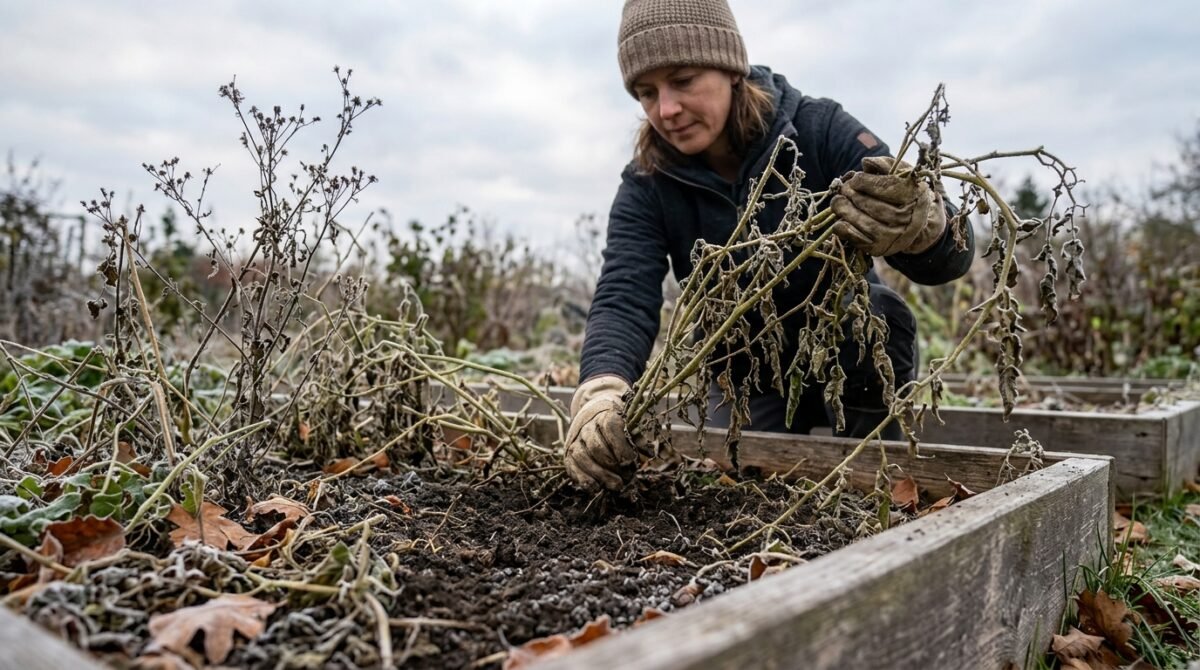
2. Remove Diseased Plant Material
Organic gardening does not mean leaving every piece of plant material in place.
Disease management remains important.
Remove plant material that is clearly diseased, especially where leaving it could contribute to future problems.
This may include:
- Severely infected leaves
- Rotten stems
- Diseased fruits
- Infected flowers
- Heavily affected crop residues
Do not automatically place questionable diseased material into a home compost pile.
A backyard compost pile may not consistently reach the temperatures and conditions required to destroy every plant pathogen.
When in doubt, separate problematic material from healthy garden residues.
3. Leave Healthy Plant Material Where It Has Value
One of the advantages of an organic approach is that not every piece of plant material needs to become waste.
Healthy stems, seed heads, and selected plant residues can provide:
- Winter habitat
- Food for wildlife
- Protection for soil
- Organic material
- Visual structure
- Shelter for beneficial organisms
However, leaving everything untouched is not automatically beneficial.
The right approach is selective retention.
Leave It When:
- The material is healthy.
- It does not create a disease problem.
- It provides useful habitat.
- It protects the soil.
- It does not interfere with winter maintenance.
Remove It When:
- It is diseased.
- It is rotten.
- It is likely to spread unwanted pests or pathogens.
- It is blocking drainage.
- It creates a practical winter hazard.
Organic gardening is not about avoiding cleanup. It is about making cleanup purposeful.
4. Minimize Unnecessary Soil Disturbance
Avoid turning or digging the entire garden simply because winter is approaching.
Excessive soil disturbance can:
- Break down soil structure
- Expose dormant weed seeds
- Disturb soil organisms
- Increase erosion
- Reduce protective surface cover
Instead, disturb only the areas that genuinely require attention.
If soil needs amendment, incorporate appropriate organic matter according to the needs of the bed rather than mechanically turning everything.
For many established beds, maintaining soil cover and minimizing disturbance is a more practical winter strategy.
5. Use Compost Thoughtfully
Finished compost can be useful when preparing an organic garden for winter.
Depending on the condition of the soil and the garden, a suitable amount of mature compost can help maintain organic matter and support soil health.
However, compost should not be treated as a universal winter fertilizer.
Avoid applying large quantities simply because winter is approaching.
Before using compost, consider:
- Is it fully mature?
- Does the soil actually need additional organic matter?
- Is it free from problematic contaminants?
- Is it appropriate for the particular bed?
- Could excessive application contribute to nutrient imbalance?
A smaller amount of well-finished compost used for a specific purpose is generally more useful than applying compost indiscriminately.
6. Protect the Soil With Organic Mulch
Organic mulch is one of the most practical tools for winterizing an organic garden.
Suitable materials can include:
- Shredded leaves
- Straw
- Compost
- Pine needles
- Chopped plant material
- Other clean organic mulch appropriate for the garden
Mulch can help:
- Reduce soil erosion
- Moderate temperature fluctuations
- Protect shallow roots
- Retain soil moisture
- Reduce winter weed pressure
- Add organic material as it breaks down
The material you choose should match the conditions of the garden.
7. Don’t Assume More Mulch Is Better
One of the most common organic winterization mistakes is applying too much natural material.
A thick layer of wet leaves or other organic debris can:
- Hold excessive moisture
- Smother low-growing plants
- Create conditions favorable to rot
- Restrict airflow
- Become difficult to remove in spring
The goal is not to bury the garden.
Apply a practical layer that protects the soil while leaving plant crowns and sensitive stems appropriately clear.
A Better Approach
Use enough mulch to solve a problem, not enough mulch simply because it is available.
8. Choose Mulch According to the Garden
Different organic materials have different characteristics.
| Organic Material | Useful Winter Role | Consideration |
|---|---|---|
| Shredded leaves | Soil cover and organic matter | Whole leaves can become a dense mat |
| Straw | Insulation and soil protection | Use clean material without unwanted seeds where possible |
| Compost | Soil cover and organic matter | Use mature compost and avoid excessive application |
| Pine needles | Light, breathable surface cover | Availability varies |
| Chopped plant material | Surface protection and organic matter | Avoid diseased material |
There is no single “best” organic mulch for every garden.
Climate, availability, drainage, plant type, and soil condition all matter.
9. Manage Fallen Leaves Intelligently
Leaves are one of the easiest organic materials to use in a garden, but they need to be managed properly.
Instead of removing every leaf from the property, consider how each area can use them.
You can:
- Shred leaves and use them as mulch.
- Add suitable leaves to compost.
- Use a thin layer around established plants.
- Leave some natural leaf litter in appropriate habitat areas.
Avoid allowing thick layers of wet leaves to remain over plants that are sensitive to prolonged moisture.
The Practical Rule
Keep useful leaves, process them when necessary, and remove excessive or problematic accumulations.
10. Manage Weeds Without Unnecessary Chemical Dependence
Fall is a useful time to remove established weeds before they produce additional seeds.
In an organic garden, practical approaches may include:
- Hand pulling
- Hoeing when soil conditions are suitable
- Shallow cultivation where appropriate
- Mulching
- Removing seed-producing weeds
- Maintaining soil cover
Avoid disturbing the soil more than necessary.
A weed that is already producing seeds can create a much larger problem for the following season.
Prioritize weeds that are mature, persistent, or positioned where they can spread easily.
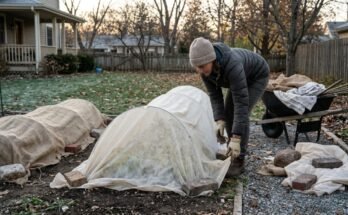
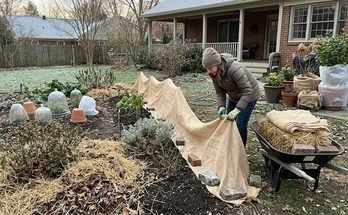
11. Use Organic-Compatible Winter Protection
Some plants may need additional protection from winter exposure.
Depending on the plant and climate, suitable materials may include:
- Straw
- Leaves
- Burlap
- Natural-fiber materials
- Wooden supports
- Organic mulch
However, do not assume that a material is appropriate simply because it is natural.
Consider whether the material:
- Retains too much moisture
- Blocks airflow
- Can become heavy when wet
- Could damage the plant
- Can be removed easily when conditions improve
Organic winter protection should still be practical.
12. Protect the Root Zone Rather Than Covering Everything
Winter protection is often more effective when focused around the root zone rather than covering the entire plant unnecessarily.
A suitable mulch layer can protect the soil around established plants while allowing stems and crowns to remain appropriately exposed.
Do not pile organic material tightly against plant crowns.
A constantly damp crown can create problems even when the surrounding soil is healthy.
The goal is root-zone protection without creating a wet pocket around the plant base.
13. Encourage Beneficial Winter Habitat
An organic garden can continue supporting wildlife and beneficial organisms through winter.
Consider retaining appropriate:
- Seed heads
- Hollow stems
- Fallen leaves
- Small areas of natural debris
- Undisturbed soil surfaces
These can provide shelter or food for insects and other garden wildlife.
However, habitat management should not override disease control.
If plant material is diseased, remove it rather than leaving it in place solely for habitat purposes.
Healthy habitat and responsible sanitation can coexist.
14. Think About Soil Biology
Healthy soil contains a complex community of microorganisms and other organisms.
Winter preparation should avoid unnecessary practices that severely disturb this environment.
Practical steps include:
- Maintaining soil cover
- Adding mature organic matter when appropriate
- Avoiding unnecessary digging
- Preventing erosion
- Maintaining reasonable moisture
- Avoiding excessive compaction
You do not need to manipulate the soil constantly to keep it healthy.
Sometimes the best winter preparation is simply leaving healthy soil covered and undisturbed.
15. Check Soil Moisture Before the Ground Freezes
Organic soil management still requires attention to moisture.
Before the ground freezes, inspect the garden.
If autumn has been unusually dry, some plants may benefit from appropriate watering before the soil freezes.
However, do not water automatically.
Avoid adding water when:
- Soil is already saturated.
- Heavy rainfall is expected.
- Drainage is poor.
- The ground is frozen.
- Water cannot drain away from the root zone.
Good winter soil moisture means balanced moisture—not constantly wet soil.
16. Improve Drainage Naturally Where Possible
Organic gardening does not mean ignoring structural soil problems.
If a garden remains waterlogged, identify why.
Potential causes include:
- Compacted soil
- Poor grading
- Heavy clay
- Blocked drainage
- Water flowing from another part of the property
- Low-lying planting areas
Organic matter can contribute to long-term soil improvement, but it should not be viewed as an instant cure for every drainage problem.
Address persistent drainage issues based on their actual cause.
17. Winterize Containers With Organic-Friendly Materials
Containers need particular attention because their roots have less insulating soil around them.
Where appropriate:
- Group containers.
- Move vulnerable pots to sheltered areas.
- Check drainage holes.
- Protect exposed containers from strong winds.
- Use suitable natural insulating materials where necessary.
Do not assume that every container should be wrapped or moved indoors.
The correct approach depends on the plant and the winter conditions in your area.
18. Prepare Organic Garden Structures
Inspect the physical parts of the garden before winter.
Check:
- Trellises
- Stakes
- Raised beds
- Wooden borders
- Compost bins
- Cold frames
- Garden arches
- Plant supports
Repair weak structures before snow, ice, and strong winds place additional stress on them.
If a temporary structure is no longer needed, removing it may be better than leaving it exposed to winter weather.
19. Keep Organic Garden Inputs Organized
Winter is a good time to organize materials you will need next season.
Check your supplies of:
- Compost
- Mulch
- Seeds
- Natural plant supports
- Garden ties
- Hand tools
- Containers
Keep stored materials dry and protected from contamination.
Good organization means you will not need to buy unnecessary materials when spring arrives.
Organic Winterization: What to Use and What to Avoid
Organic gardening is sometimes misunderstood as meaning that anything natural is automatically safe.
A more useful approach is to consider the function and condition of each material.
| Use | Practical Approach |
|---|---|
| Soil protection | Use suitable organic mulch |
| Soil improvement | Apply mature compost when needed |
| Winter habitat | Retain healthy stems and seed heads |
| Disease management | Remove infected material |
| Weed control | Combine physical removal and soil cover |
| Container protection | Use plant-appropriate methods |
| Structure protection | Secure or remove weak supports |
| Drainage | Address the underlying problem |
The central principle is simple:
Organic does not mean careless. Natural materials still need to be used correctly.
Common Organic Winterization Mistakes
1. Leaving Diseased Material Because It Is “Natural”
Not all plant residue belongs in the garden.
Better approach: Remove clearly diseased material and handle it appropriately.
2. Applying Excessive Organic Mulch
A huge pile of leaves or straw can create moisture and airflow problems.
Better approach: Use a controlled layer appropriate for the soil and plants.
3. Digging the Entire Garden
Turning every bed can unnecessarily disturb soil structure and organisms.
Better approach: Disturb only the areas that genuinely need attention.
4. Adding Compost Without Checking Soil Needs
More compost is not always better.
Better approach: Use mature compost when there is a clear reason to add organic matter.
5. Treating All Plant Debris as Waste
Healthy plant residues can provide habitat and organic material.
Better approach: Separate healthy material from diseased or problematic debris.
6. Assuming Every Natural Material Is Suitable
A natural material can still retain too much moisture, contain unwanted seeds, or create other problems.
Better approach: Evaluate material quality and suitability before using it.
7. Ignoring Drainage
Organic mulch cannot fix a permanently waterlogged bed.
Better approach: Identify and address the actual drainage problem.
An Organic Garden Winterization Checklist
Before winter arrives, work through this list:
- Inspect the entire garden
- Identify diseased plant material
- Remove serious disease sources
- Remove finished annuals where appropriate
- Retain suitable healthy stems and seed heads
- Control mature weeds
- Minimize unnecessary soil disturbance
- Check whether compost is actually needed
- Protect exposed soil with suitable organic mulch
- Avoid excessive mulch around plant crowns
- Manage fallen leaves appropriately
- Check soil moisture
- Inspect drainage
- Protect vulnerable plants where necessary
- Check containers
- Secure garden structures
- Organize tools and organic garden materials
- Complete a final pre-winter inspection
A Simple Organic Winterization Workflow
If you want to keep the process straightforward, follow this order:
1. Assess
Walk through the garden and identify what needs attention.
2. Separate
Distinguish healthy plant material from diseased or problematic material.
3. Clean Selectively
Remove disease, weeds, and unnecessary debris without stripping the entire garden.
4. Protect the Soil
Apply appropriate organic mulch and maintain soil cover.
5. Support Soil Health
Use mature compost or other organic amendments only where they serve a clear purpose.
6. Protect Vulnerable Areas
Give additional attention to exposed plants, containers, and recently planted areas.
7. Secure the Garden
Check structures, drainage, tools, and stored materials.
8. Leave the Garden Ready for Spring
Finish with a final inspection rather than continuing to disturb the garden unnecessarily.
How to Winterize an Organic Garden With Fewer Inputs
One of the advantages of a thoughtful organic approach is that winterization does not need to become an expensive process.
You can often make use of resources already available in the garden.
For example:
Fallen leaves → mulch or compost
Healthy plant residues → habitat or organic material
Mature compost → soil support where appropriate
Existing walls and fences → shelter from wind
Healthy soil cover → protection from erosion
The objective is not to buy a product for every winter problem.
First look at what the garden already provides, then add materials only when they solve a genuine problem.
Final Thoughts
Winterizing an organic garden is fundamentally about protecting the soil, managing plant material responsibly, and preparing the garden without unnecessary disturbance.
Remove disease, control mature weeds, use organic mulch intelligently, apply compost when there is a genuine need, and preserve healthy plant material that can support soil life and winter habitat.
At the same time, remember that organic does not mean leaving everything untouched. A healthy organic garden still requires sanitation, drainage management, structural maintenance, and sensible protection.
The best winter preparation is balanced: less waste, less unnecessary disturbance, and more deliberate use of the resources already available in the garden.