The morning after the first frost can make a garden look far worse than it actually is.
Leaves may be limp, darkened, or completely collapsed, while some plants may show surprisingly little damage. Before you start cutting everything back or pulling plants out, give the garden time to thaw and assess what actually happened.
Knowing what to do after the first frost can help you save plants that are still viable, harvest crops before they deteriorate, and avoid unnecessary cleanup.
This guide focuses on the immediate steps to take after the first frost.
What to Do After the First Frost
After the first frost, your priorities should be:
- Let frozen plants thaw naturally.
- Inspect the garden carefully.
- Identify obvious frost damage.
- Avoid unnecessary pruning.
- Harvest usable tender crops.
- Check containers and protected plants.
- Remove only material that genuinely needs removal.
- Check the forecast for another cold night.
- Protect plants that are still worth saving.
- Record what you learn for future seasons.
The most important rule is simple: don’t make permanent decisions based on a garden you have not properly inspected yet.
1. Let the Garden Thaw First
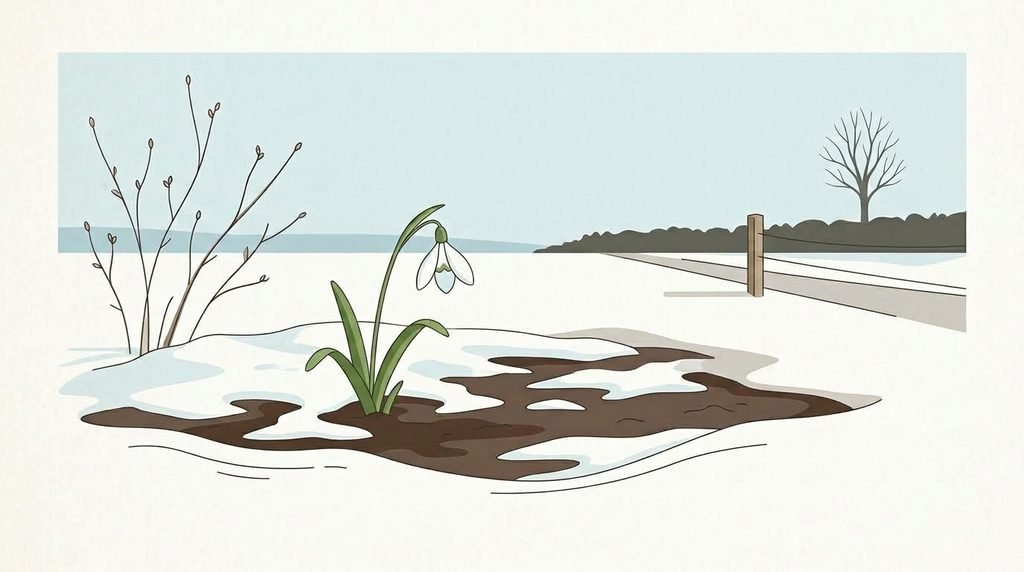
If the temperature is still below freezing, resist the temptation to handle damaged plants.
Frozen leaves and stems are fragile. Touching, bending, or pruning them while they are frozen can cause additional physical damage and make it harder to determine the true extent of the frost injury.
Wait until temperatures rise and the plants have thawed naturally.
Once the foliage has softened again, you can make a much more useful assessment.
A good routine is:
Wait for thawing → inspect later in the day → decide what needs attention.
2. Walk Through the Entire Garden
Don’t judge the condition of the garden from a single plant.

Walk through each area and inspect:
- Vegetable beds
- Flower beds
- Containers
- Recently planted plants
- Young seedlings
- Tender annuals
- Exposed areas
- Plants that were covered overnight
Look at the leaves, stems, growing points, flowers, and fruit.
Also pay attention to location. A plant growing beside a wall or in a sheltered corner may have experienced considerably less cold than one in an open part of the yard.
Your garden can contain several small microclimates, so frost damage may be surprisingly uneven.
3. Learn What Frost Damage Looks Like
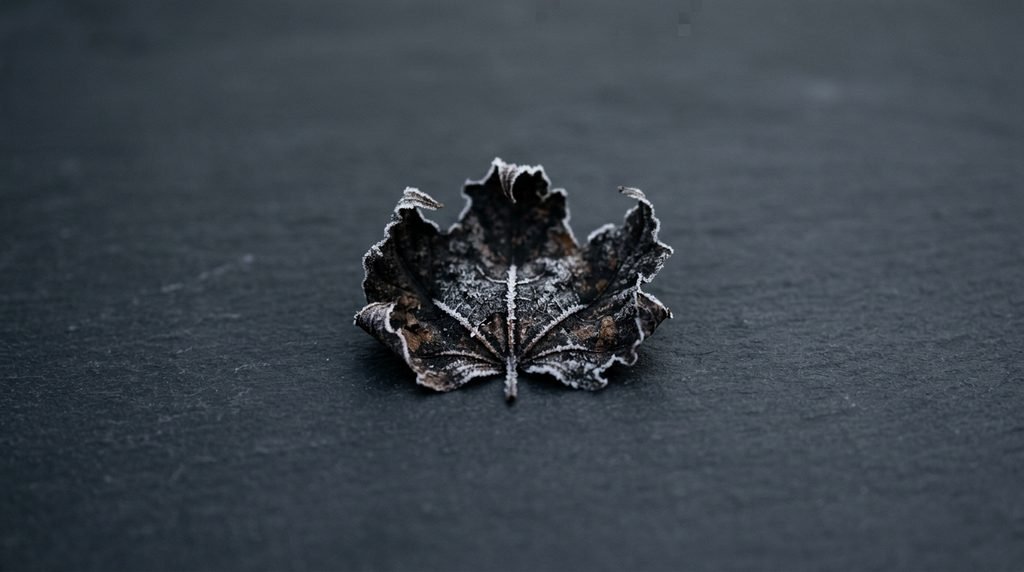
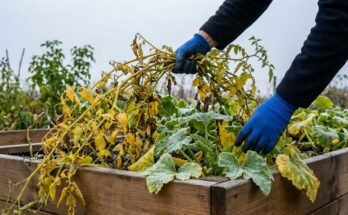
Frost-damaged foliage can look:
- Limp
- Water-soaked
- Dark green
- Blackened
- Brown
- Translucent
- Wilted
- Papery after drying
Stems may also become soft, discolored, or collapsed.
However, damaged leaves don’t necessarily mean the entire plant is dead.
Instead of asking whether the plant “looks dead,” check for healthy tissue elsewhere.
Look at:
- Lower sections of the stem
- Growing points
- New buds
- Protected foliage
- Main stems
- The base of the plant
If healthy tissue remains, there may still be a good reason to leave the plant in place.
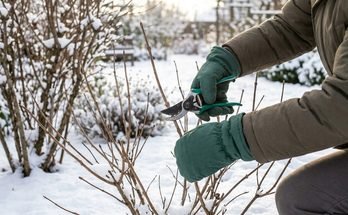
4. Don’t Prune Everything Immediately
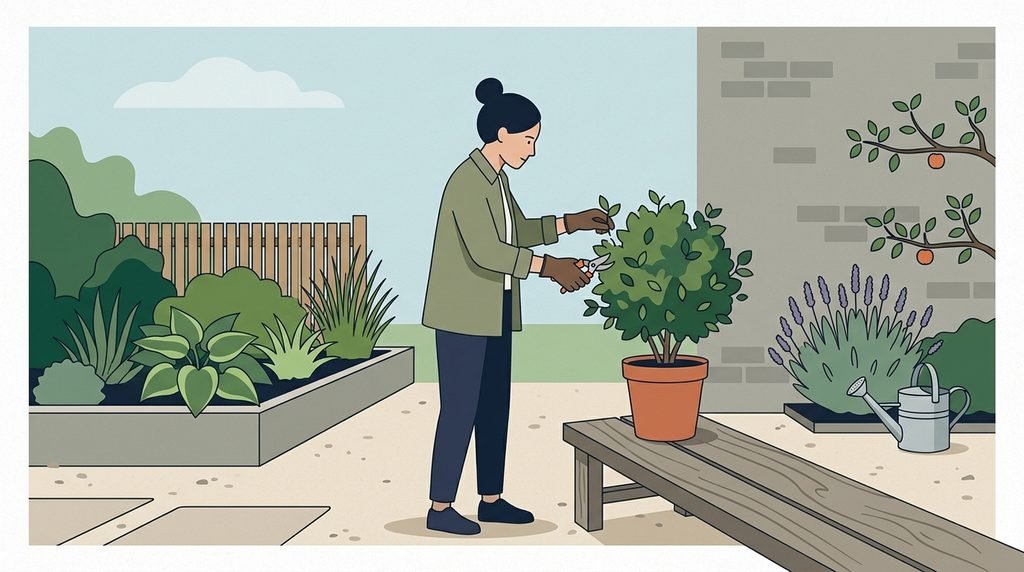
One of the easiest mistakes to make after the first frost is to start cutting away every brown leaf and damaged stem.
In many cases, waiting is better.
The full extent of frost damage may not be obvious immediately. Some plants can recover from damage to their leaves or outer growth when their roots and growing points remain healthy.
Leaving damaged material temporarily can also help protect living tissue from additional cold.
That doesn’t mean damaged material should remain indefinitely. Once you know what is dead and what needs to be removed, cleanup becomes much easier.
A practical rule
Assess first. Prune second.
If a plant has a reasonable chance of recovering, give it some time before making an irreversible decision.
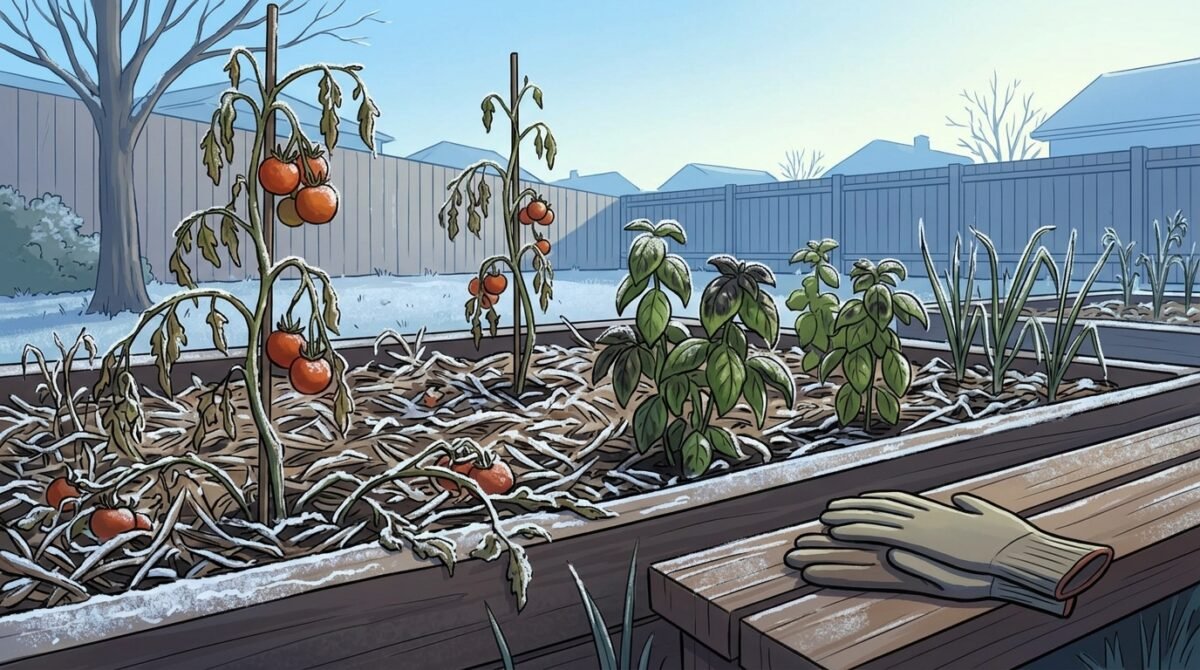
5. Check Tender Vegetable Crops
Tender vegetables deserve special attention after the first frost.
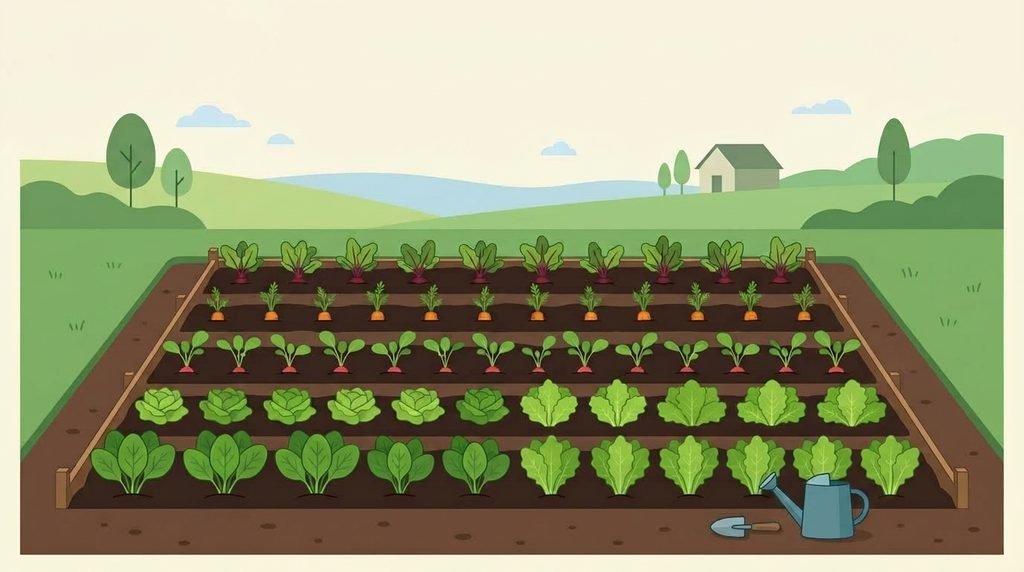
Inspect crops such as:
- Tomatoes
- Peppers
- Beans
- Cucumbers
- Summer squash
- Basil
- Other warm-season crops
If edible portions are still in good condition, harvest them rather than leaving them exposed to another cold night.
Don’t assume that every crop needs to be removed immediately, though. Some vegetables are considerably more cold-tolerant than others.
The important question is whether the part you intend to eat remains in good condition.
Frost-damaged foliage does not automatically mean every edible portion has been ruined.
6. Inspect Plants That Were Covered
If you protected plants from the first frost, check the protection as well as the plants underneath it.
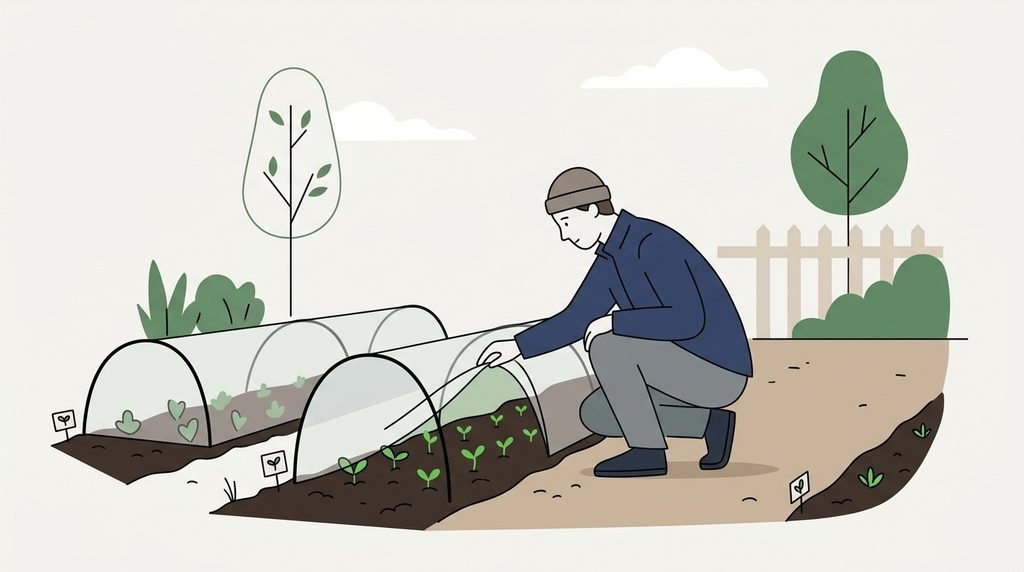
Look for:
- Covers that shifted overnight
- Exposed foliage
- Torn fabric
- Broken supports
- Loose edges
- Plants pressed against the covering
- Moisture or condensation
A cover that moved in the wind may have protected one section of a plant while leaving another exposed.
If another frost is forecast, repair the setup while you have daylight rather than waiting until the next evening.
7. Give Container Plants Extra Attention
Container plants can be particularly vulnerable to sudden temperature drops.
Unlike plants growing directly in the ground, their root systems are surrounded by a relatively small amount of soil. The container can therefore cool rapidly during cold weather.
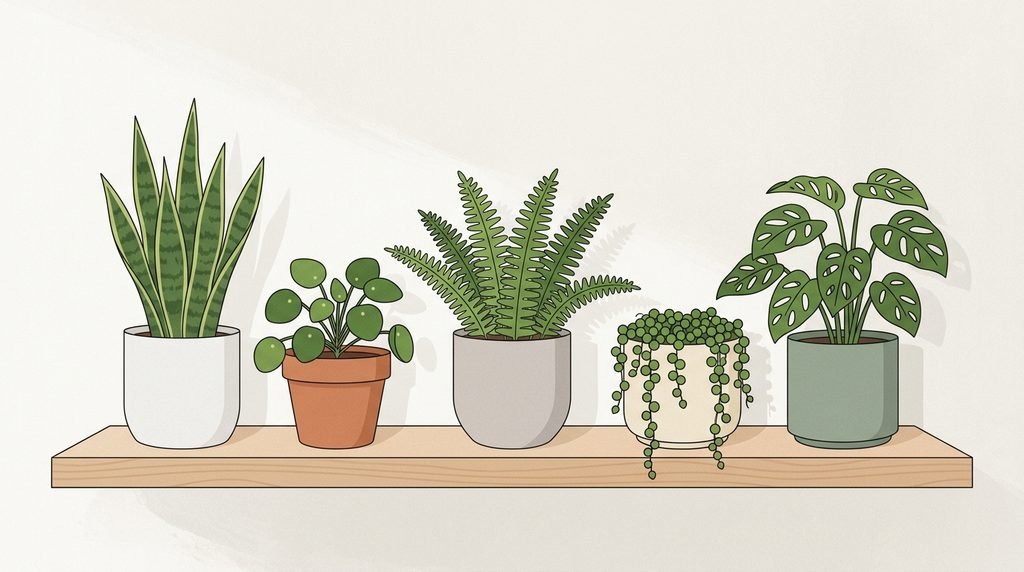
Check outdoor containers for:
- Frost-sensitive plants
- Damaged leaves
- Soft stems
- Healthy new growth
- Very cold or exposed locations
- Signs that the plant should be moved
If a tender container plant has survived the first frost, moving it into a more sheltered location may help it survive the next cold spell.
This is especially important if the weather forecast shows several additional freezing nights.
8. Harvest What Is Still Usable
The first frost is a useful signal to finish harvesting crops that are unlikely to tolerate additional cold.
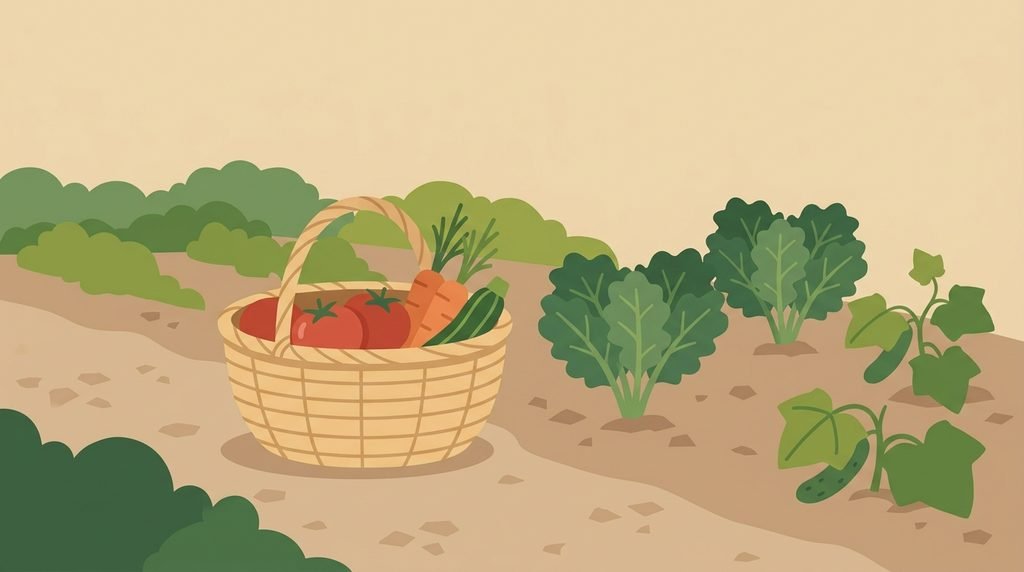
Walk through the garden and look for crops that are:
- Mature
- Nearly mature
- Frost-sensitive
- Still in good condition
Prioritize crops that could be lost if another frost arrives.
At the same time, don’t feel pressured to harvest every crop simply because the first frost occurred. Hardy vegetables may continue growing under suitable conditions.
The goal is to save what is ready and vulnerable without unnecessarily disturbing crops that can tolerate the weather.
9. Don’t Start a Complete Garden Cleanup
The first frost does not automatically mean the garden needs to be cleared immediately.
Avoid pulling or cutting everything simply because it looks untidy.
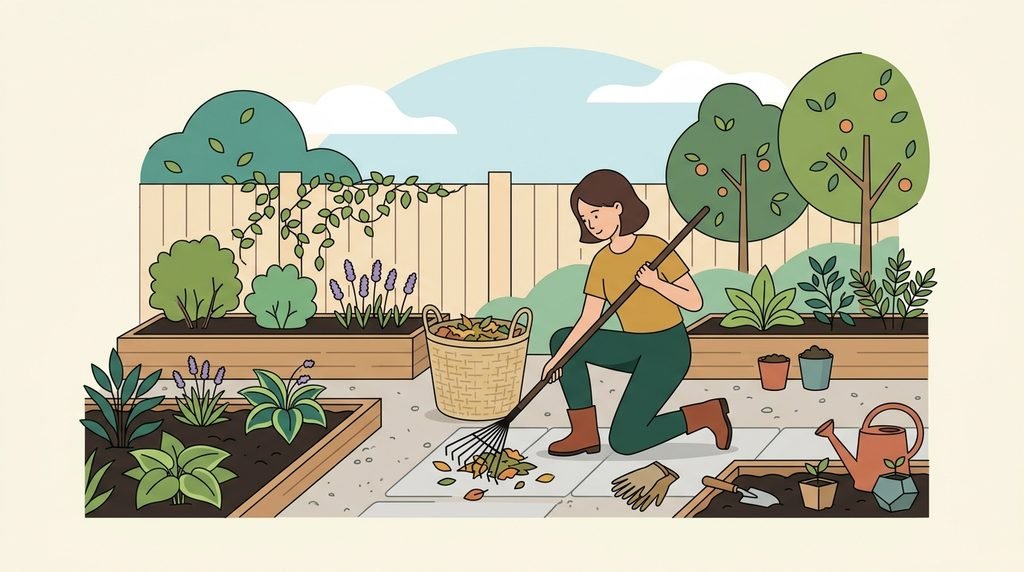
You don’t necessarily need to:
- Remove every perennial
- Cut every plant to the ground
- Strip all seed heads
- Clear every piece of healthy plant material
- Dig up garden beds
- Remove plants that may recover
Instead, distinguish between material that is genuinely problematic and material that can remain.
Clearly diseased plant material, completely collapsed annuals, and unusable vegetable remains may need attention. Healthy stems and seed heads may be better left alone for the time being.
This is a good example of why garden cleanup and frost assessment are not the same task.
10. Check the Weather Again
The first frost isn’t always the beginning of permanent winter conditions.
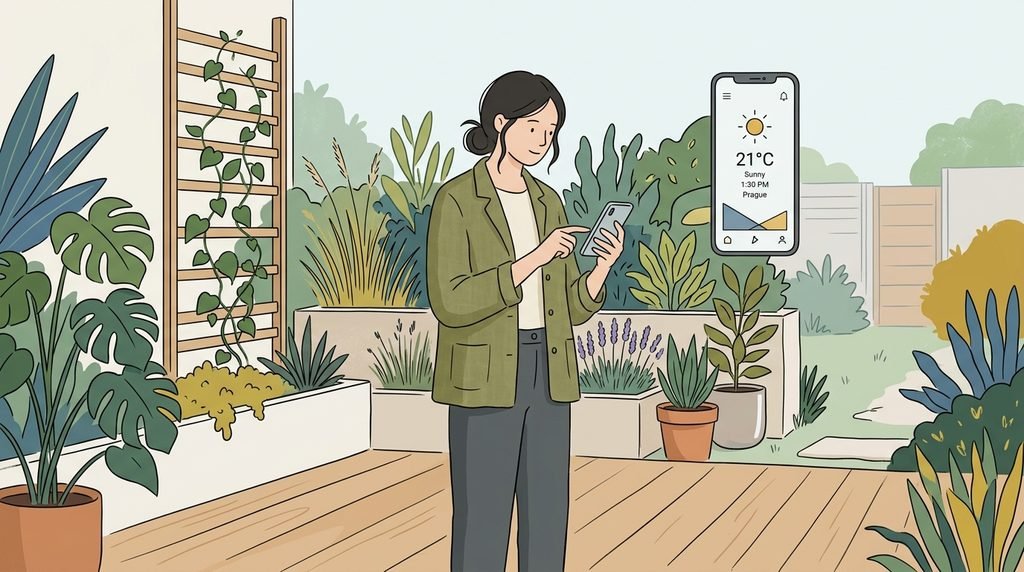
You may get:
- One isolated frost followed by warmer weather
- Several consecutive freezing nights
- A gradual transition into colder weather
- A more severe freeze shortly afterward
Your next step should depend partly on what is coming.
If another frost is expected, protect plants that survived the first event.
If warmer weather is returning, you may have additional time to harvest crops, move containers, or complete other seasonal work.
Don’t make your next decision based only on yesterday’s temperature.
Frost Damage or Temporary Cold Stress?
A damaged-looking plant isn’t necessarily a dead plant.
| What you see | What it may mean | What to do |
|---|---|---|
| Limp leaves | Cold stress or frost injury | Wait until the plant has thawed |
| Darkened leaves | Frost-damaged tissue | Inspect the rest of the plant |
| Brown leaf edges | Localized tissue damage | Monitor before pruning |
| Collapsed tender growth | Potentially severe damage | Check stems and growing points |
| Healthy lower stems | Plant may still survive | Leave it and monitor |
| Damaged fruit | Possible cold injury | Inspect and harvest if usable |
| Little visible damage | Plant may have tolerated the frost | Continue monitoring |
Plant hardiness, frost intensity, exposure, and the length of time temperatures remained low can all influence the outcome.
What Should You Remove After the First Frost?
Use a simple principle:
Remove material when there is a clear reason to remove it.
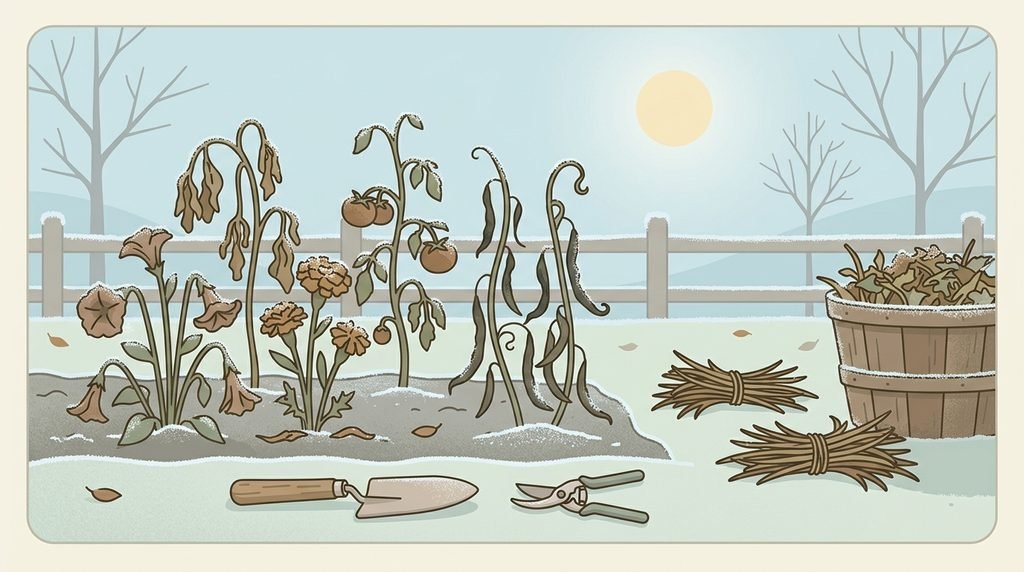
This may include:
- Completely dead annual plants
- Clearly diseased material
- Collapsed tissue creating a sanitation problem
- Vegetable material that is no longer usable
- Damaged growth that interferes with necessary protection
But don’t assume every frost-damaged leaf needs to be removed immediately.
If healthy tissue remains and another cold event is possible, leaving some damaged growth temporarily may be the better choice.
What If Another Frost Is Coming?
Surviving one frost doesn’t guarantee that a plant will survive the next.
Give extra attention to:
- Tender plants
- Young plants
- Recently transplanted plants
- Container plants
- Plants that suffered partial damage
- Valuable specimens
- Plants growing in exposed locations
Repair frost covers, move vulnerable containers, and prepare protection before the next cold night arrives.
The first frost has already provided useful information about your garden. Use that information to decide where protection is most valuable.
A Simple Post-Frost Checklist
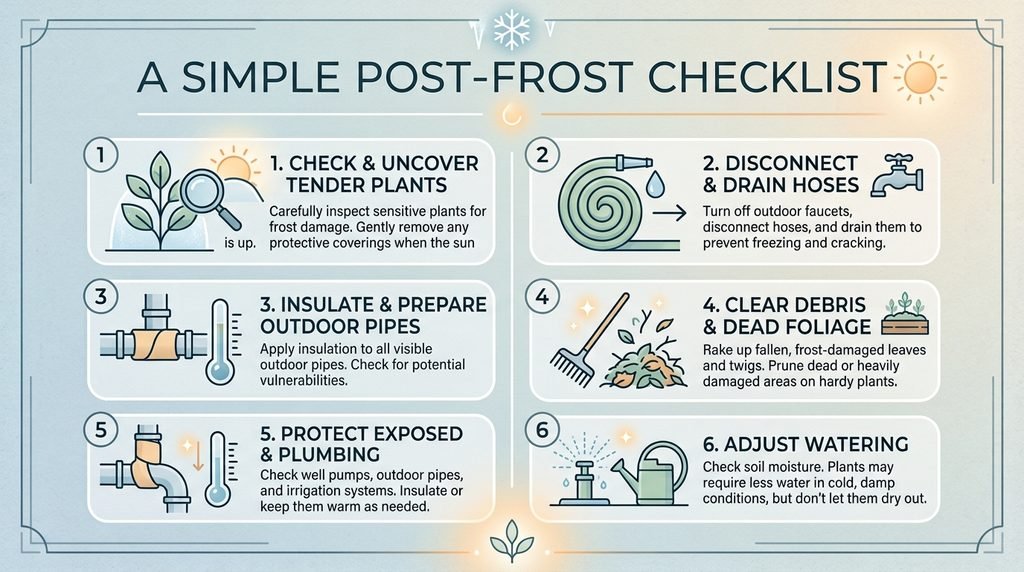
After the Garden Thaws
- Walk through the entire garden
- Inspect tender plants
- Check vegetables and fruit
- Examine container plants
- Inspect frost covers
- Look for healthy remaining tissue
Before You Start Cleaning
- Identify genuinely dead plants
- Separate frost damage from disease
- Avoid unnecessary pruning
- Harvest usable tender crops
- Leave potentially recoverable plants alone
Before the Next Cold Night
- Check the latest forecast
- Move vulnerable containers
- Repair or reinstall covers
- Protect surviving tender plants
- Secure protective materials
What Not to Do After the First Frost
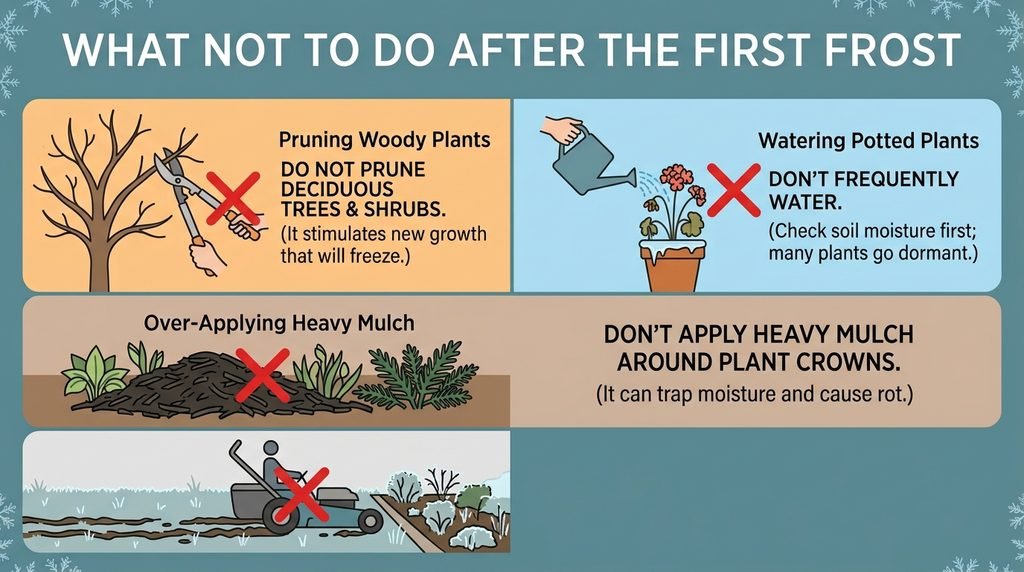
Don’t prune while plants are frozen
Frozen tissue is fragile and difficult to evaluate.
Don’t pull plants just because the leaves are brown
The roots, stems, or growing points may still be alive.
Don’t clear the entire garden automatically
Frost and winter do not require every plant to be removed.
Don’t assume every crop is ruined
Inspect the edible portions before deciding what to discard.
Don’t ignore another approaching freeze
A plant that survives a light frost may be damaged by a longer or harder freeze.
Keep Notes for Next Year
The first frost can teach you a lot about your garden.
Record:
- The date of the first frost
- Approximate overnight temperature
- Which plants were damaged
- Which plants survived
- Which areas were most exposed
- Which plants needed covers
- Which protection methods worked
- Which containers needed to be moved
After a few seasons, these observations can become a valuable personal frost record.
You’ll begin to recognize which parts of your property stay warmer, which plants consistently need protection, and which crops can remain outside longer than expected.
That knowledge can make future frost preparation much more precise.
Final Thoughts
The first frost doesn’t necessarily mean the garden is finished.
It is a point at which you should stop, inspect, and make decisions based on what actually happened.
Let frozen plants thaw before handling them. Check for healthy tissue before pruning. Harvest vulnerable crops while they’re still usable, give container plants extra attention, and protect anything that survived but may face another cold night.
Most importantly, don’t mistake a damaged appearance for a dead plant.
A careful post-frost assessment can help you save plants, reduce unnecessary cleanup, and make better decisions as the garden moves deeper into the cold season.