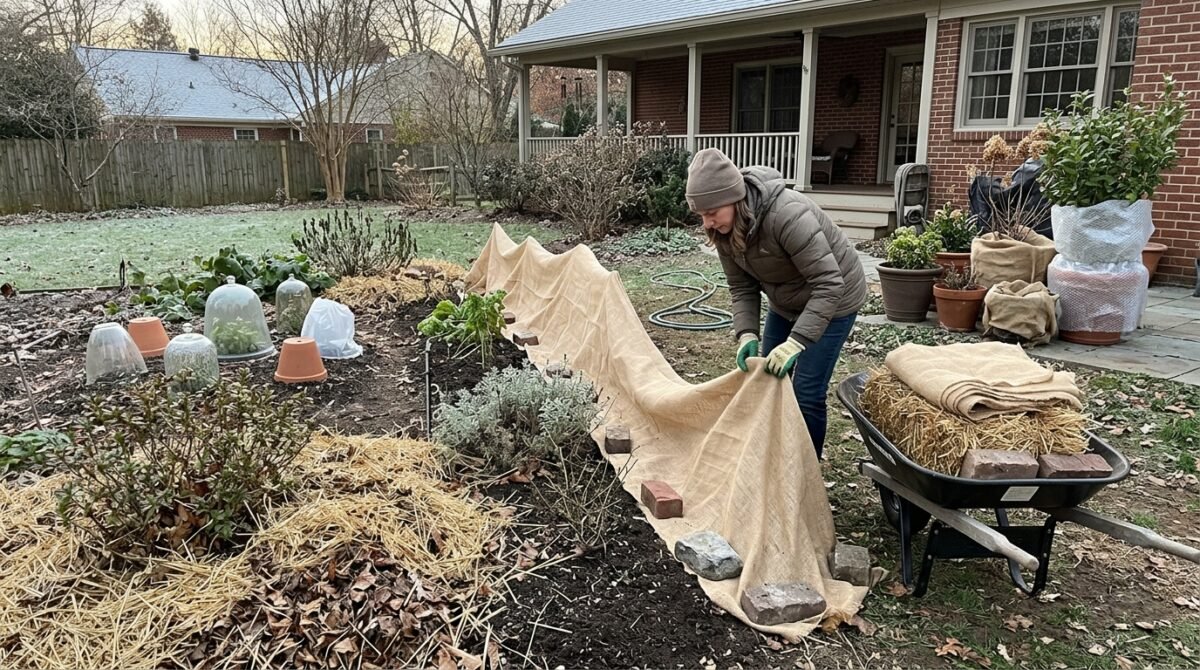
Frost can damage a garden in a single night. Tender leaves may turn black, flowers can collapse, and young plants may struggle to recover after temperatures fall below freezing. Even when the weather warms the following day, the damage may already be done.
The good news is that many common frost problems can be reduced with a little preparation. You do not need to cover every plant every night or buy expensive equipment. The key is understanding which plants are vulnerable, when frost is likely, and which protective steps will make the biggest difference.
This guide explains how to protect plants from frost using practical methods that work in home gardens, raised beds, containers, and exposed outdoor spaces.
Why Frost Damages Plants
Frost forms when surfaces cool enough for water vapor to freeze into ice. It often occurs on clear, calm nights when heat escapes from the ground and plant surfaces into the atmosphere.
Plant damage depends on several factors:
- Plant hardiness: Some plants tolerate freezing temperatures, while others suffer damage just above or below 32°F (0°C).
- Temperature: The lower the temperature falls, the greater the potential for injury to susceptible plants.
- Exposure time: A brief dip toward freezing may cause less damage than several hours of severe cold.
- Plant condition: Drought-stressed, newly planted, or actively growing plants may be more vulnerable.
- Location: Plants in low spots, exposed beds, or containers can experience different temperatures from plants in sheltered ground.
Not all frost events are equally dangerous. A light frost may damage tender annuals while leaving established hardy perennials unaffected. A prolonged freeze can threaten a much wider range of plants.
1. Know When Frost Is Likely
The first step in frost protection is recognizing the conditions that make frost possible.
Check your local forecast, especially overnight low temperatures. Pay attention to warnings about frost, freezing conditions, and sudden temperature drops.
Frost is more likely when:
- Skies are clear overnight.
- Winds are light.
- Temperatures are forecast to approach freezing.
- Cold air settles in low-lying areas.
- Plants are exposed to open sky without nearby shelter.
Remember that a forecast low is not a guarantee of the temperature at every point in your garden. The temperature near the ground can differ from the official reading, and sheltered locations may remain warmer than exposed areas.
Practical tip: Use a minimum–maximum outdoor thermometer near your garden to learn how its temperature compares with the forecast. Over time, this can help you identify the spots that need protection first.
Do not wait until ice is visible on the leaves. Protective measures are usually more effective when installed before temperatures fall.
2. Identify the Plants That Need Protection Most
One of the most effective frost-protection strategies is to focus on vulnerable plants rather than treating the entire garden equally.
Tender annuals and vegetables
Many warm-season annuals and vegetables are sensitive to frost. Tomatoes, peppers, basil, cucumbers, and similar crops may suffer significant damage when temperatures approach freezing.
If frost is forecast, prioritize valuable plants that are still producing or that you want to preserve.
Newly planted plants
Recently planted perennials, shrubs, and trees may be more vulnerable than established plants because their root systems have not fully settled into the surrounding soil.
Their risk depends on species, planting time, soil conditions, and local climate. Do not assume every new planting needs the same level of protection, but give these plants a closer inspection.
Container plants
Containers expose roots to colder conditions than surrounding garden soil. Small pots, especially those left in windy or exposed positions, can cool quickly.
Move vulnerable containers to a sheltered location when practical.
Plants with tender new growth
New leaves, shoots, and flowers are often less cold-tolerant than mature, hardened growth. A plant that normally survives your winter may still suffer damage if it is producing tender growth during an unexpected cold spell.
A simple priority order
When time is limited, protect plants in this order:
- Tender plants with little tolerance for frost.
- Valuable container plants and vulnerable potted specimens.
- Recently planted or already stressed plants.
- Tender flowers, buds, and new growth.
- Established plants that are hardy in your local climate, unless conditions are unusually severe.
The precise order will vary with the forecast and the plants you grow.
3. Cover Vulnerable Plants Before Temperatures Drop
Covering plants is one of the most practical ways to reduce frost damage in a home garden.
A properly positioned cover can trap some of the heat released by the soil and reduce direct exposure to cold air. Its effectiveness depends on the material, how it is installed, the weather, and how low the temperature falls.
How to cover plants correctly
- Prepare the cover before sunset. Keep suitable materials ready when frost is forecast.
- Cover the whole plant where practical. A cover should extend down toward the ground to help retain warmth from the soil.
- Use supports when necessary. Prevent heavy or wet material from pressing on delicate branches and foliage.
- Secure the edges. Wind can lift a loose cover and expose the plant.
- Avoid relying on a thin cover during severe freezes. Some covers provide only limited protection when temperatures fall substantially below freezing.
- Remove or open the cover when conditions improve. Plants need light and ventilation during the day, and covered plants can overheat in sunshine.
Use materials intended for plant protection when possible. Avoid plastic sheeting resting directly against foliage because direct contact can increase the risk of cold injury where leaves touch the material. If plastic is used as an outer barrier, support it so it does not contact the plant and remove it when the danger passes.
No cover can guarantee survival during every freeze. Match the protection to the expected conditions and the plant’s cold tolerance.
4. Water the Soil When Appropriate
Soil moisture can influence how much heat the ground stores and releases overnight.
When soil is very dry, it may store less heat than moist soil under otherwise similar conditions. Moist soil can absorb heat during the day and release some of it at night, potentially helping the area around plants remain slightly warmer.
However, watering is not a substitute for covering vulnerable plants, and it does not make a severe freeze safe.
Practical watering guidance
- Check soil moisture before watering.
- Water dry soil during the day when frost is forecast, allowing excess water to drain.
- Avoid leaving plants in saturated soil.
- Do not water frozen ground or create icy conditions on paths and walkways.
- Consider the plant’s normal watering requirements and drainage.
The goal is to avoid drought stress and maintain suitable soil moisture—not to flood the garden in an attempt to prevent frost.
Important: Overhead irrigation is a specialized frost-protection technique that depends on continuous water application, correct equipment, and suitable conditions. Improper use can increase damage. For most home gardeners, covering plants and moving containers are simpler and more dependable options.
5. Use Mulch to Help Protect Roots
Mulch helps moderate changes in soil temperature and can reduce repeated freezing and thawing around plant roots.
It is particularly useful for established perennials, shrubs, and other plants that benefit from a more stable root environment.
Suitable mulch options may include shredded leaves, clean straw, pine needles, or other materials appropriate for your garden.
How to apply mulch
- Spread an even layer over the root zone.
- Keep mulch away from direct contact with woody stems and tree trunks.
- Avoid burying plant crowns that need good airflow.
- Do not use thick, wet layers that create persistent moisture problems.
- Apply mulch according to the plant’s needs and local climate.
Mulch is not a complete solution for frost-sensitive leaves, flowers, or stems. It protects the soil and roots more effectively than exposed foliage.
For that reason, combine root-zone protection with covers or relocation when the plant itself is vulnerable.
6. Move Container Plants to Shelter
Container plants are often among the easiest plants to protect because they can be moved.
Before a frost, relocate susceptible pots to a sheltered area such as an unheated garage, enclosed porch, greenhouse, or protected position near the house, depending on the plant’s temperature requirements.
Choose a location that is suitable for the species. A tropical plant may need a frost-free indoor environment, while a hardy outdoor perennial may only need protection from extreme exposure.
Which containers should move first?
Prioritize:
- Small pots with exposed root systems.
- Containers holding frost-sensitive plants.
- Newly planted specimens.
- Pots positioned in strong winds.
- Expensive or difficult-to-replace plants.
If you cannot move a large container, group pots together in a sheltered spot and protect them appropriately. Raising a container off a cold, exposed surface may also help with drainage, but it does not replace insulation or frost protection.
Avoid moving outdoor plants into a warm indoor room for a short frost event unless the species requires it. Sudden changes in temperature and light can create additional stress.
7. Reduce Exposure to Cold Winds
Wind can increase moisture loss and make exposed plants more vulnerable to winter stress. It can also dislodge protective covers and damage branches.
Look around your garden for locations where plants are exposed to prevailing winds.
Helpful measures include:
- Moving portable pots behind a sheltered wall.
- Securing covers so they cannot blow away.
- Using existing fences or hedges to reduce exposure.
- Supporting vulnerable plants where appropriate.
- Avoiding unnecessary pruning immediately before a frost event.
A windbreak does not prevent frost by itself. On clear, calm nights, frost can still develop even in a sheltered garden. Wind protection is one part of a broader strategy, not a replacement for temperature-based protection.
8. Choose the Right Garden Location
The position of a plant can influence its exposure to cold.
Cold air tends to settle in low areas, while elevated or gently sloping locations may drain cold air more effectively. Walls, fences, and buildings can also alter exposure to wind and radiant heat loss.
When possible, place frost-sensitive containers in sheltered locations and reserve the most exposed parts of the garden for plants suited to local conditions.
For permanent planting, consider:
- Low spots where cold air accumulates.
- Areas exposed to winter winds.
- The amount of sunlight the site receives.
- Nearby walls and buildings.
- Soil drainage and moisture conditions.
- The mature size and hardiness of the plant.
Do not plant a sun-loving species in deep shade solely to protect it from frost. A location must suit the plant’s overall growing requirements, not just its winter needs.
9. Avoid Late-Season Growth That Is Easily Damaged
Some plants become more vulnerable when they produce tender growth late in the growing season.
Excessive late-season fertilization, particularly with nitrogen, can encourage growth that may not have enough time to harden before cold weather arrives.
For most established outdoor plants, avoid unnecessary late-season feeding and follow the recommended fertilization schedule for the species and your region.
Do not deliberately stress plants by withholding essential water or nutrients. The goal is to support natural seasonal hardening, not to weaken the plant.
Also avoid heavy pruning immediately before expected frost unless a specific plant-care requirement makes it necessary. Fresh cuts and stimulated new growth may complicate preparation for cold conditions.
10. Protect Plants During a Sudden Frost Warning
Sometimes a cold night arrives before you have completed your seasonal garden preparation. In that situation, focus on immediate, practical actions rather than trying to finish every garden task.
Before sunset
- Check the expected overnight low and frost warning.
- Identify the most vulnerable plants.
- Harvest ripe produce that may otherwise be lost.
- Move susceptible containers into appropriate shelter.
- Water dry soil if needed and conditions allow.
- Install and secure suitable plant covers.
During the night
- Avoid repeatedly disturbing covered plants.
- Check that covers remain secure if wind is expected.
- Do not walk on icy paths or attempt risky outdoor work in dangerous conditions.
The following morning
- Remove or open covers when temperatures rise and conditions allow.
- Inspect plants without immediately cutting off damaged growth.
- Check containers and soil moisture.
- Record which parts of the garden experienced the most damage.
Wait until the extent of the damage is clearer before carrying out major pruning. Frost-injured leaves can look worse than the underlying stems, and premature cutting may remove tissue that is still alive.
11. What Not to Do When Protecting Plants From Frost
Good intentions can sometimes make frost damage worse. Avoid these common mistakes.
Do not assume every plant needs a cover
Hardy plants adapted to your climate may tolerate ordinary frost without help. Focus protection on vulnerable plants and unusual cold events.
Do not leave covers in place indefinitely
Covers can restrict light and ventilation or cause overheating during sunny weather. Remove or adjust them when conditions permit.
Do not let plastic rest against foliage
Direct contact can create cold spots and increase the risk of injury. Use supports or choose a suitable plant-protection cover.
Do not overwater
Wet soil is not always better. Excess moisture can create root problems, especially in poorly drained ground or containers.
Do not prune every damaged leaf immediately
Visible damage does not always indicate that the entire branch or plant is dead. Wait until the plant’s condition becomes clearer and follow species-specific pruning guidance.
Do not rely on one method for every freeze
A light frost and a prolonged hard freeze present different risks. Protection should reflect the expected temperature, duration, plant hardiness, and available shelter.
A Quick Frost-Protection Checklist
Use this checklist when frost is forecast.
- Check the overnight forecast and any frost warnings.
- Identify tender plants and vulnerable new growth.
- Prioritize containers and recently planted specimens.
- Move portable plants to suitable shelter.
- Cover vulnerable plants before temperatures fall.
- Secure covers and keep them from pressing against foliage.
- Check soil moisture and avoid waterlogging.
- Apply appropriate mulch around root zones where needed.
- Consider wind exposure and secure unstable structures.
- Remove or adjust covers when conditions improve.
- Assess damage carefully before pruning.
Frequently Asked Questions
What temperature should I cover my plants at?
There is no single temperature that applies to every plant. Some tender plants can be injured at temperatures above 32°F (0°C), while many hardy plants tolerate freezing conditions. Check the cold tolerance of the species you grow and cover vulnerable plants before the forecast reaches their risk threshold.
Does watering plants before frost help?
Suitable soil moisture can help soil store and release heat, and avoiding drought stress is beneficial. However, watering does not guarantee frost protection. Water only when needed, and do not saturate poorly drained soil.
Should I cover plants every night in winter?
Not necessarily. Many hardy plants are adapted to local winter conditions and do not require nightly covering. Protect susceptible plants when frost or freezing temperatures threaten, and remove or adjust covers when conditions improve.
Is mulch enough to protect plants from frost?
Mulch can help insulate roots and moderate soil-temperature changes, but it does not reliably protect exposed leaves, flowers, or stems. Tender plants may also need covers or relocation.
Can plants recover from frost damage?
Many plants can recover from light or moderate frost damage, depending on the species, the temperature, the duration of exposure, and the condition of the roots and stems. Avoid immediate heavy pruning. Give the plant time to show which tissues remain healthy.
Are all frosts equally dangerous?
No. Damage depends on the minimum temperature, how long freezing conditions last, the plant’s hardiness, moisture conditions, and its stage of growth. A brief light frost may cause little damage to hardy plants but severely injure tender species.
Final Thoughts
Protecting plants from frost is easier when you focus on prevention rather than emergency recovery. Learn which plants are vulnerable, pay attention to overnight forecasts, and prepare suitable covers and sheltered locations before temperatures fall.
Mulch can help protect roots, careful watering can prevent drought stress, and wind protection can reduce exposure. Moving containers and covering tender plants are often the most practical steps for home gardeners.
Above all, match your protection to the plant and the weather. Not every plant needs the same treatment, and no single method works for every freeze.
A little planning before a cold night can help preserve valuable plants, reduce avoidable losses, and give your garden a better chance of coming through winter in good condition.
You May Also Like: Frosted Garden: A Practical Guide to Managing Frost in the Garden