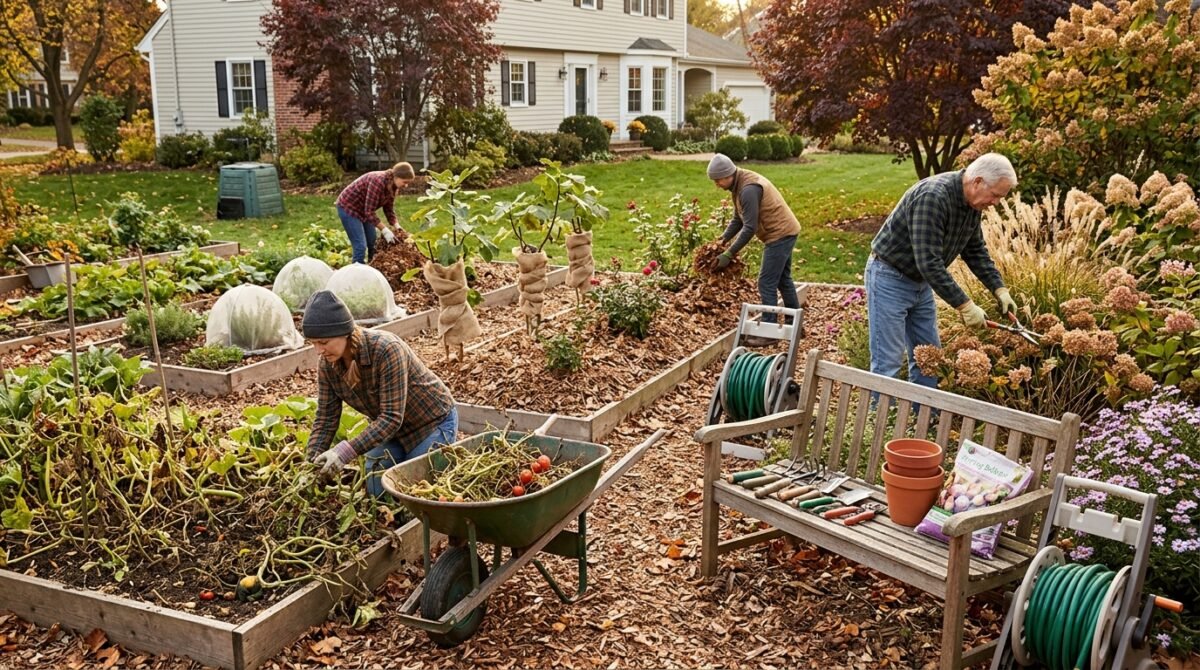
A sudden freeze can catch even a well-maintained garden off guard.
Perhaps the forecast changes quickly, temperatures are expected to fall several degrees below normal, or an early cold front arrives before you have finished your usual fall garden preparation. In that situation, you do not need to winterize everything perfectly at once.
You need to prioritize the tasks that can reduce immediate risk.
This 72-hour garden winterization plan provides a practical emergency sequence for the period before a sudden freeze, the freeze night itself, and the morning afterward.
It is designed to help you decide what matters most when time is limited.
Important: This is an emergency preparation workflow, not a replacement for detailed frost-protection guidance for individual plants. Plant hardiness, temperature, wind, moisture, and local conditions can significantly affect the appropriate protection.
What Is a 72-Hour Garden Winterization Plan?
A 72-hour winterization plan is a short-term emergency schedule for preparing a garden when a sudden freeze is approaching.
Instead of attempting a complete seasonal cleanup, divide the work into four stages:
- 72 to 48 hours before the freeze: assess and prioritize.
- 48 to 24 hours before the freeze: complete essential preparation.
- 24 hours to freeze night: protect the most vulnerable plants.
- Morning after the freeze: inspect, document damage, and avoid unnecessary cleanup.
The purpose is simple:
Protect vulnerable plants first. Complete general winterization later.
First: Determine What Is Actually at Risk
Before starting, check the expected weather conditions.
A forecast calling for a light frost is different from a prolonged hard freeze.
Consider:
- Expected minimum temperature
- Duration of freezing temperatures
- Wind conditions
- Cloud cover
- Whether the soil is already cold
- Recent rainfall
- Plant sensitivity
- Whether plants are established or newly planted
- Whether containers are exposed
You do not need to panic every time temperatures approach freezing.
The goal is to determine which parts of the garden actually require immediate attention.
The 72-Hour Emergency Priority List
When time is limited, use this order:
Highest Priority
- Vulnerable plants
- Newly planted plants
- Container plants
- Tender annuals or plants sensitive to cold
- Plants exposed to wind
- Plants with valuable fruit or vegetables still outdoors
Medium Priority
- Soil moisture
- Exposed roots
- Loose supports
- Garden structures
- Watering equipment
Lower Priority
- General cleanup
- Cosmetic pruning
- Nonessential garden organization
- Routine seasonal maintenance
Do not spend your limited preparation time making the garden look tidy while vulnerable plants remain unprotected.
72 to 48 Hours Before the Freeze: Assess and Prioritize
If you have roughly three days before the expected freeze, start with preparation rather than immediately covering everything.
1. Walk Through the Entire Garden
Inspect:
- Flower beds
- Vegetable beds
- Containers
- Newly planted areas
- Raised beds
- Exposed plants
- Sheltered plants
- Garden structures
Make a quick list of anything that could be damaged.
You are looking for risk, not perfection.
2. Identify the Most Vulnerable Plants
Prioritize plants that are:
- Known to be sensitive to freezing temperatures
- Recently planted
- Growing in containers
- Already showing cold stress
- Located in exposed areas
- Producing valuable crops
- At an unusually vulnerable growth stage
Established, cold-hardy plants may require much less intervention.
This distinction can save considerable time.
3. Check Containers
Container plants deserve early attention because their roots have less insulating soil around them.
Identify pots that can be:
- Moved against a sheltered wall
- Grouped together
- Placed in a protected outdoor location
- Moved indoors when appropriate for the particular plant
Do not move every container indoors automatically.
Some plants need cool or dormant conditions, while others may be damaged by indoor warmth.
4. Check the Soil
Inspect the moisture level around vulnerable plants.
If the soil is unusually dry and conditions are appropriate, watering before the freeze may help prevent plants from entering a cold period under drought stress.
However, avoid creating saturated soil.
Do not water simply because a freeze is coming if the ground is already wet or poorly drained.
5. Gather Protection Materials
Do not wait until sunset on freeze night to discover that you have nothing available.
Gather suitable materials such as:
- Frost cloth
- Fabric coverings
- Blankets intended for temporary plant protection
- Stakes
- Plant ties
- Containers for securing covers
- Mulch
- Empty pots or boxes where appropriate
- Buckets or other practical supports
Use materials that allow you to protect plants without unnecessarily crushing foliage.
Avoid relying on materials that become dangerously heavy when wet.
48 to 24 Hours Before the Freeze: Complete Essential Preparation
With approximately one to two days remaining, move from assessment to action.
6. Move Vulnerable Containers
Relocate suitable container plants to protected areas.
Good locations may include:
- Against a building
- A sheltered porch or patio
- A protected wall
- A covered outdoor area with suitable light and temperature
Grouping containers can reduce exposure, but do not block drainage or create a permanently wet environment.
7. Harvest What Cannot Safely Remain Outside
If vegetables, fruits, herbs, or flowers are approaching harvest and cannot tolerate the predicted temperatures, harvest them rather than gambling on the weather.
Prioritize mature or nearly mature produce.
A sudden freeze can turn a crop that was almost ready into damaged produce overnight.
You do not need to harvest everything. Focus on plants and crops that are genuinely vulnerable.
8. Protect Exposed Roots
Check for plants with exposed root zones caused by:
- Erosion
- Recent planting
- Soil movement
- Heavy rain
- Gardening activity
Restore appropriate soil coverage and use suitable mulch where necessary.
Do not pile mulch directly against plant crowns or stems.
9. Check Garden Structures
Inspect:
- Stakes
- Trellises
- Plant cages
- Row covers
- Temporary supports
Make sure they are secure enough to withstand wind and the weight of protective material.
A loose structure can damage plants when the weather changes.
10. Finish Essential Watering
If plants need water, complete it before the temperature drops sharply.
Water deeply enough to address the root zone when appropriate rather than repeatedly wetting the surface.
Avoid watering frozen soil.
Also avoid creating standing water around plants that already have drainage problems.
24 Hours Before the Freeze: Prepare the Protection System
At this point, you should know exactly which plants need attention.
11. Set Up Supports for Covers
If you are using protective fabric or similar coverings, prepare the support system before temperatures fall.
The covering should ideally be supported above delicate foliage when necessary rather than being allowed to press heavily against the plant.
Check that:
- Stakes are stable.
- Covers can reach the ground where appropriate.
- Wind cannot easily lift them.
- The material is not trapping unnecessary weight against branches.
12. Cover the Most Vulnerable Plants
Cover plants according to their individual requirements.
A protective covering can help reduce exposure to freezing air, particularly when it creates a useful layer of insulation around the plant.
However, a cover is not a guarantee against severe cold.
The effectiveness depends on:
- Material
- Fit
- Wind
- Temperature
- Duration of the freeze
- Plant sensitivity
- Ground temperature
Do not assume that covering a plant makes it capable of surviving any temperature.
Freeze Day: Complete the Final Checks
As the freeze approaches, stop doing nonessential garden work.
Your priority is now protection.
13. Check Every Protected Plant
Make sure:
- Covers are secure.
- The material reaches the intended area.
- Wind cannot easily remove it.
- The plant is not being crushed.
- Containers are in their planned locations.
- Vulnerable areas are not forgotten.
This final inspection is often more valuable than another hour of general garden cleanup.
14. Secure Lightweight Materials
Wind can turn emergency protection into a source of damage.
Secure:
- Covers
- Pots
- Garden fabric
- Lightweight tools
- Empty containers
- Loose decorations
Use suitable weights or supports without placing excessive pressure on plants.
Freeze Night: Leave the Garden Alone
Once the freeze begins, avoid unnecessary disturbance.
Do not repeatedly uncover plants to inspect them during the coldest part of the night.
If you have already prepared the garden correctly, the best thing you can often do is leave the protection in place.
Avoid walking unnecessarily through frozen beds.
Frozen soil and plant tissue are vulnerable to damage from physical disturbance.
What About Snow?
Snow is not automatically harmful.
A light snow layer can sometimes provide insulation, while heavy wet snow can place significant weight on branches and structures.
If snow becomes heavy enough to threaten a structure or plant, address the situation carefully when conditions allow.
Do not aggressively shake frozen branches.
Frozen plant tissue can be brittle and more easily damaged.
Morning After the Freeze: Don’t Start Cutting Immediately
One of the most important steps is knowing what not to do.
After temperatures rise, inspect the garden carefully.
Do not immediately cut off every leaf or stem that looks damaged.
Cold injury can take time to become fully visible.
Instead:
- Allow conditions to moderate.
- Inspect affected plants.
- Record obvious damage.
- Remove only material that is clearly dead, broken, or creating an immediate problem.
- Give plants time to show whether living tissue remains.
Premature pruning can remove tissue that might recover.
The Morning-After Inspection
Walk through the garden systematically.
Check:
- Leaves
- Stems
- Flowers
- Fruits
- Growing points
- Container plants
- Newly planted specimens
- Supports and coverings
Look for:
- Wilting
- Darkened tissue
- Water-soaked appearance
- Broken stems
- Collapsed leaves
- Frosted flowers
- Damaged fruit
Remember that visible damage does not always mean the entire plant is dead.
What to Do After a Sudden Freeze
Once the immediate danger has passed, return to normal garden management.
Remove Damaged Produce
Harvest or remove severely damaged fruits and vegetables where appropriate.
Check Soil Moisture
Cold weather followed by sunshine and wind can still cause moisture stress.
Inspect Covers
Clean, dry, and store reusable protection materials.
Repair Structures
Fix stakes, trellises, or supports that were damaged during the freeze.
Record What Happened
Make a note of:
- Minimum temperature
- Freeze duration
- Plants that were damaged
- Plants that survived
- Protection methods used
- Which areas performed well
This information becomes extremely useful when the next unexpected freeze arrives.
A 72-Hour Emergency Freeze Timeline
| Time | Priority Actions |
|---|---|
| 72–48 hours | Check forecast, inspect garden, identify vulnerable plants, gather materials |
| 48–24 hours | Move containers, harvest vulnerable crops, check soil moisture, secure structures |
| 24 hours | Prepare supports and protective coverings |
| Freeze day | Cover vulnerable plants and secure materials |
| Freeze night | Minimize disturbance and maintain protection |
| Morning after | Inspect damage, avoid premature pruning, remove obvious hazards |
| Following days | Monitor recovery, repair structures, record lessons |
What to Do If You Have Only 24 Hours
Sometimes the forecast changes suddenly and you do not have three days.
If you have only one day, simplify the plan.
First
Identify the most vulnerable plants.
Second
Move exposed containers into suitable shelter.
Third
Harvest vulnerable produce.
Fourth
Check soil moisture where appropriate.
Fifth
Gather and install suitable protective coverings.
Sixth
Secure the coverings against wind.
Finally
Ignore cosmetic garden cleanup until the freeze has passed.
When time is limited, plant protection takes priority over appearance.
What to Do If the Freeze Is Only a Few Hours Away
If temperatures are about to fall, do not attempt a complete winterization project.
Focus on the essentials:
- Protect the most vulnerable plants.
- Move suitable containers.
- Cover exposed plants appropriately.
- Secure covers.
- Harvest immediately vulnerable produce.
- Check that no critical area has been overlooked.
Forget about pruning, reorganizing tools, cleaning borders, or other nonessential tasks.
Those can wait.
Common Emergency Freeze Mistakes
1. Trying to Winterize the Entire Garden at Once
This wastes valuable preparation time.
Better approach: Prioritize plants and areas at immediate risk.
2. Waiting Until the Temperature Drops
Emergency protection becomes harder when everything is already frozen.
Better approach: Prepare materials and covers before the coldest part of the night.
3. Covering Everything Without Prioritizing
Not every plant has the same sensitivity.
Better approach: Focus protection on vulnerable plants first.
4. Using Heavy Material Directly on Plants
Wet blankets or heavy coverings can bend or break plants.
Better approach: Use suitable supports and appropriate protective material.
5. Forgetting Wind
A perfectly placed cover is useless if it blows away.
Better approach: Secure covers and supports before temperatures fall.
6. Overwatering
More water does not automatically mean more protection.
Better approach: Check soil moisture and avoid saturating poorly drained beds.
7. Pruning Immediately After the Freeze
Damaged foliage can make a plant look worse than it actually is.
Better approach: Wait and assess recovery before performing major cleanup.
What You Should Not Try to Do During an Emergency Freeze
When time is short, postpone:
- Cosmetic pruning
- Complete garden cleanup
- Rearranging healthy plants
- Major soil preparation
- Rebuilding garden beds
- General tool organization
- Nonessential landscaping work
These are normal winterization tasks, but they are not the priority during an emergency freeze.
The immediate goal is simply:
Protect vulnerable living plants and prevent avoidable damage.
The Emergency Freeze Checklist
Before the Freeze
- Check the expected minimum temperature
- Determine how long freezing conditions may last
- Identify vulnerable plants
- Check newly planted areas
- Inspect containers
- Harvest vulnerable produce
- Check soil moisture
- Gather protective materials
- Prepare supports
- Secure garden structures
Freeze Night
- Cover priority plants
- Move suitable containers
- Secure covers against wind
- Protect exposed root zones where necessary
- Avoid unnecessary garden traffic
- Leave protection in place through the coldest period
Morning After
- Wait for conditions to moderate
- Inspect plants carefully
- Check stems and growing points
- Remove obvious hazards
- Avoid premature major pruning
- Check damaged structures
- Record what survived and what was damaged
How to Turn an Emergency Freeze Into Better Winter Preparation
A sudden freeze can reveal weaknesses in your normal winterization routine.
After the event, ask:
- Which plants were most vulnerable?
- Which areas cooled fastest?
- Which containers suffered?
- Did protective covers stay in place?
- Was enough material available?
- Did any structures fail?
- Was the soil too dry or too wet?
- Which protection methods worked well?
Use those observations to improve your normal winter preparation.
An emergency freeze should not become a recurring crisis if the same vulnerabilities can be addressed before the next cold-weather event.
Final Thoughts
A sudden freeze does not give you time to do everything.
That is why an emergency garden winterization plan needs to focus on priorities rather than perfection.
Start by identifying vulnerable plants, move exposed containers, harvest susceptible crops, check soil moisture, gather protective materials, and secure the most important areas. As the freeze approaches, focus entirely on protecting plants rather than completing routine garden cleanup.
Afterward, resist the urge to immediately cut everything that looks damaged. Give plants time to reveal what has survived, then use what you learned to strengthen your normal winter preparation.
The most useful emergency rule is simple:
Protect living plants first. Clean up later.



One Comment on “The 72-Hour Garden Winterization Plan for a Sudden Freeze”