Fall garden cleanup is one of those gardening jobs where doing less can sometimes be better than doing more.
As summer ends, it’s tempting to cut everything back, rake every leaf, remove every dead stem and leave the garden looking completely bare.
I used to think a perfectly clean garden was a well-prepared garden. Experience with cold winters changed my mind.
Some material should absolutely be removed before winter. Diseased foliage, invasive weeds and certain pest-infested debris can create problems for the following growing season.
But healthy leaves, perennial stems and seed heads can also serve useful purposes. They can protect soil, provide winter habitat and give beneficial insects and birds places to shelter and feed.
The goal of good fall cleanup isn’t to make the garden spotless.
It’s to remove what can cause problems, leave what can provide value, and prepare the garden for winter without creating unnecessary work for yourself in spring.
What Is Fall Garden Cleanup?
Fall garden cleanup is the process of selectively removing, cutting back or managing plant material and garden debris at the end of the growing season.
It can include:
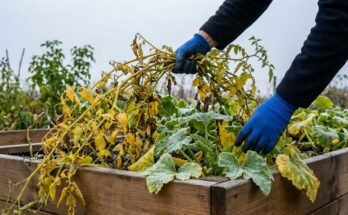
- Removing diseased plants
- Controlling weeds
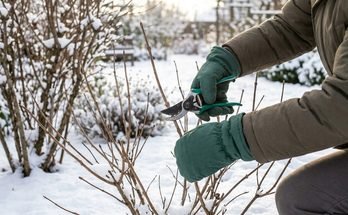
- Clearing damaged branches
- Removing spent annuals
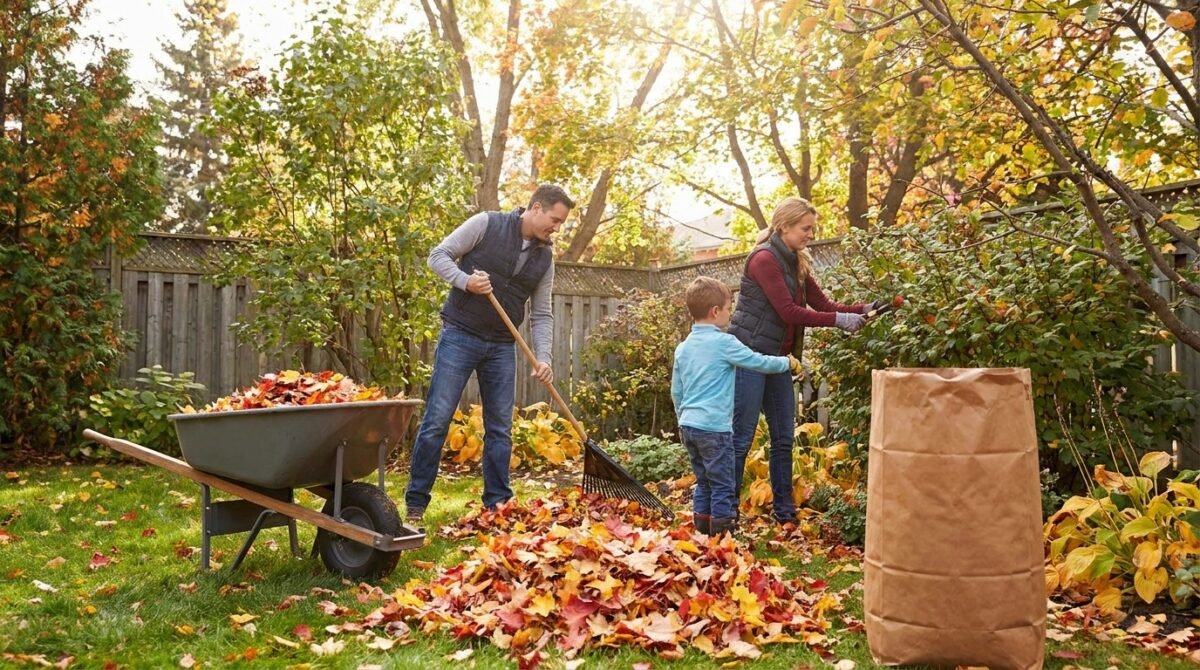
- Managing fallen leaves
- Cutting back selected perennials
- Leaving useful seed heads
- Protecting soil
- Removing hazardous debris
- Preparing paths and garden areas for winter
But it does not mean removing everything from the garden.
A modern approach to fall cleanup recognizes that a garden is an ecosystem.
What looks like “dead debris” to us may be shelter, food or habitat for insects and wildlife.
What Should You Remove During Fall Garden Cleanup?
The easiest way to decide what stays and what goes is to classify garden material according to its condition and potential risk.
| Material | Usually remove? | Reason |
|---|---|---|
| Severely diseased foliage | Yes | Reduces potential disease problems |
| Heavily pest-infested plants | Usually | Reduces overwintering pest pressure |
| Invasive weeds | Yes | Prevents spreading and seed production |
| Diseased fallen fruit | Usually | Can harbor disease or pests |
| Broken hazardous branches | Yes | Safety and storm protection |
| Healthy perennial stems | Not necessarily | Wildlife habitat and winter structure |
| Healthy seed heads | Often leave | Food and habitat |
| Healthy fallen leaves | Usually manage, not automatically remove | Organic matter and habitat |
| Spent annual vegetables | Depends | Crop health and next-season plans |
This is the basic principle I use:
If the material creates a genuine disease, pest, safety or weed problem, remove it. If it provides ecological or protective value, consider leaving it.
1. Remove Diseased Plant Material First
If you only have time for one cleanup job, make it this one.
Walk through your garden and look for plants with obvious disease problems.
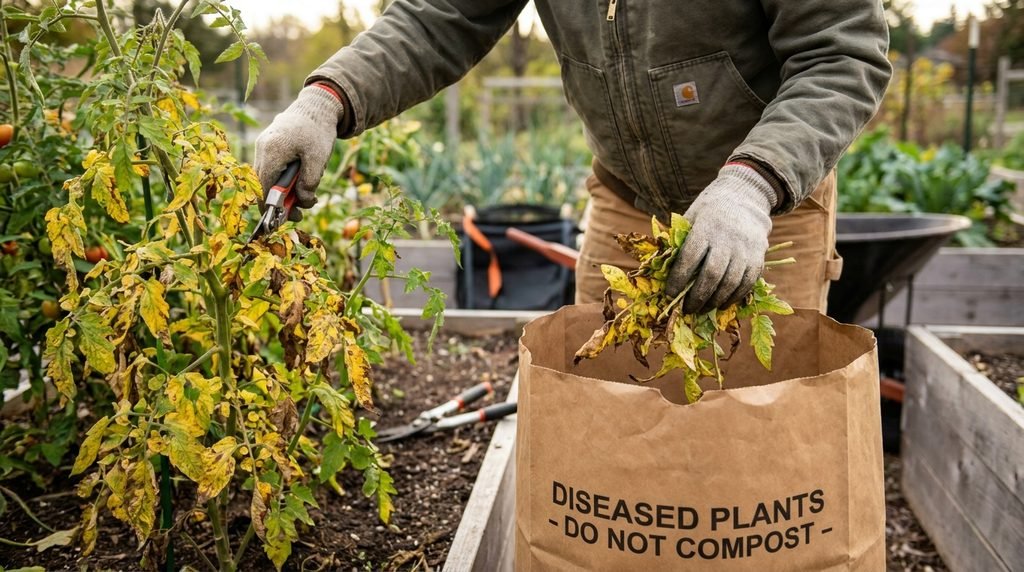
Depending on the plant, signs may include:
- Severe leaf spotting
- Rot
- Cankers
- Diseased stems
- Persistent fungal problems
- Significant dieback
- Unhealthy fruit
Remove affected material using appropriate sanitation practices.
Don’t automatically put heavily diseased material into your home compost pile. Some diseases can survive poorly managed composting conditions.
If you’re uncertain whether a particular plant is diseased, identify the problem before deciding how to dispose of it.
Why this comes first
Healthy leaves left in a garden are rarely a major concern.
Diseased material is different.
Leaving a significant disease source sitting around through winter can increase the amount of problematic material present when the next growing season begins.
2. Remove Heavily Pest-Infested Plants
The same principle applies to severe pest infestations.
You don’t need to remove every leaf that has ever had an insect on it.
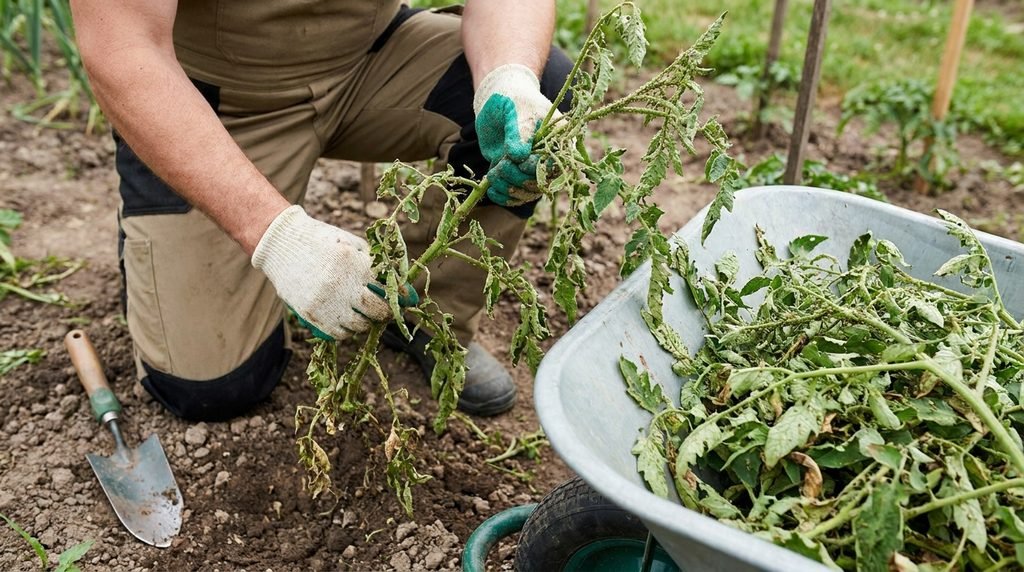
Instead, look for plants that are:
- Heavily infested
- Seriously damaged
- No longer productive
- Hosting an obvious recurring pest problem
Remove them appropriately.
However, avoid treating every insect as a reason for aggressive cleanup.
Many insects found in autumn gardens are harmless or beneficial.
Some are also using the garden as winter habitat.
3. Pull Annual Plants That Are Truly Finished
Annual flowers and vegetables that have completed their useful life can usually be removed.
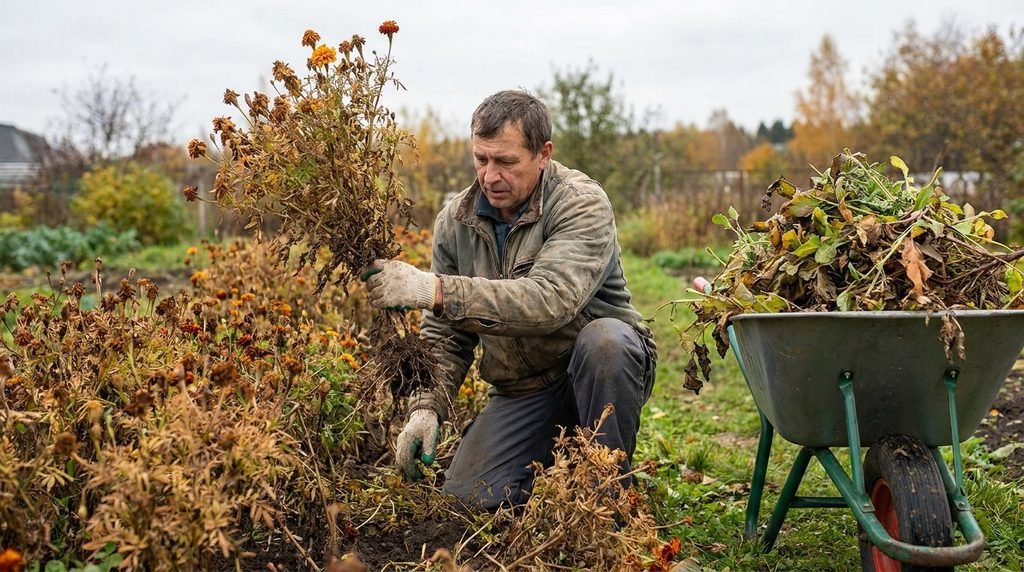
For example:
- Dead annual flowers
- Finished tender vegetables
- Completely spent seasonal plants
- Plants that have stopped producing
But before pulling them, check whether they are healthy.
A healthy plant can sometimes be left in place longer or added to an appropriate composting system.
A diseased plant deserves different treatment.
4. Deal With Weeds Before They Drop More Seed
Fall is an excellent time to deal with weeds.
Some weeds are easy to ignore because they’re small or less noticeable as temperatures fall.
That’s exactly why they can become a problem.
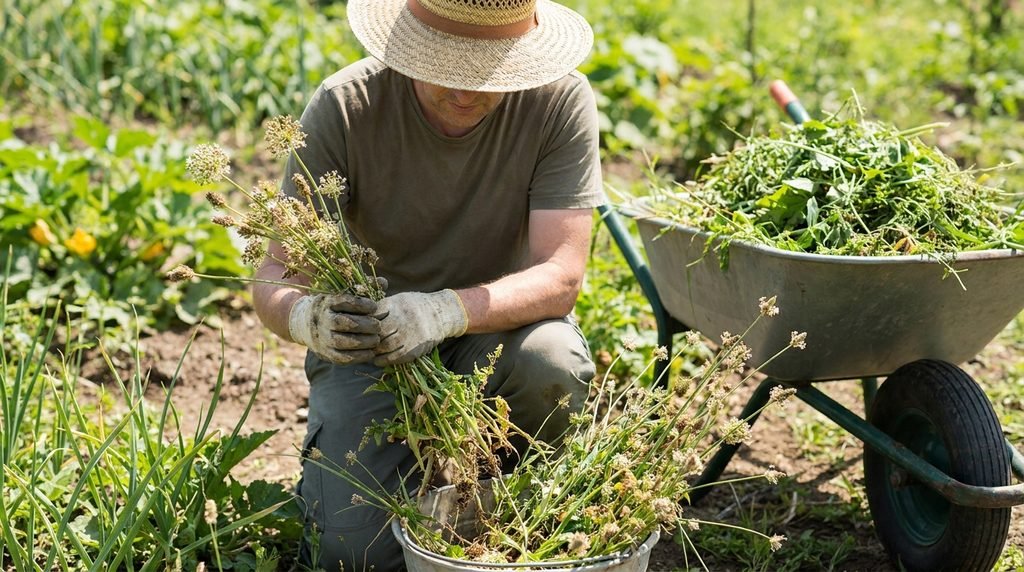
Prioritize weeds that are:
- Flowering
- Producing seed
- Spreading aggressively
- Perennial
- Growing around young plants
Removing weeds before they release more seed can reduce the number of unwanted plants you’ll have to deal with later.
Don’t turn weed removal into unnecessary soil disturbance
Pulling or digging weeds can disturb the soil.
Where practical, remove the weed while minimizing unnecessary cultivation.
5. Don’t Automatically Remove Every Fallen Leaf
This is probably the biggest change I’d recommend to gardeners who grew up with the idea that every leaf must be raked away.
Leaves aren’t inherently garden waste.
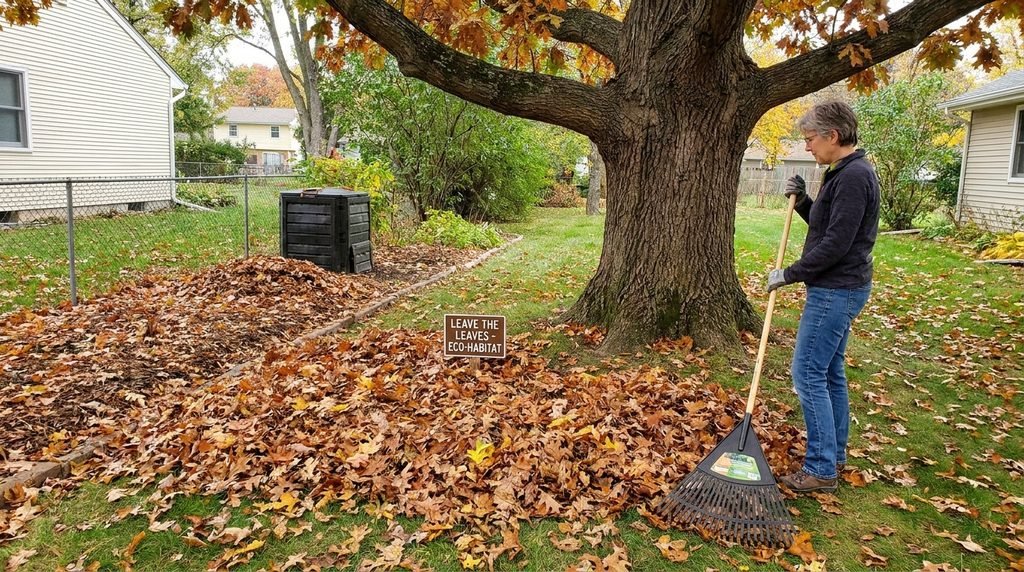
They can provide:
- Organic matter
- Soil protection
- Winter habitat
- Moisture retention
- Shelter for beneficial organisms
The better question isn’t:
“How do I remove all the leaves?”
It’s:
“Where are these leaves actually causing a problem?”
Where Should Fallen Leaves Be Removed?
There are situations where leaves should be managed.
Lawn
A thick, persistent layer of leaves can interfere with turf.
Instead of automatically hauling them away, consider mowing or mulching suitable leaves into the lawn where appropriate.
Paths and walkways
Wet leaves can become slippery.
Remove them from areas where they create a safety hazard.
Roofs and drainage systems
Leaves accumulating in gutters or drainage channels can obstruct water flow.
Diseased plants
If leaves are heavily affected by a disease that is known to overwinter in fallen foliage, removing them may be sensible.
Ponds
Excessive leaf accumulation can create water-quality problems.
In these situations, cleanup has a clear purpose.
6. Consider Leaving Leaves in Garden Beds
Healthy fallen leaves can be valuable in planting beds.
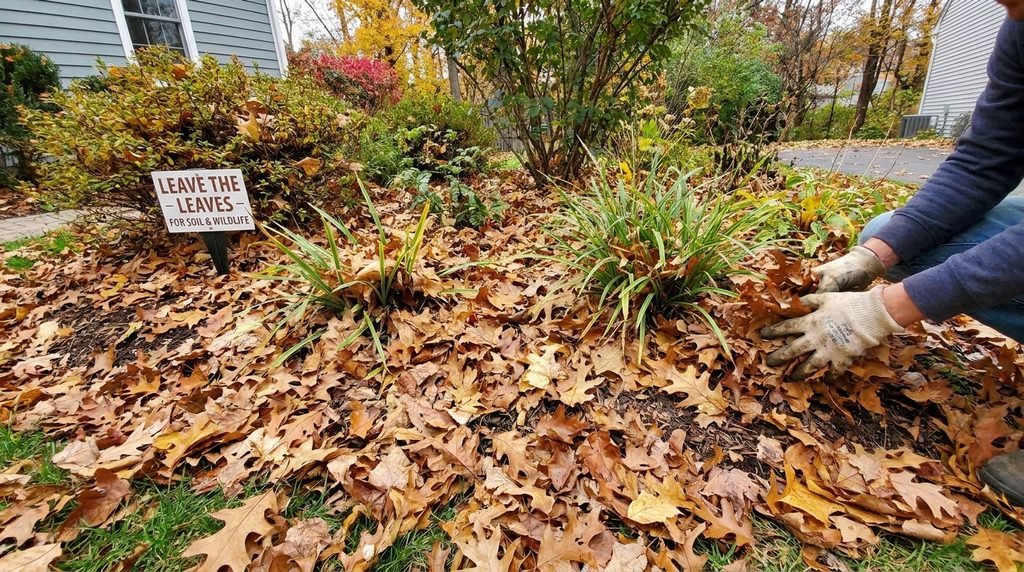
A moderate layer can:
- Protect exposed soil
- Add organic matter
- Provide habitat
- Reduce erosion
- Moderate soil conditions
If leaves form an excessively thick, wet mat, however, they may need to be redistributed, shredded or partially removed.
You don’t need to choose between:
“Remove every leaf”
and
“Never touch the leaves.”
There is a useful middle ground.
7. Leave Some Perennial Stems Standing
This is another area where aggressive fall cleanup can do more harm than good.
Many perennial plants have attractive stems and seed heads that remain useful after flowering.
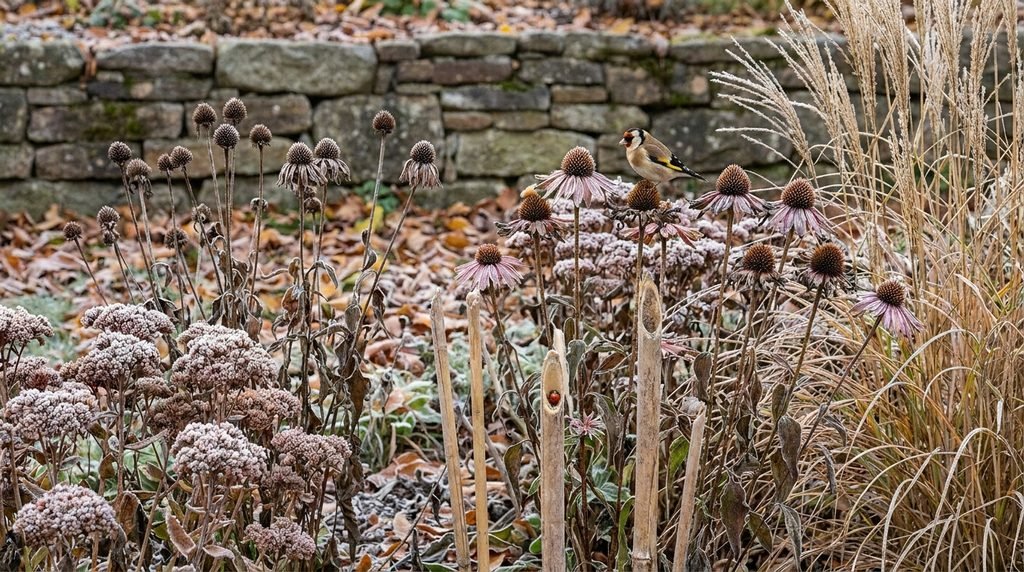
Leaving suitable stems standing can provide:
- Winter structure
- Wildlife habitat
- Seeds for birds
- Shelter for insects
- Protection from exposed weather
Some hollow stems can also provide places for insects to overwinter.
That doesn’t mean every perennial should remain untouched.
Some plants are better cut back in autumn for practical, disease-management or aesthetic reasons.
But there’s no need to cut everything to ground level simply because winter is coming.
8. Don’t Cut Back Perennials Just Because They’re Brown
Brown doesn’t automatically mean useless.
A dormant perennial may look dead while still providing important winter value.
Before cutting it, ask:
- Is the plant healthy?
- Does it have useful seed heads?
- Could it provide winter habitat?
- Is there a disease reason to remove it?
- Will leaving it interfere with spring growth?
- Does the plant normally benefit from being cut back later?
If there is no strong reason to remove it, leaving it standing can be the better choice.
9. Know When Seed Heads Should Stay
Seed heads can provide food for birds and structure for the winter garden.
Plants with attractive or useful seed heads can become particularly valuable when much of the garden is dormant.
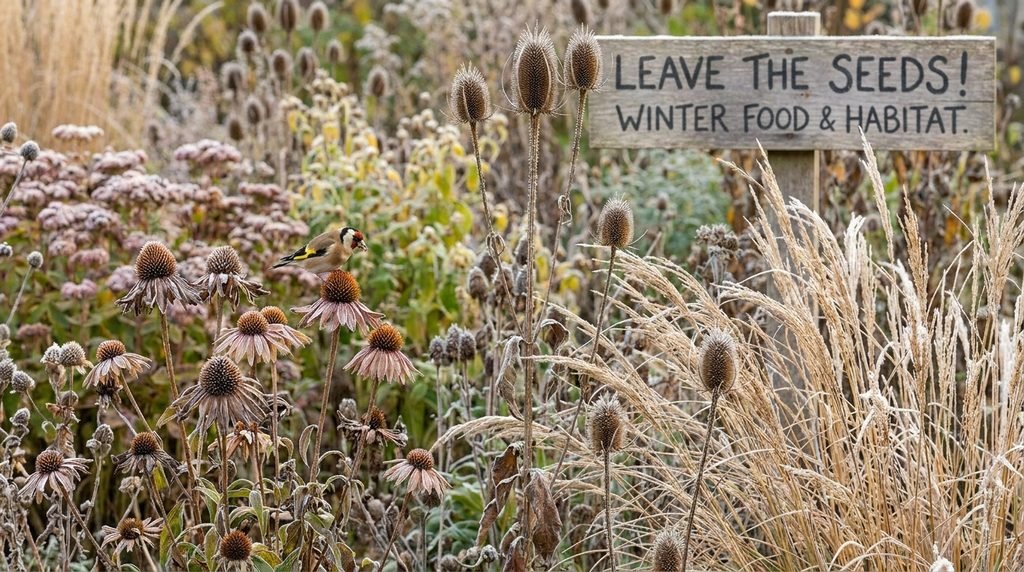
Examples include many:
- Coneflowers
- Rudbeckias
- Ornamental grasses
- Sedums
- Native flowering perennials
Don’t assume a spent flower head is simply garden waste.
A practical approach
Leave healthy seed heads where:
- They provide wildlife food
- They add winter structure
- They aren’t spreading unwanted plants
- They aren’t harboring a known disease problem
Remove them when:
- They are becoming invasive
- You don’t want natural reseeding
- They are diseased
- They create a practical maintenance problem
10. Be Careful With Ornamental Grasses
Ornamental grasses can be especially attractive during winter.
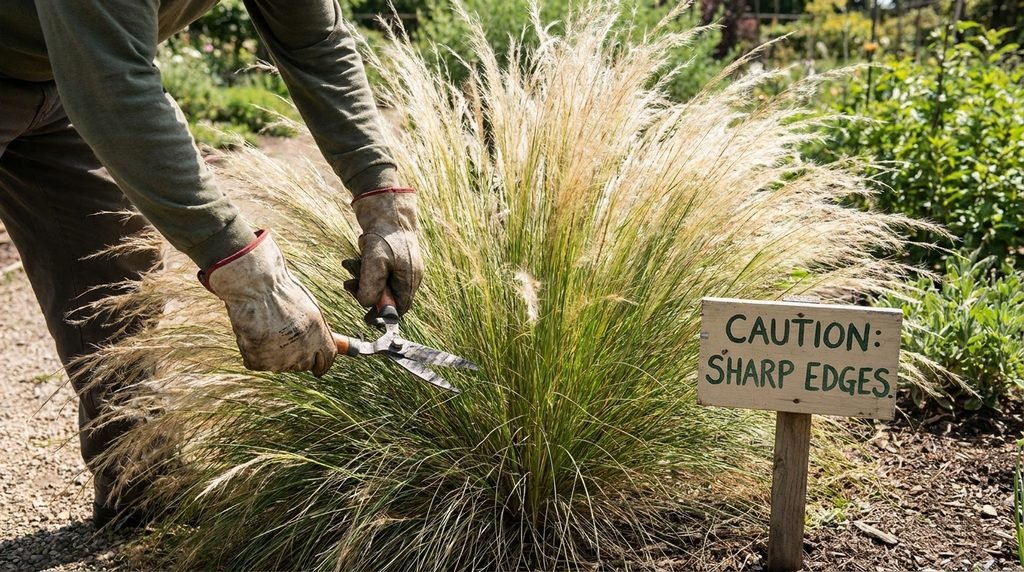
Their dry foliage and seed heads can provide:
- Winter texture
- Wildlife habitat
- Wind protection
- Visual interest
In many gardens, there’s little reason to cut them down in autumn.
However, wet or damaged grasses can become problematic in some situations, and local conditions may influence the best timing.
If you leave them standing, plan to cut them back at the appropriate time before spring growth begins.
11. Remove Fallen Fruit That Can Become a Problem
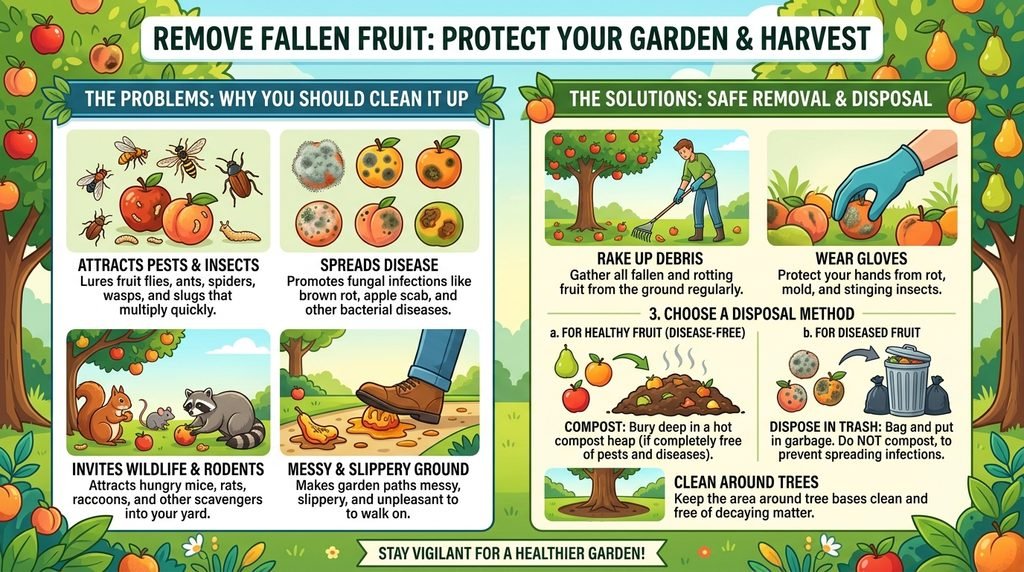
If fruit trees are part of your garden, don’t ignore fruit lying on the ground.
Remove obviously rotten or diseased fruit, particularly when it can harbor pests or disease.
This is especially important when the same disease has been a recurring problem in your orchard.
Healthy fruit that has simply fallen naturally can be assessed differently, but diseased or heavily infested fruit should not be casually left under the tree.
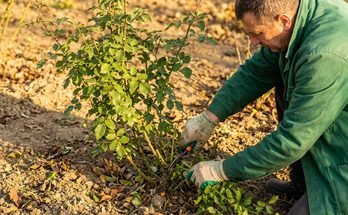
12. Clean Around Trees Without Damaging Them
Fall is a good time to inspect the area around tree trunks.
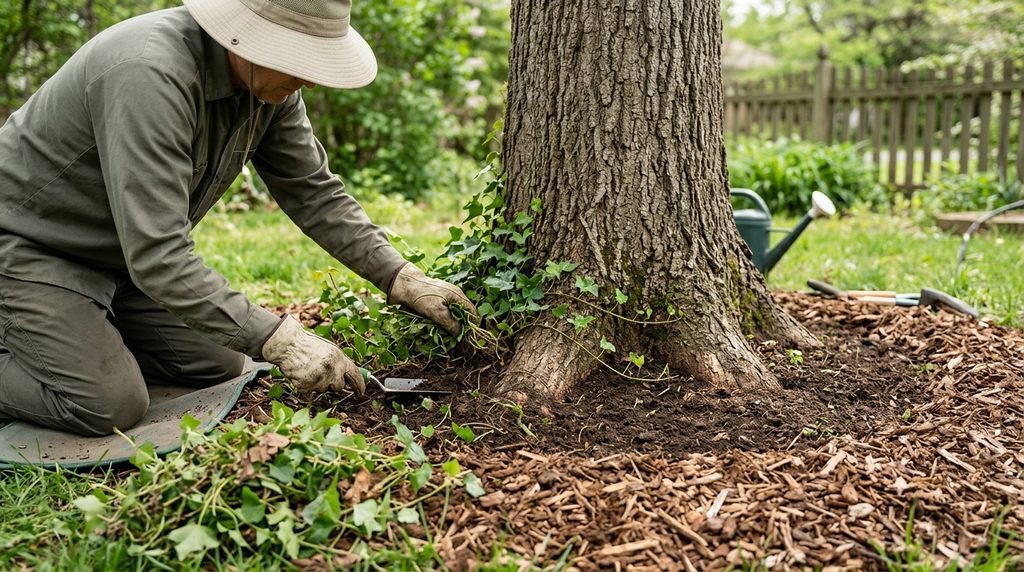
Remove:
- Grass competing directly with young trees
- Weeds
- Diseased plant material
- Debris that creates a pest or disease concern
But avoid creating a deep pile of organic material directly against the trunk.
If you use mulch, keep it around the root zone rather than building a mound against the bark.
Remember:
Mulch should look more like a shallow donut than a volcano around a tree.
This small detail makes a significant difference to long-term tree health.
13. Don’t Remove Healthy Plant Material Just for Appearance
A completely bare garden may look neat.
But neatness isn’t the same as ecological health.
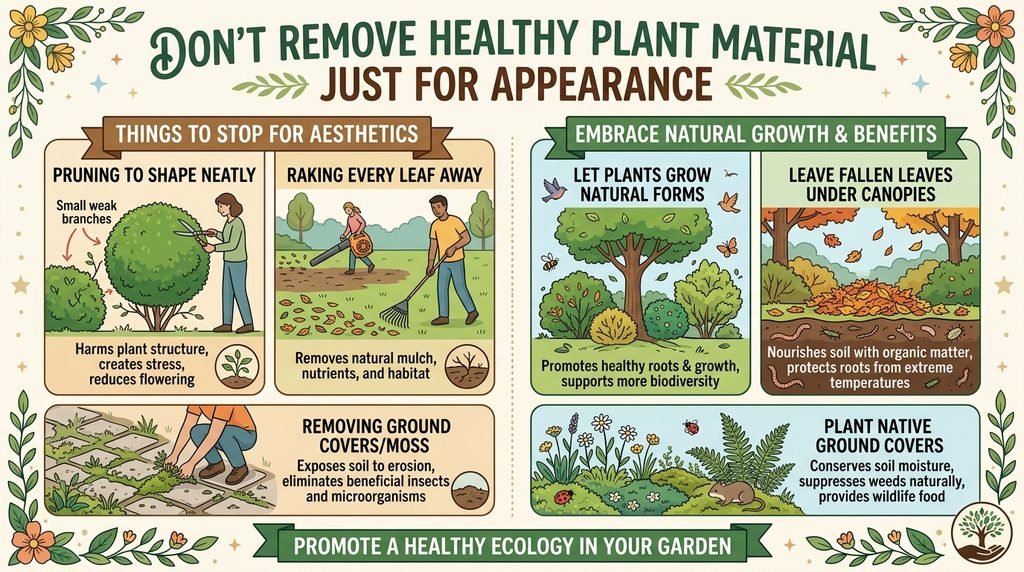
Before removing healthy plant material, consider whether it provides:
- Winter shelter
- Food
- Soil protection
- Organic matter
- Visual structure
A slightly untidy garden can actually be a more functional winter garden.
This is particularly relevant if you want Frosty Flora to stand apart from generic gardening sites.
Instead of telling readers to “clean everything up,” explain why specific material should or shouldn’t be removed.
14. Clean Garden Paths and Hard Surfaces
While some garden debris can stay in beds, paths deserve more attention.
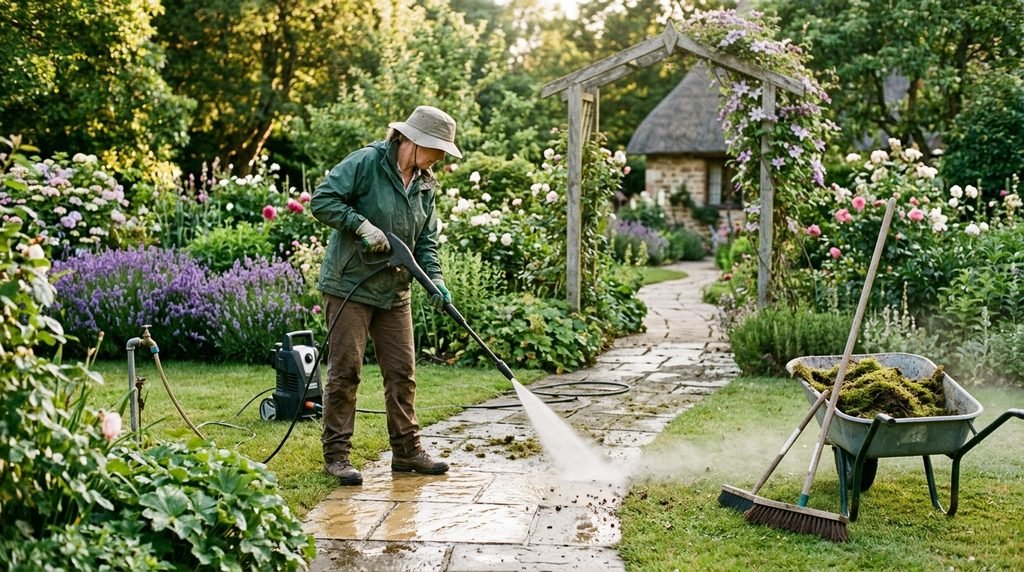
Remove excessive leaves and plant debris from:
- Steps
- Walkways
- Decks
- Patios
- Garden paths
- Areas around entrances
Wet organic material can become slippery and may stain some surfaces.
This is one of those jobs where cleanup is primarily about safety, not appearance.
15. Clean Gutters and Drainage Areas
Garden winterization isn’t limited to plants.
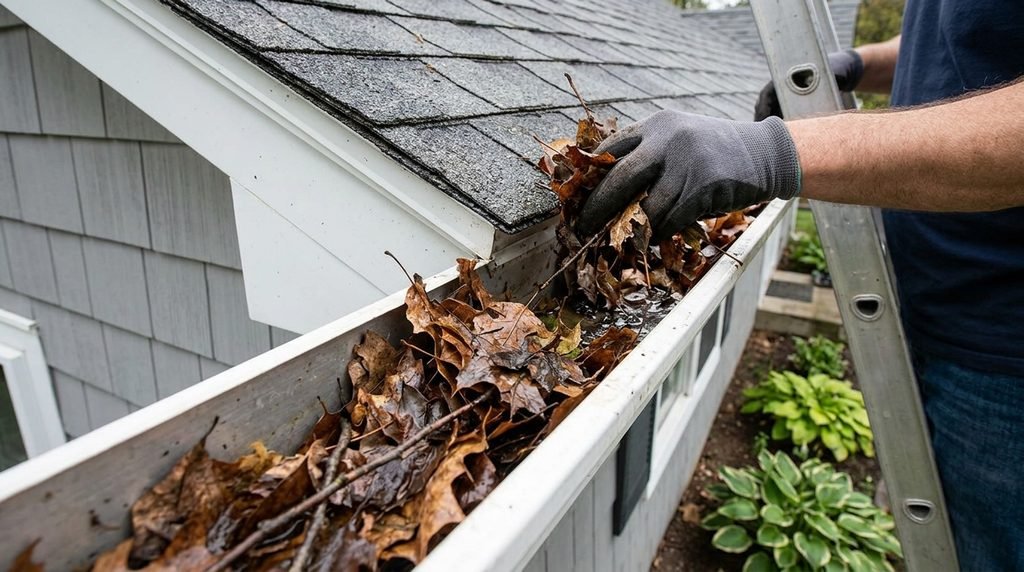
Before heavy winter rain or snowmelt arrives, check:
- Drainage channels
- Gutters
- Downspouts
- Surface drains
- Areas where runoff enters the garden
Leaves can accumulate quickly during autumn.
A blocked drainage system can redirect water into planting beds or against structures.
Practical insight
Don’t only inspect the garden after a storm.
If possible, observe where water naturally wants to flow during rainfall.
That tells you much more about winter drainage than looking at dry soil.
16. Don’t Disturb Soil Just to Make It Look Clean
A common fall-cleanup mistake is excessive digging.
Once plants have been removed, gardeners sometimes immediately turn over the entire bed.
That’s not always necessary.
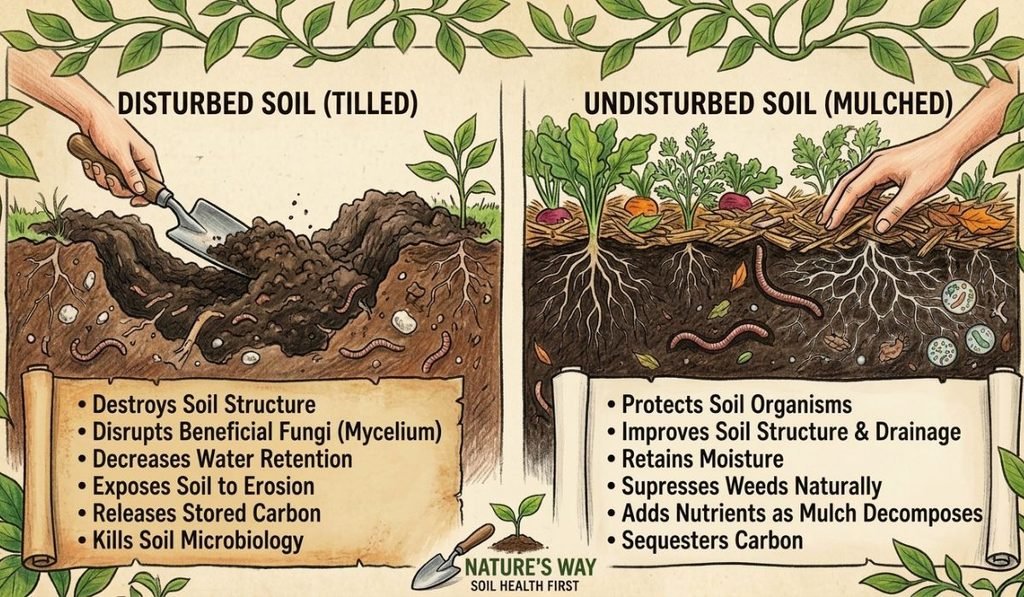
If your soil is already in good condition, unnecessary cultivation can:
- Disturb soil structure
- Expose weed seeds
- Disrupt soil organisms
- Increase erosion risk
If a bed doesn’t need digging, don’t dig it simply because autumn cleanup has begun.
17. Compost Healthy Garden Debris Properly
Healthy leaves and plant material can be valuable compost ingredients.
A balanced compost pile generally benefits from a mixture of different organic materials rather than huge quantities of one material.
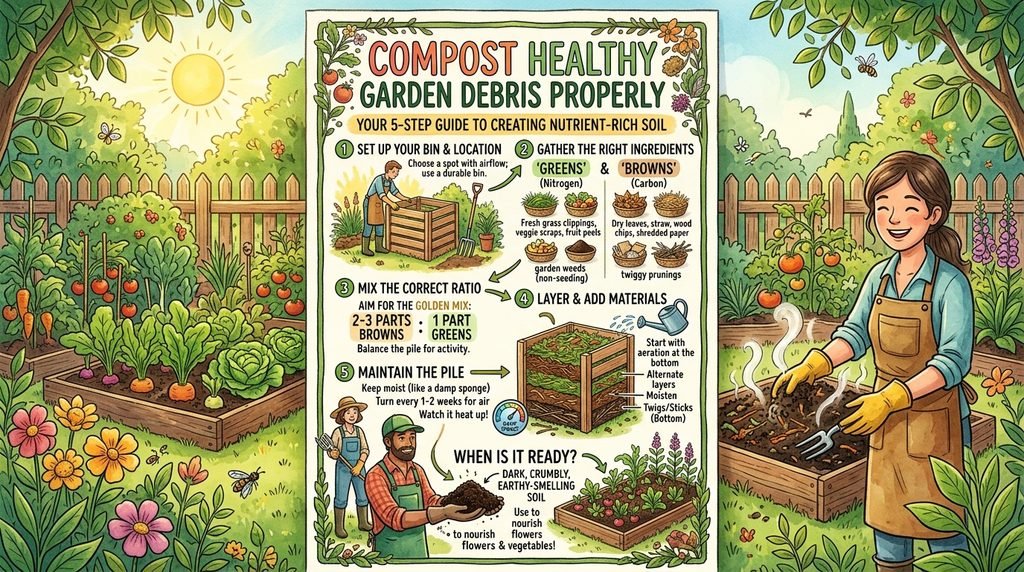
Suitable garden debris can include:
- Healthy leaves
- Healthy annual plants
- Small plant trimmings
- Vegetable residues
- Grass clippings used appropriately
Avoid adding material you suspect carries a significant disease or persistent pest problem unless your composting system is specifically capable of safely processing it.
18. Shred Leaves When You Have Too Many
You don’t necessarily have to haul away every fallen leaf.
If you have a large quantity, shredding them can make them easier to manage.
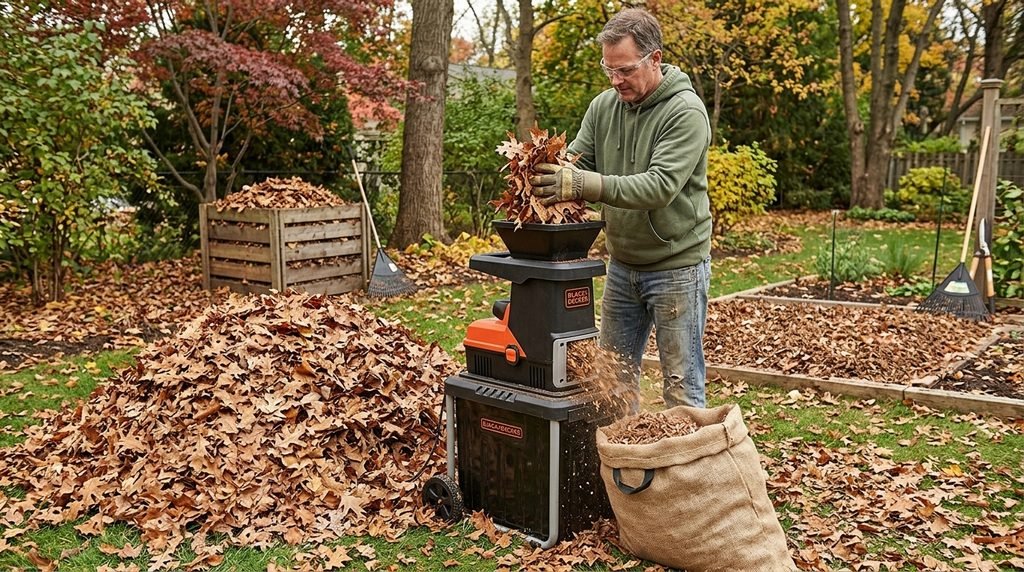
Shredded leaves:
- Break down more readily
- Take up less space
- Can be easier to distribute
- Can be incorporated into appropriate composting systems
- Can sometimes be used as mulch
A lawn mower can often be used to chop dry leaves into smaller pieces where appropriate.
The important thing is to avoid leaving an excessively thick layer where it can smother turf or create other problems.
19. Inspect for Hidden Winter Problems While Cleaning
Fall cleanup gives you an excellent opportunity to inspect the garden.
Look underneath foliage and around plant bases.
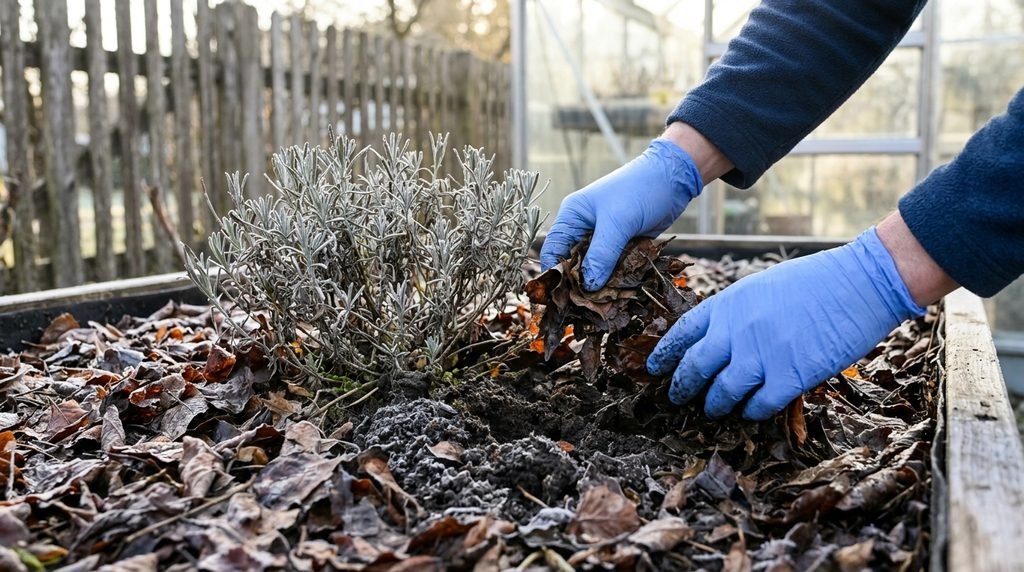
Check for:
- Exposed roots
- Broken branches
- Damaged supports
- Loose stakes
- Erosion
- Standing water
- Rodent damage
- Weak structures
You may discover problems that have nothing to do with “cleanup” but could become much worse during winter.
Fixing them while conditions are still comfortable is far easier than doing it in freezing weather.
20. Don’t Overlook Newly Planted Plants
If you planted trees, shrubs or perennials during the growing season, mark them during fall cleanup.
Once vegetation dies back, young plants can become surprisingly easy to overlook.
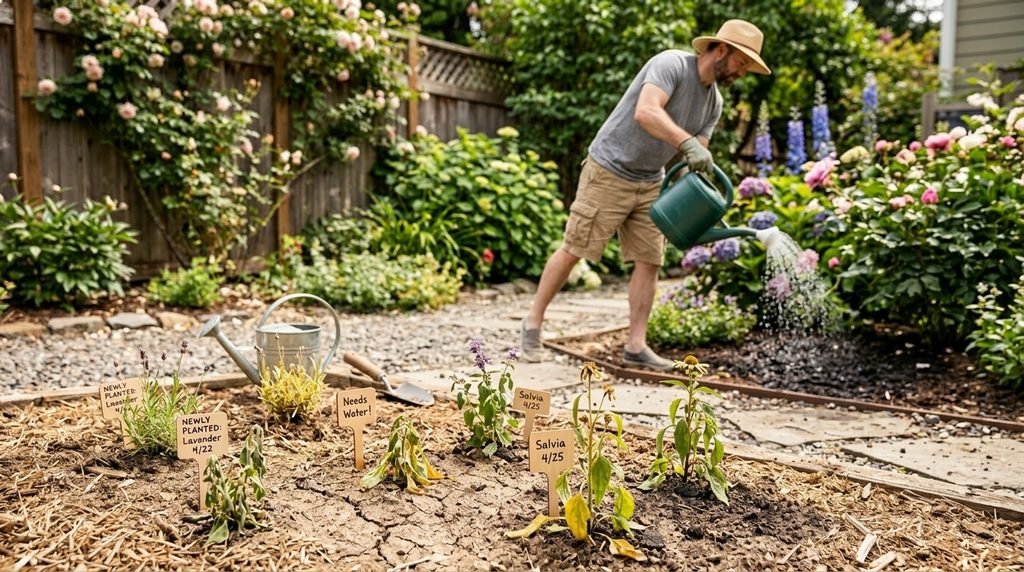
Check:
- Plant labels
- Stakes
- Root exposure
- Mulch
- Soil settling
- Wind exposure
A winter storm can be much harder on a newly planted specimen than on an established plant.
21. Fall Cleanup Is Also a Good Time to Spot Drainage Problems
If you live in an area with heavy winter rain, pay attention to low spots.
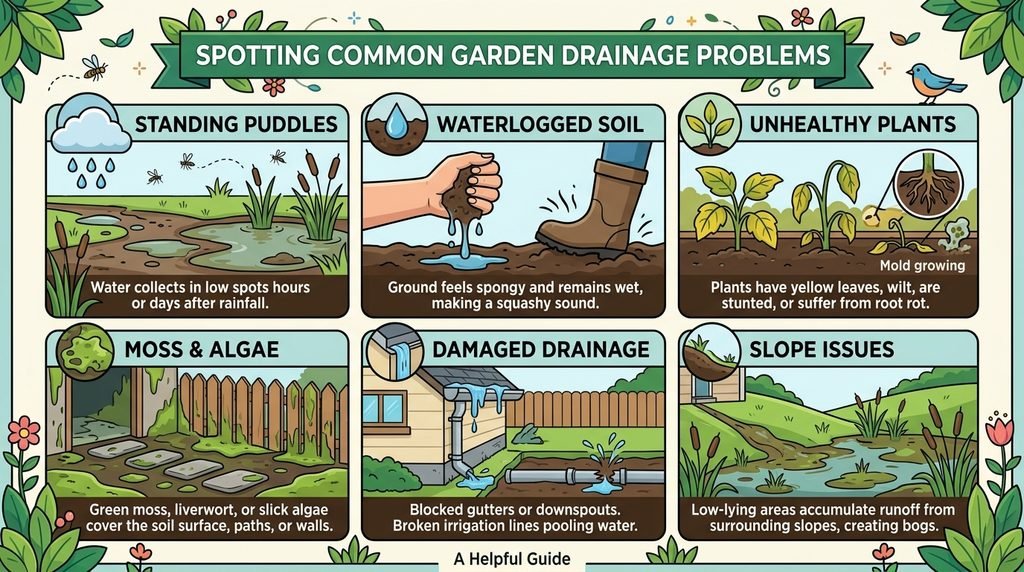
After rainfall, ask:
- Where does water collect?
- Which beds remain wet longest?
- Is water flowing toward a building?
- Is soil washing out of a bed?
- Are pathways becoming muddy?
Don’t automatically add more organic material to solve standing-water problems.
Sometimes the issue is grading, compaction or runoff.
Fall is a good time to identify the problem, even if the full solution has to wait for a suitable season.
What Should You Leave in the Garden for Winter?
Here’s a useful quick-reference table.
| Leave it? | Material | Why |
|---|---|---|
| Usually | Healthy fallen leaves in suitable beds | Soil protection and habitat |
| Often | Healthy perennial stems | Winter structure and insect habitat |
| Often | Seed heads | Wildlife food and structure |
| Often | Ornamental grasses | Winter interest and habitat |
| Depends | Vegetable residues | Crop health and disease risk matter |
| Depends | Small amounts of healthy debris | Compost or soil benefit |
| Usually no | Severely diseased material | Disease management |
| Usually no | Aggressive seed-producing weeds | Prevent spread |
| Usually no | Hazardous broken branches | Safety |
| Usually no | Heavily pest-infested material | Reduce pest pressure |
What Should You Remove Before Winter?
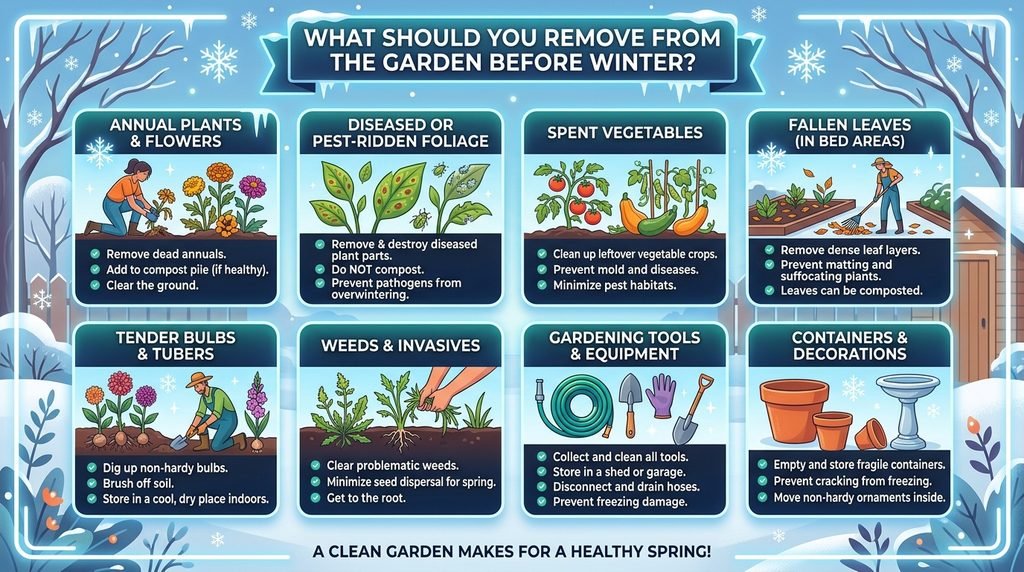
Use this as your practical removal list.
Remove first
- Severely diseased plant material
- Heavily infested plants
- Invasive or seed-producing weeds
- Diseased fallen fruit
- Dangerous broken branches
- Debris blocking drainage
- Slippery accumulations on paths
Consider removing
- Spent annuals
- Excessive leaf accumulation
- Plants that interfere with winter access
- Perennials that are known to perform better when cut back in fall
Usually consider leaving
- Healthy perennial stems
- Seed heads
- Healthy leaves in appropriate beds
- Healthy ornamental grasses
- Some natural plant debris that provides habitat
Fall Garden Cleanup: A Better Order of Work
If you’re doing the entire garden in one session, work in this order.
1. Remove hazards
Clear broken branches, dangerous debris and slippery material from paths.
2. Remove disease sources
Deal with diseased plants and fallen fruit.
3. Control problem weeds
Remove weeds before they produce additional seed.
4. Harvest and remove finished annuals
Clear crops and flowers that have genuinely finished.
5. Manage leaves
Move, shred, mulch or compost leaves according to where they have accumulated.
6. Decide what stays
Leave useful perennial stems, seed heads and habitat where appropriate.
7. Inspect soil and plants
Look for exposed roots, erosion and drainage problems.
8. Finish winter preparation
Once cleanup is complete, address the separate winterization needs of plants, beds and equipment.
This order keeps you from spending valuable time on cosmetic cleanup while more important problems remain.
A Simple “Remove or Leave?” Decision Test
Whenever you’re unsure about a piece of plant material, ask these five questions:
1. Is it diseased?
If yes, removal is usually the safer choice.
2. Is it heavily infested with pests?
If yes, consider removing it appropriately.
3. Is it a weed that could spread?
If yes, remove it before it becomes a bigger problem.
4. Does it provide habitat, food or soil protection?
If yes, consider leaving it.
5. Will leaving it create a practical problem?
If yes, manage or remove it.
This five-question test works surprisingly well.
Common Fall Garden Cleanup Mistakes
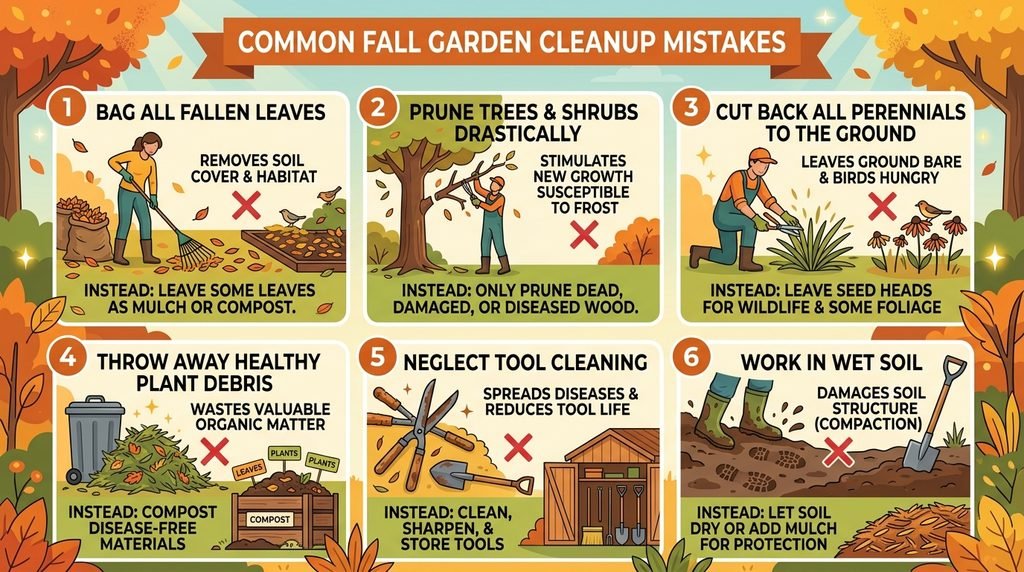
Mistake 1: Raking every leaf away
Not every leaf is garden waste.
Mistake 2: Cutting every perennial to the ground
Many healthy stems can provide winter habitat.
Mistake 3: Composting diseased plants without thinking
Disease-contaminated material deserves more careful handling.
Mistake 4: Digging every empty bed
Unnecessary soil disturbance can do more harm than good.
Mistake 5: Removing seed heads automatically
They can provide winter food and habitat.
Mistake 6: Ignoring drainage
Blocked drains and poorly managed runoff can create winter problems.
Mistake 7: Focusing only on appearance
A perfectly tidy garden isn’t necessarily a healthier garden.
Mistake 8: Waiting until everything is frozen
Some cleanup jobs are much easier before severe winter weather arrives.
A Practical Fall Garden Cleanup Checklist
Remove
- Diseased plant material
- Heavily pest-infested plants
- Seed-producing invasive weeds
- Diseased fallen fruit
- Dangerous broken branches
- Excess debris from paths
- Material blocking drains
Evaluate before removing
- Fallen leaves
- Perennial stems
- Seed heads
- Ornamental grasses
- Healthy vegetable residues
- Healthy annual plants
Leave where appropriate
- Healthy leaves in suitable beds
- Useful seed heads
- Healthy perennial stems
- Wildlife habitat
- Suitable organic material
Inspect
- Exposed roots
- Soil erosion
- Drainage
- Newly planted plants
- Tree supports
- Garden structures
- Winter access paths
The Best Time to Stop Cleaning
This might sound strange, but there is a point where you should stop.
If you’ve removed:
- Disease sources
- Serious weeds
- Hazards
- Excessive debris
- Problematic fallen material
and the remaining plant material is healthy and useful, leave it alone.
You don’t need to keep working until every square inch looks freshly manicured.
The garden is entering a different season.
Some of the things that look untidy in November may become exactly what birds, insects and soil organisms need during the months ahead.
Fall Cleanup vs. Winterization: Know the Difference
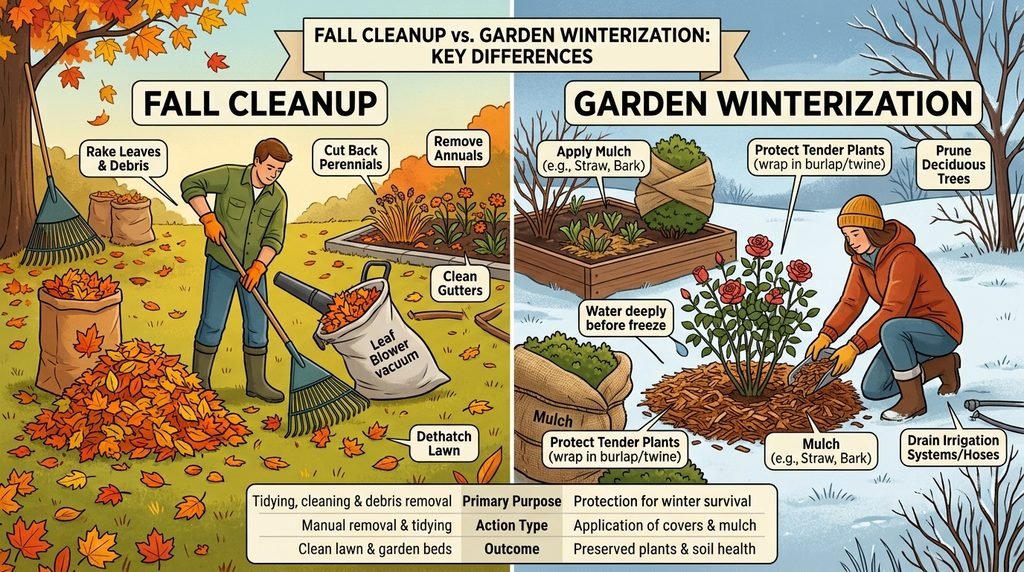
These two terms are often used interchangeably, but they aren’t identical.
Fall cleanup is mainly about deciding what plant material and debris should be removed, managed or left.
Winterization is broader.
It can include:
- Frost protection
- Winter mulch
- Container protection
- Water-system preparation
- Structural preparation
- Equipment storage
- Protection of vulnerable plants
Keeping these concepts separate makes garden management easier.
It also prevents you from doing unnecessary work simply because you’ve decided it’s “cleanup day.”
Final Thoughts
A good fall garden cleanup should leave you with a garden that is healthier, safer and better prepared for winter, not simply emptier.
Remove disease sources, serious pest problems, invasive weeds and hazards. Manage leaves where they create genuine problems, but don’t assume every fallen leaf belongs in a trash bag.
Leave healthy perennial stems and seed heads when they provide winter structure, wildlife food or insect habitat. Avoid unnecessary soil disturbance, and use cleanup as an opportunity to spot exposed roots, drainage problems and vulnerable young plants.
The biggest lesson is simple:
Don’t clean the garden just because something is brown. Clean it because there’s a good reason to remove it.
Once you start looking at fall cleanup this way, the garden becomes much easier to manage.
Instead of fighting nature to make the landscape perfectly bare, you’re working with the natural transition into winter.
And when spring arrives, you’ll have fewer problems to correct, and a healthier garden ready to grow again.
You May Also Like: Garden Cleaning: A Complete Guide to Getting Your Garden Ready for Winter