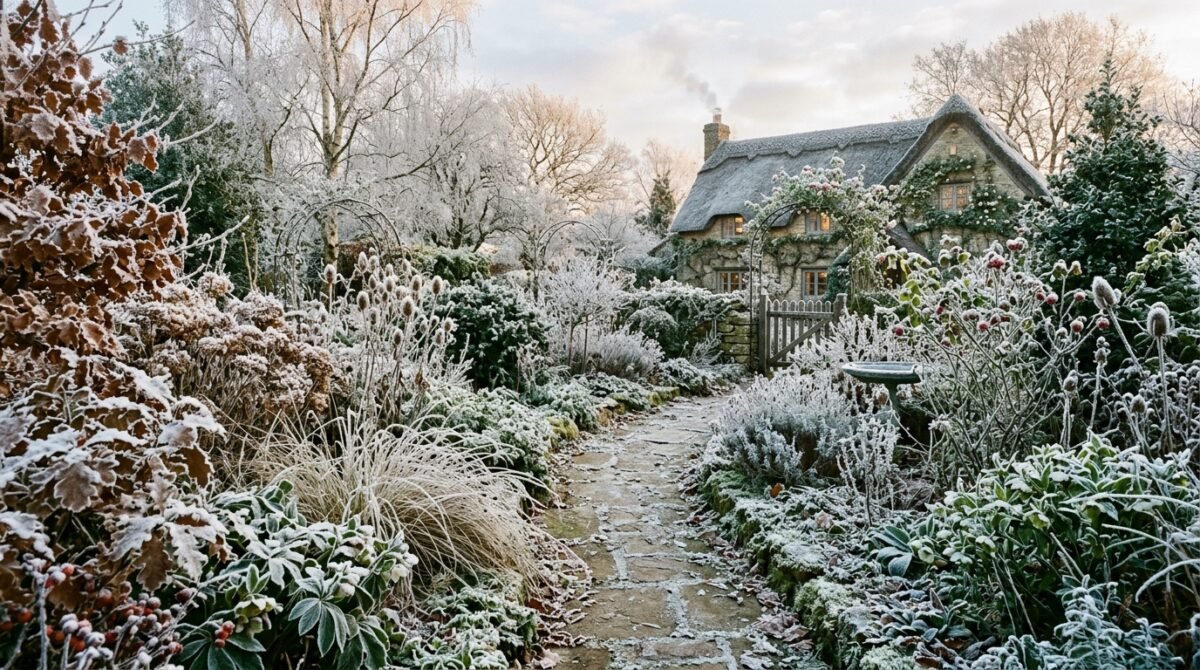
A frosted garden can look dramatically different from the garden you see during the growing season. Leaves may become limp or discolored, flowers can collapse overnight, and tender plants may show damage even when the air temperature didn’t seem exceptionally cold.
But frost damage isn’t always immediately obvious, and not every frosted plant needs to be removed. One of the most useful winter-gardening skills is learning to distinguish temporary frost injury from damage that is likely to be permanent.
This guide focuses specifically on what to do when your garden has experienced frost.
What Happens to a Garden During Frost?
Frost forms when plant surfaces or nearby objects cool enough for moisture to freeze.
At the plant level, freezing can affect water inside and around plant cells. Tender tissues may become damaged, particularly when temperatures remain below the plant’s tolerance for long enough.
The visible result can include:
- Limp or wilted foliage
- Darkened leaves
- Translucent-looking tissue
- Brown or black patches
- Collapsed flowers
- Damaged young shoots
- Split or softened plant tissue
The important point is that visible damage does not always mean the entire plant is dead.
A frost may damage the exposed foliage while leaving stems, buds, roots, or lower portions of the plant alive.
The First Rule: Don’t Start Pruning Immediately
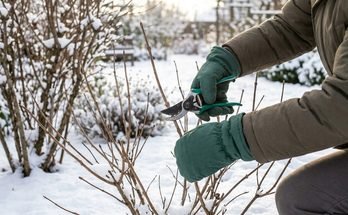
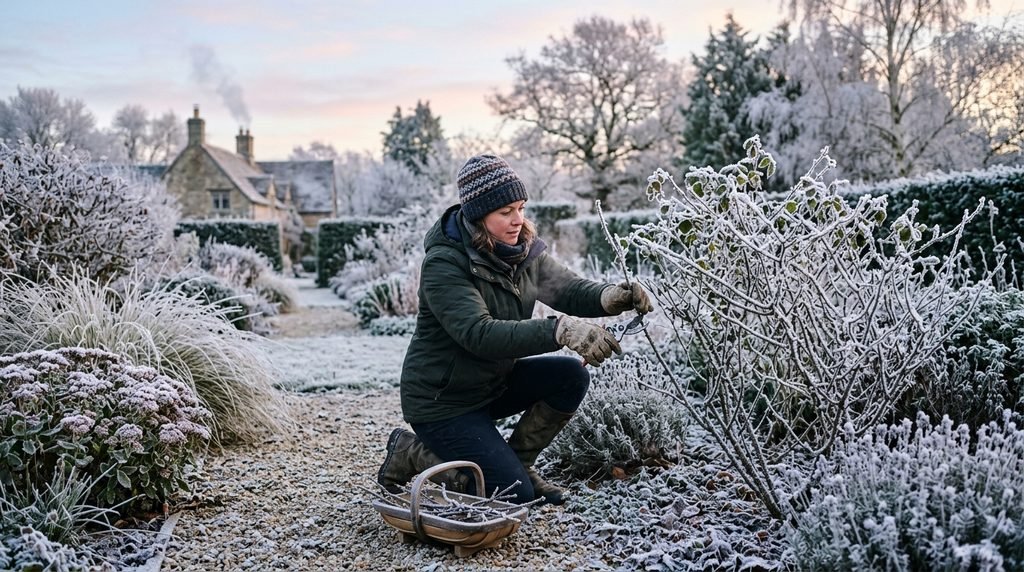
One of the most useful things you can do after a frost is wait before cutting damaged growth.
Frost-damaged leaves may look terrible, but they can still provide some protection to the living tissue underneath during subsequent cold nights.
Immediate pruning can also expose previously protected stems and buds to additional cold.
Instead:
- Let the plant remain undisturbed initially.
- Allow the weather to stabilize.
- Observe which tissues recover and which remain clearly dead.
- Prune later when the extent of damage is easier to determine.
This is particularly useful when another freezing night is expected soon.
How to Tell if a Plant Has Frost Damage
Frost damage doesn’t always appear immediately.
Some symptoms become clearer hours or even days after the freezing event.
Look for:
Limp Foliage
Leaves may suddenly lose their normal firmness.
Dark or Blackened Tissue
Some plants develop dark patches as damaged tissue deteriorates.
Water-Soaked Appearance
Damaged tissue can sometimes appear unusually translucent or water-soaked.
Collapsed Flowers
Tender flowers are often among the first structures affected.
Soft Stems
Young, tender stems can become soft or discolored after freezing.
Delayed Symptoms
A plant can initially appear relatively normal and then show more obvious damage as the affected tissue breaks down.
This is why assessing the garden immediately after frost can produce misleading conclusions.
Not Every Plant Reacts to Frost the Same Way
The severity of damage depends on more than the temperature shown on a weather app.
Important factors include:
- Plant species
- Plant maturity
- Tissue age
- Duration of freezing
- Wind
- Humidity
- Exposure
- Whether the plant was already dormant
- Whether the plant was actively growing
- Microclimate
A plant positioned beside a warm wall may experience different conditions from the same species growing in an exposed open bed.
This creates an important winter-gardening lesson:
Your garden has microclimates, not just one temperature.
That is why two plants only a few feet apart can sometimes emerge from the same frost with noticeably different levels of damage.
Check the Stems Before Removing the Plant
If foliage looks dead, inspect the stems before deciding that the plant has failed.
On a woody or semi-woody plant, gently inspect a small section of stem.
Living tissue beneath the outer layer may remain green or otherwise healthy, while severely damaged tissue may be discolored and dry.
Don’t repeatedly scrape or cut large sections of the plant just to investigate.
Instead, make the smallest practical inspection and observe the plant over time.
For perennial plants, the roots or crown may survive even when the above-ground growth is badly damaged.
Give Damaged Plants Time to Recover
After a frost, gardeners often want to fix everything immediately.
Usually, patience is more useful.
Avoid immediately responding with:
- Heavy pruning
- Excess fertilizer
- Excessive watering
- Aggressive digging
- Multiple treatments at once
A frost-damaged plant is already stressed.
Give it reasonable conditions and time to show what remains alive.
Once temperatures moderate and new growth begins, you’ll have much better information about the plant’s actual condition.
Should You Water a Frost-Damaged Garden?
Don’t assume that every frosted plant needs extra water.
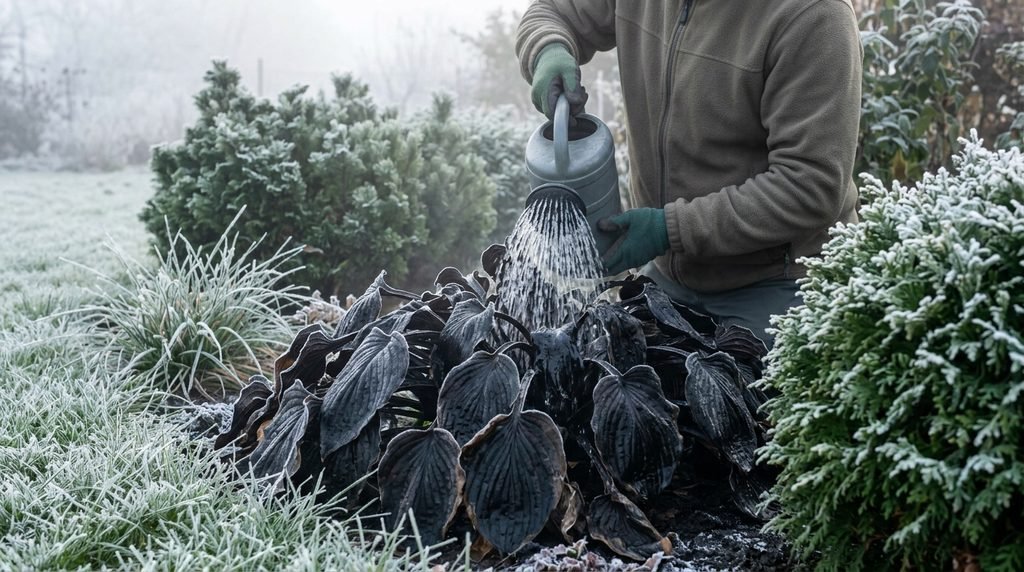
Check the soil first.
If the soil is already adequately moist, additional irrigation may provide no benefit and could create other problems.
If the soil is genuinely dry and the plant’s normal watering requirements call for moisture, water appropriately.
The key distinction is:
Frost damage does not automatically equal dehydration.
Avoid treating every visible symptom as evidence that the plant needs more water.
What About Fertilizer After Frost?
Fertilizer is not an instant cure for frost damage.
A plant that has suffered cold injury needs time to recover. Applying excessive fertilizer immediately after a frost can create additional stress rather than solving the original problem.
Instead, return to the plant’s normal nutritional requirements and seasonal care once active growth resumes.
If a plant is badly damaged, first determine whether enough living tissue remains to justify additional intervention.
Protect Plants From the Next Cold Event
One frost does not necessarily mean the cold period is finished.
This is where frost gardening becomes more about managing a sequence of weather events than reacting to a single night.
Check the forecast for:
- Another frost
- Freezing temperatures
- Strong winds
- Rapid temperature changes
If another cold event is expected, prioritize vulnerable plants rather than immediately trying to restore the garden’s appearance.
Repeated cold exposure can compound damage, especially when new growth has already been injured.
Pay Attention to New Growth
New growth is often more vulnerable than mature tissue.
A plant that survived an earlier cold period may become vulnerable again when an unusually warm spell causes it to begin producing tender new shoots.
This creates a common winter-gardening paradox:
A warmer period can temporarily increase frost risk.
Why?
Because the plant may begin active growth before the weather has become consistently warm.
When temperatures fall again, that newly emerged tissue can be considerably more vulnerable than dormant tissue.
Use Your Garden’s Microclimates
After a frost, compare different areas of your garden.
You may notice that:
- Plants beside walls suffer less damage.
- Plants beneath tree canopies remain relatively protected.
- Low areas show greater frost injury.
- Exposed plants suffer more from wind.
- Containers experience temperature changes differently from plants in the ground.
Record these observations.
Over several seasons, you can create a surprisingly useful microclimate map of your own garden.
That information can help you decide where to place frost-sensitive plants in future seasons without relying entirely on generic hardiness information.
When Should You Remove a Frost-Damaged Plant?
Don’t remove a plant simply because its leaves have turned brown or black.
Consider removing it when:
- The plant is clearly dead
- The crown has failed
- The stems are extensively damaged and no viable tissue remains
- Disease or decay develops
- Recovery is clearly impossible
For perennials, the visible top growth may die while the underground portion remains viable.
For annuals, severe frost damage may be more decisive because they don’t have the same opportunity for seasonal regrowth.
The plant’s life cycle matters.
Frost Damage vs. Winter Dormancy
These conditions can look similar but aren’t the same.
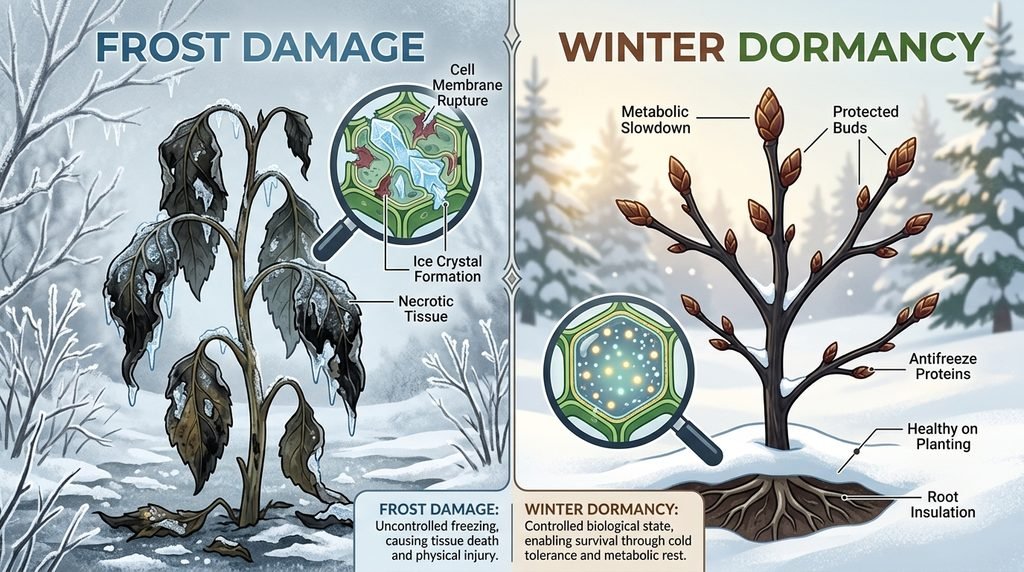
Frost Damage
Usually involves injury to tissue caused by freezing conditions.
Symptoms can include sudden collapse, blackened tissue, or damaged flowers and shoots.
Dormancy
Is a natural seasonal response in which a plant reduces or stops active growth.
Deciduous plants may lose their leaves naturally, while many perennial plants retreat below ground.
Understanding the difference prevents unnecessary intervention.
A dormant plant isn’t necessarily a damaged plant.
A Practical 72-Hour Frost Assessment
For gardeners who want a simple decision-making system, use a three-stage approach after a frost.
First 24 Hours: Observe
Don’t rush into major pruning.
Record:
- Temperature
- Duration of the cold event
- Which plants were affected
- Which areas of the garden were affected
24–48 Hours: Inspect
Look more closely at:
- Leaves
- Flowers
- Tender shoots
- Stems
- Crowns where appropriate
Separate obvious damage from tissue that may still recover.
48–72 Hours: Decide
If the weather has moderated, determine whether the plant needs:
- No intervention
- Light cleanup
- Protection from another cold event
- Normal watering
- Later pruning
This approach reduces the tendency to overreact to the first appearance of frost damage.
Create a Frost Damage Record
Here’s a simple practice that can provide surprisingly valuable information.
After significant frost, record:
| Observation | What to Record |
|---|---|
| Date | When the frost occurred |
| Lowest temperature | Approximate minimum |
| Duration | How long freezing conditions lasted |
| Plant | Species or variety |
| Location | Where the plant is growing |
| Damage | Leaves, flowers, stems, or crown |
| Recovery | What recovered afterward |
| Microclimate | Exposed, sheltered, wall-side, low area, etc. |
After several winters, this becomes your own garden-specific frost database.
It can reveal patterns that generalized gardening advice cannot.
For example, you may discover that one supposedly tender plant consistently survives light frost in a particular sheltered corner of your property.
That is actionable information for future garden planning.
Common Mistakes After a Frost
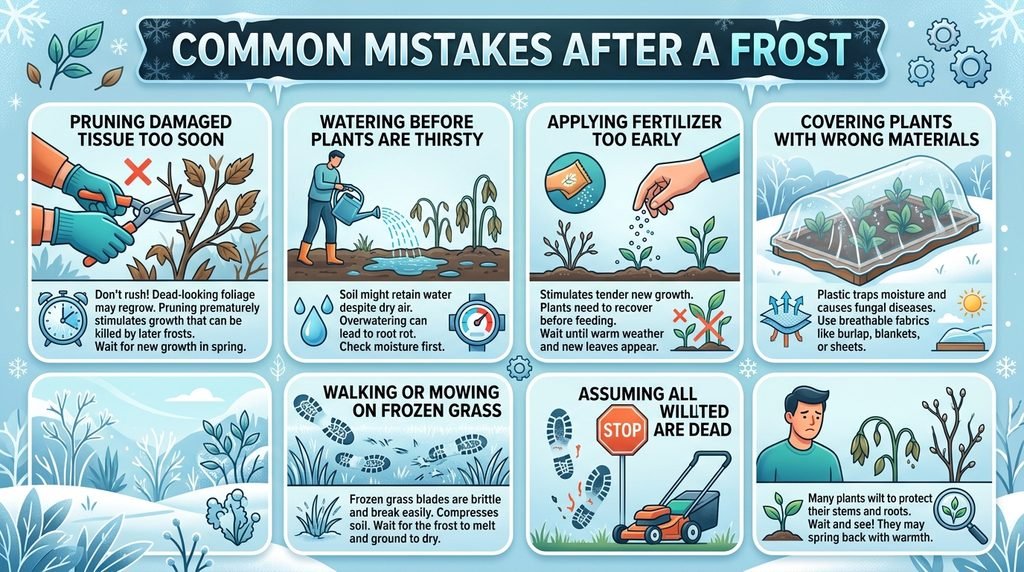
Pruning Everything Immediately
Wait until you can distinguish temporary injury from permanent damage.
Assuming Brown Means Dead
Some plants can recover from surprisingly extensive foliage damage.
Overwatering
Cold injury doesn’t automatically mean the soil is dry.
Applying Excess Fertilizer
Fertilizer isn’t a treatment for frost injury.
Ignoring the Next Forecast
A damaged plant may be particularly vulnerable to another cold event.
Treating Every Part of the Garden the Same
Microclimates can create significant differences in frost exposure.
Frosted Garden Checklist
After a frost, work through this list:
- Record approximately how cold it became.
- Check which plants show symptoms.
- Avoid immediate heavy pruning.
- Inspect stems and other living tissue carefully.
- Check soil moisture before watering.
- Avoid using fertilizer as an emergency treatment.
- Check the forecast for another freeze.
- Protect vulnerable plants if another cold event is expected.
- Reassess damaged plants after conditions moderate.
- Remove only clearly dead or irrecoverable material.
- Record which garden areas experienced the most damage.
Final Thoughts
A frosted garden isn’t necessarily a ruined garden.
The most important skill after a frost is learning to assess damage before acting. Leaves may be lost while stems, crowns, roots, or buds remain viable. Some plants recover surprisingly well once temperatures moderate.
Instead of trying to make the garden look normal immediately, observe it, protect vulnerable plants from subsequent cold events, and give damaged tissue time to reveal its true condition.
And perhaps the most valuable long-term strategy is to learn from every frost. Record which plants were affected, where they were growing, and how they recovered. Over time, those observations can help you understand the unique frost patterns of your own garden, and make better planting and protection decisions in future winters.